Manipur: United Naga Council urges PM Modi to intervene, demands justice for 6 slain civilians
Synopsis
For the first time since the latest cycle of violence, Naga elders from Manipur have come to New Delhi — not to negotiate, but to demand answers. The killing of six abducted Naga civilians, whose bodies were recovered mutilated on 11 June, has pushed the UNC to escalate directly to the Prime Minister, raising questions about whether the Centre's SoO framework is shielding armed groups from accountability.
Key Takeaways
The United Naga Council (UNC) submitted a joint memorandum to PM Narendra Modi on 27 June , urging urgent intervention in Manipur .
Six Naga civilians abducted from Kangpokpi district on 13 May were found dead on 11 June , with bodies described as mutilated and dismembered.
The UNC alleged that Kuki militant groups under a Suspension of Operations (SoO) agreement with the government were responsible for the abductions and killings.
Attacks on Naga villages in Ukhrul and Kamjong districts on 7 May allegedly involved drones, rocket launchers, and cross-border armed movement.
The Kuki-Zo Council expressed regret on 25 June over the killings, calling them a 'grave mistake' — the first acknowledgement from the Kuki side.
The UNC demanded a court-monitored independent investigation and concrete security guarantees for all Naga-inhabited areas.
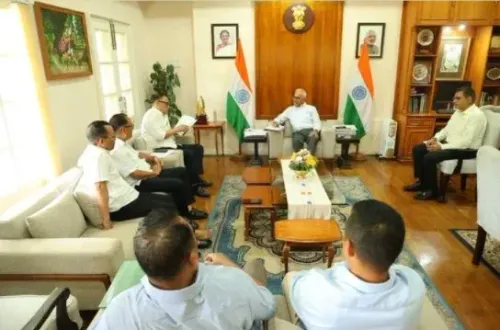
The United Naga Council (UNC), the apex body representing the 21 Naga tribes of Manipur, on Saturday, 27 June appealed to Prime Minister Narendra Modi and the Union Government to urgently intervene in the rapidly deteriorating security situation in Manipur, particularly across Naga-inhabited areas. The appeal came as senior Naga leaders held a series of meetings in New Delhi to present what they described as a deepening crisis threatening civilian lives and territorial integrity.
The Joint Memorandum and Key Demands
A joint memorandum was submitted to the Prime Minister by the UNC, the Naga Women's Union, and the All Naga Students' Association, Manipur, demanding immediate intervention against what the organisations described as a proxy war waged against the Nagas by Kuki militant groups — groups currently operating under a Suspension of Operations (SoO) agreement with the government.
The Naga bodies alleged that these groups, along with the Myanmar-based KNA (B), are violating the Indo-Naga Framework Agreement signed on 3 August 2015 and pose a serious threat to India's eastern frontier security.
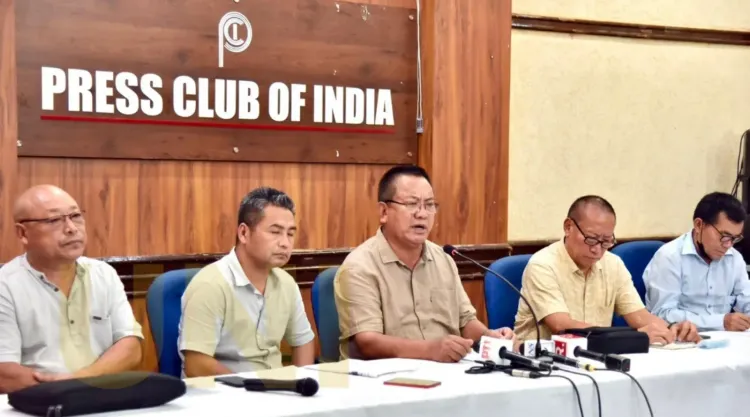
UNC President N.G. Lorho, along with senior Naga leaders Vareiyo Shatsang, Samson Remei, A.C. Thotso, K.S. Paul Leo, and L. Adani, have been meeting political leaders, civil society organisations, women's groups, peace activists, and media representatives in Delhi to press their case for constitutional and political intervention.
The Killing of Six Naga Civilians
The immediate trigger for the escalation was the killing of six Naga civilians in Manipur's Kangpokpi district on 13 May. According to the UNC, following the killing of three Thadou church leaders on the same date, 20 Naga civilians were allegedly abducted by Kuki militant groups from Leilon Vaiphei and Sapermaina Kuki villages. Fourteen of the abducted were released on 15 May; the remaining six stayed missing despite repeated appeals and extensions granted by the UNC to the Manipur Government.
On 10 June, Naga village guards — facilitated by the UNC and the Naga People Organisation, Senapati — released 14 Kuki detainees as a humanitarian gesture, even amid widespread public anger. The following day, 11 June, the bodies of the six missing Naga civilians were recovered in what the UNC described as a mutilated and dismembered condition.
The UNC called the killings 'deeply traumatic' and said the incident had severely shaken public confidence in the government's ability to protect innocent civilians. The Kuki-Zo Council (KZC) had on 25 June expressed regret over what it termed a 'grave mistake' in the killings — the first such acknowledgement from the Kuki side.
Security Concerns and Cross-Border Dimensions
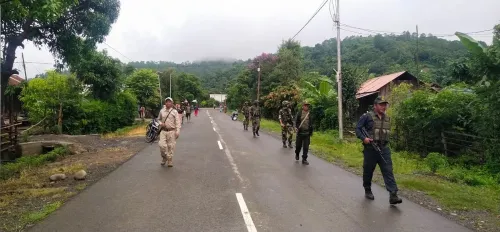
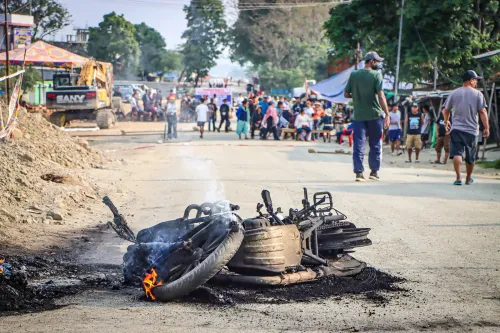
The UNC alleged that attacks on Naga villages in Ukhrul and Kamjong districts on 7 May — including Namlee-Wanglee, Choro, and Kaka villages — involved cross-border armed movement, military-grade weapons, drones, rocket launchers, and coordinated assaults by armed cadres. The Council argued that the situation must not be viewed merely as a law-and-order issue or an internal communal conflict.
The UNC also maintained that large parts of present-day Kangpokpi district are historically ancestral lands of the Zeliangrong Nagas, asserting that any violence, militarised assertion, or demographic intimidation in these areas constitutes a serious issue of Naga security and territorial integrity.
Broader Context: Manipur's Ongoing Crisis
The UNC noted that these incidents occurred while the state was still reeling from the Meitei-Kuki ethnic conflict that erupted in May 2023 — a conflict that has already claimed hundreds of lives and displaced tens of thousands. According to the UNC, this is the first time that Naga elders from Manipur have addressed the national media in New Delhi since the current cycle of violence began, underscoring the gravity with which the community views the situation.
The Council demanded a time-bound, independent, and court-monitored investigation into the abduction and killing of the six Naga civilians, along with concrete security guarantees for all Naga-inhabited areas, particularly vulnerable regions where civilians have allegedly faced intimidation, hostage-taking, and armed incursions. All eyes are now on whether the Centre will respond with the urgency that the UNC insists the situation demands.
Point of View
The agreement is either being violated without consequence or is providing political cover. The Centre has so far treated Manipur's multi-front conflict as a Meitei-Kuki binary; the Naga community's formal entry into the national conversation signals that framing is no longer tenable. A court-monitored probe, as demanded, would be the minimum credible response — anything less risks further alienating a community that has historically been a stabilising force on India's northeastern frontier.
NationPress
26 Sept 2026
Frequently Asked Questions
Why has the United Naga Council approached PM Modi over Manipur?
The UNC approached PM Modi on 27 June 2025 to demand urgent intervention after six Naga civilians, abducted in Kangpokpi district on 13 May, were found dead on 11 June with their bodies in a mutilated condition. The Council alleges that Kuki militant groups operating under a Suspension of Operations agreement with the government were responsible.
What happened to the six Naga civilians killed in Manipur?
According to the UNC, 20 Naga civilians were abducted by Kuki militant groups on 13 May from Leilon Vaiphei and Sapermaina Kuki villages in Kangpokpi district. Fourteen were released on 15 May; the remaining six were found dead on 11 June, with their bodies described as mutilated and dismembered.
What is the Suspension of Operations (SoO) agreement and why is it relevant?
The SoO is a ceasefire-style agreement between the Indian government and certain Kuki militant groups, under which the groups agree to halt armed operations in exchange for designated camps and allowances. The UNC alleges that groups under this agreement are violating its terms by conducting armed attacks on Naga villages, raising accountability concerns about the framework.
How does this connect to Manipur's broader ethnic conflict?
Manipur has been in turmoil since May 2023, when a Meitei-Kuki ethnic conflict erupted, claiming hundreds of lives and displacing tens of thousands. The UNC says the latest violence against Naga civilians represents a separate but overlapping crisis, and that the state now faces a multi-community conflict that the government has not adequately addressed.
What specific actions has the UNC demanded from the Centre?
The UNC has demanded a time-bound, independent, court-monitored investigation into the abduction and killing of the six Naga civilians, concrete security guarantees for Naga-inhabited areas, and a recognition that the situation involves cross-border armed movement and is not merely a law-and-order or communal issue.