Nagaland University's Research Unveils Wild Banana's Genetic Wealth for Climate-Resilient Agriculture

Synopsis
A groundbreaking study by Nagaland University reveals that 'Musa sikkimensis', a wild banana species, holds vital genetic traits essential for climate resilience and sustainable farming. This research emphasizes the urgent need for conservation in the face of environmental threats, showcasing its potential to contribute to food security and agricultural advancement.
Key Takeaways
The study identifies the genetic diversity of 'Musa sikkimensis', a vital wild banana species.
It highlights the importance of conservation for sustainable agricultural practices.
Findings suggest potential for developing climate-resilient and high-yielding banana varieties.
Research addresses challenges in conserving local banana genotypes in remote areas.
The establishment of a Biodiversity Corridor supports ongoing conservation efforts.
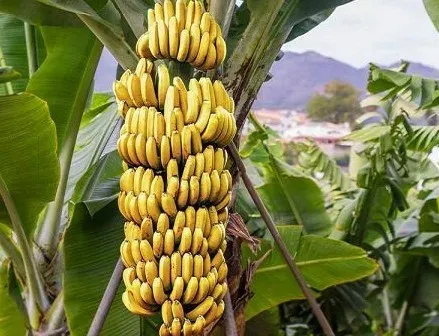
Kohima, March 3 (NationPress) A team of researchers from Nagaland University, the sole Central university in the state, has carried out a thorough investigation into the genetic variety of 'Musa sikkimensis', a wild banana species indigenous to the Eastern Himalayas and Northeast India. This study emphasizes its crucial role in promoting climate resilience, ensuring food security, and facilitating sustainable agricultural practices.
The research team categorized Musa sikkimensis, also referred to as the 'Darjeeling banana' or 'Sikkim banana', as a wild-seeded species that acts as an essential genetic reservoir.
It harbors characteristics associated with disease resistance, environmental stress tolerance, and climate adaptability, rendering it an invaluable asset for future banana breeding and agricultural enhancement programs.
While this species is not commonly cultivated for its edible fruit, it significantly contributes to bolstering crop resilience and ensuring sustainable agricultural output.
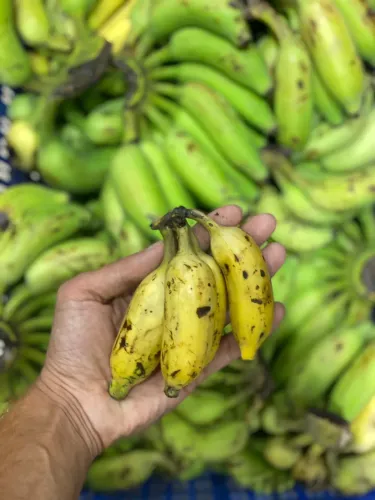
The research findings indicate that local banana germplasm shows robust adaptive capabilities across varying environmental conditions, underscoring its significance for conservation and future breeding endeavors.
Situated in the Indo-Burma biodiversity hotspot, Nagaland is home to a rich assortment of native banana genotypes. However, escalating human activities, environmental challenges, and deforestation have jeopardized numerous wild genotypes, increasing the necessity for conservation research.
The study titled 'Exploring the Genetic Diversity of Musa sikkimensis Land Races in Nagaland, India' highlights the urgent requirement to safeguard endangered banana germplasm within one of the most biodiverse regions globally.
The findings were published in a peer-reviewed scientific journal dedicated to plant and animal biology, biodiversity, ecology, and environmental conservation.
Co-authored by Nagaland University Research Scholars K. R. Singh, Dr. S. Walling, and Dr. Animesh Sarkar, the research underscores the critical need for such studies to protect the rich biodiversity of the Northeast. Prof. Jagadish K. Patnaik, Vice-Chancellor of Nagaland University, expressed satisfaction over a significant scientific breakthrough achieved by the university researchers in creating a biodiversity corridor aimed at conserving indigenous banana germplasm at risk of extinction.
He emphasized that this groundbreaking initiative illustrates the university’s profound sense of duty towards preserving the wild flora in the hilly regions of Northeast India.
"This research underscores our dedication to scientific advancement rooted in local genetic resources and traditional ecological wealth. Amid climate change, it will pave the way for future crop enhancement initiatives by reinforcing genetic resilience, boosting adaptability, and ensuring nutritional security," stated the VC.
The research builds upon a series of postgraduate and doctoral projects supervised by Dr. Animesh Sarkar, Associate Professor at the Department of Horticulture, focusing on banana biodiversity, germplasm mapping, characterization of wild species, and evaluating genetic resources within the state.
Dr. Sarkar pointed out the research's role in tackling conservation challenges and protecting local germplasm, stating, "Our aim was to tackle the difficulties in identifying and conserving local banana genotypes thriving in remote forest areas of Nagaland. Through collaboration with banana specialists from Northeast and South India, our team successfully identified and documented several previously unclassified genotypes."
He added, "Field exploration presented substantial obstacles, including challenging terrain, limited access to remote forest areas, and a lack of awareness among farmers regarding the significance of germplasm conservation. Our study also points to a noticeable shift among farmers towards hybrid and tissue-culture banana varieties, which could hasten the loss of traditional and wild genotypes."
The findings indicate the potential of wild banana genetic resources to contribute to climate-resilient agriculture, enhance food security, and foster socio-economic growth.
Researchers have noted that wild banana species could facilitate the development of high-yielding, disease-resistant varieties and new value-added products such as fiber-based materials and health beverages.
The study also emphasizes the considerable ethnobotanical significance of wild bananas among indigenous communities in Nagaland, with various plant parts traditionally utilized for food, fiber, medicine, and cultural practices. Reported medicinal uses include treatments for dysentery, ulcers, diabetes, and microbial infections.
To bolster conservation efforts, Nagaland University has instituted a Banana Biodiversity Corridor within its Department of Horticulture, university officials reported.
This corridor operates as a living field gene bank, integrating in situ and ex situ conservation methods while facilitating genetic and molecular research, climate-resilient breeding programs, student training, and initiatives for national germplasm security.
The initiative aims to safeguard fragmented banana diversity, enhance local value chains, and assist future agricultural development.
Dr. Sarkar has also formed a network for the exploration of banana biodiversity and its biotechnological research in Nagaland, funded by the Department of Biotechnology (DBT) under the Central government.
Point of View
The study not only addresses immediate ecological concerns but also positions itself as a vital resource for future food security efforts. The insights provided underscore the importance of local genetic resources in combating climate challenges.
NationPress
20 Sept 2026
Frequently Asked Questions
What is 'Musa sikkimensis'?
'Musa sikkimensis' is a wild banana species native to the Eastern Himalayas and Northeast India, known for its potential in climate-resilient agriculture.
Why is the conservation of wild bananas important?
Conserving wild bananas like 'Musa sikkimensis' is crucial for maintaining genetic diversity, which aids in disease resistance and climate adaptability in agriculture.
How does the research impact food security?
The findings from this research can lead to the development of high-yielding and disease-resistant banana varieties, enhancing food security.
What challenges did researchers face during the study?
Researchers encountered obstacles such as difficult terrain, limited access to remote areas, and a lack of awareness among farmers regarding the importance of germplasm conservation.
What initiatives have been established for conservation?
Nagaland University has established a Banana Biodiversity Corridor to facilitate the conservation of indigenous banana germplasm at risk of extinction.