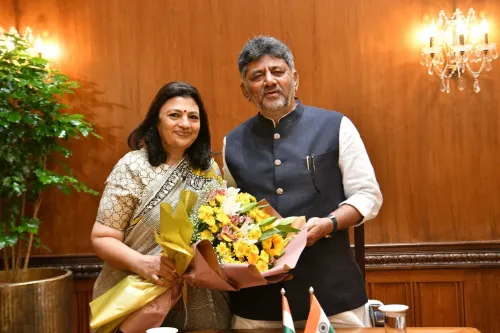
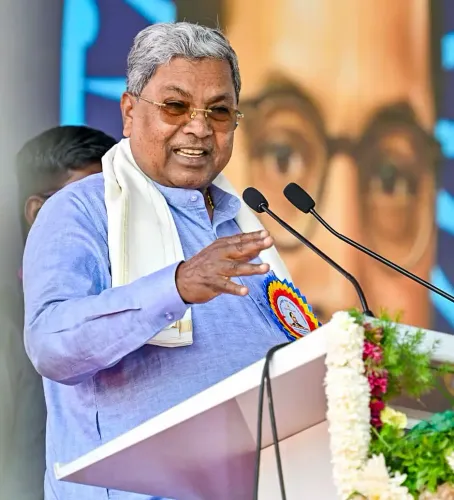
Chandrababu Naidu thanks Karnataka CM for cyclone Arnab, Murasu power restoration aid
Synopsis
Back-to-back cyclones Arnab and Murasu knocked out power to more than 3,100 villages in Andhra Pradesh and uprooted nearly 9,700 electricity poles. Karnataka stepped in with 592 personnel across 68 teams — and CM Naidu's thank-you letter is a rare public acknowledgement of how critical cross-border solidarity has become as Bay of Bengal cyclones grow more frequent.
Key Takeaways
CM Chandrababu Naidu wrote to Karnataka CM D.K.
Shivakumar on 18 November 2026 thanking him for cyclone relief assistance.
Twin cyclones Arnab and Murasu damaged or uprooted a combined 9,702 electricity poles within APCPDCL jurisdiction.
Power supply was disrupted in 1,333 villages (Arnab) and 1,825 villages (Murasu) in APCPDCL limits alone.
Karnataka deployed 592 personnel in 68 teams ; Andhra Pradesh fielded up to 3,292 personnel in 390 teams after Cyclone Murasu.
Naidu pledged that Andhra Pradesh would reciprocate with personnel, equipment, and machinery if Karnataka faces a future disaster.
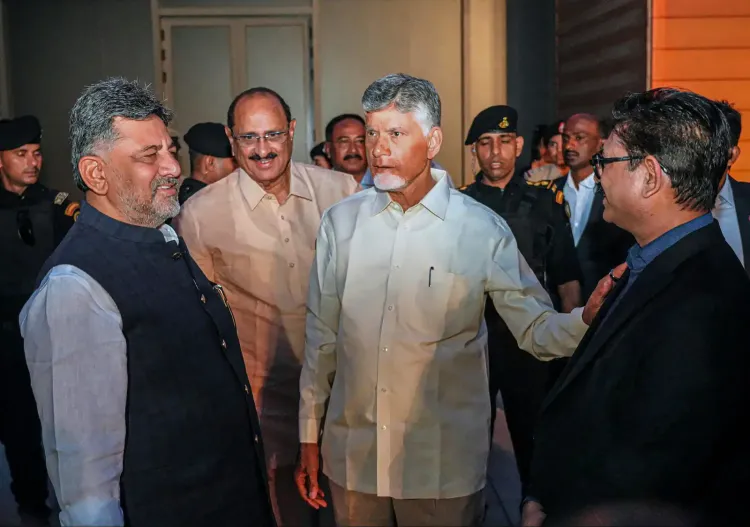
Andhra Pradesh Chief Minister N. Chandrababu Naidu has written an official letter to Karnataka Chief Minister D.K. Shivakumar, expressing gratitude for Karnataka's swift deployment of personnel to restore electricity supply across cyclone-battered districts of Andhra Pradesh following twin cyclones Arnab and Murasu. The letter, confirmed by the Chief Minister's Office (CMO) on Wednesday, 18 November 2026, underscores the scale of inter-state cooperation triggered by one of the more damaging back-to-back cyclone sequences to hit the state's power infrastructure in recent memory.
Scale of Destruction
The twin cyclones inflicted severe damage on electricity infrastructure across Andhra Pradesh. Cyclone Arnab damaged or uprooted 1,852 electricity poles and disrupted power supply in 1,333 villages within the Andhra Pradesh Central Power Distribution Corporation Limited (APCPDCL) jurisdiction alone. Cyclone Murasu compounded the crisis, uprooting 7,850 poles and cutting power to 1,825 villages in the same zone — bringing the combined toll to more than 9,700 poles and over 3,100 villages affected within APCPDCL limits.
Karnataka's Response on the Ground
Responding to Andhra Pradesh's call for assistance, the Karnataka government deployed 592 personnel organised into 68 teams to aid restoration operations. The teams worked alongside local crews under difficult post-cyclone conditions. Within APCPDCL's jurisdiction, Andhra Pradesh itself mobilised 1,580 personnel in 165 teams after Cyclone Arnab, and a significantly larger 3,292 personnel in 390 teams after Cyclone Murasu — with Karnataka's contingent providing critical additional bandwidth to the strained local workforce.
What Naidu Said
Chief Minister Naidu acknowledged that Karnataka's timely reinforcement helped Andhra Pradesh intensify and accelerate its power restoration drive. He noted that the two states share deep geographical, economic, and cultural ties, and said that such solidarity during natural disasters would only strengthen that relationship further. Naidu also assured Shivakumar that Andhra Pradesh would reciprocate — extending deployment of personnel, equipment, and machinery — whenever Karnataka faced a natural disaster or emergency in the future.
Broader Context
Inter-state mutual aid for disaster response has gained momentum across India in recent years, particularly for power restoration after extreme weather events. The severity of Cyclone Murasu — evidenced by the nearly four-times higher pole damage compared to Arnab — suggests escalating infrastructure vulnerability in coastal Andhra Pradesh as cyclone frequency in the Bay of Bengal increases. This comes amid ongoing discussions at the national level about strengthening the resilience of power distribution networks in cyclone-prone states. How quickly full restoration is completed across all affected villages will be a key metric of the joint operation's effectiveness.
Point of View
Indirectly, is the inadequacy of APCPDCL's standalone restoration capacity: needing an external state to field 592 personnel after a cyclone sequence points to a staffing and equipment gap that goodwill alone cannot fix. The seven-to-one ratio in pole damage between Murasu and Arnab deserves scrutiny — it suggests either Murasu struck a more infrastructure-dense corridor or that pre-hardening was insufficient. Andhra Pradesh's power distribution resilience, not just inter-state diplomacy, is the story that needs a follow-up.
NationPress
18 Nov 2026
Frequently Asked Questions
Why did Andhra Pradesh CM Chandrababu Naidu write to Karnataka CM D.K. Shivakumar?
CM Naidu wrote to thank Shivakumar for Karnataka's prompt deployment of 592 personnel across 68 teams to assist in restoring electricity supply in Andhra Pradesh after twin cyclones Arnab and Murasu caused extensive damage to power infrastructure. The letter was confirmed by the Chief Minister's Office on 18 November 2026.
How much damage did cyclones Arnab and Murasu cause to Andhra Pradesh's power infrastructure?
Within the APCPDCL jurisdiction, Cyclone Arnab uprooted or damaged 1,852 electricity poles and disrupted power in 1,333 villages, while Cyclone Murasu uprooted 7,850 poles and cut power to 1,825 villages. Combined, the two cyclones damaged more than 9,700 poles and affected over 3,100 villages in APCPDCL limits alone.
How many personnel were deployed for power restoration in Andhra Pradesh?
Karnataka sent 592 personnel in 68 teams. Andhra Pradesh's own APCPDCL deployed 1,580 personnel in 165 teams after Cyclone Arnab and 3,292 personnel in 390 teams after Cyclone Murasu, making it one of the largest state-level power restoration mobilisations in recent years.
What did Naidu promise in return for Karnataka's help?
CM Naidu assured Karnataka that Andhra Pradesh would extend all possible assistance — including deployment of personnel, equipment, and machinery — whenever Karnataka faces a natural disaster or emergency in the future, framing the arrangement as a reciprocal inter-state compact.
Why does inter-state cooperation matter for disaster response in India?
India's coastal states, particularly those along the Bay of Bengal, face recurring cyclone threats that can overwhelm local restoration capacity within hours. Inter-state mutual aid — as seen here with Karnataka supporting Andhra Pradesh — fills critical gaps in manpower and equipment, speeding up recovery for affected citizens. Such cooperation is increasingly important as extreme weather events grow in frequency and intensity.