CM Himanta Hails Nalbari Police's ₹1.48 Cr Heroin Bust
Synopsis
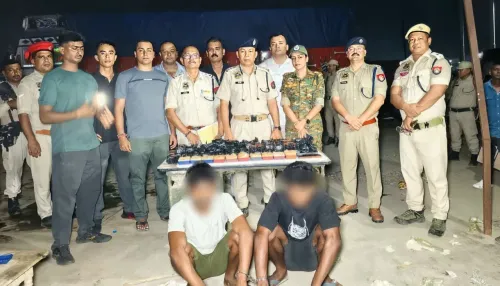
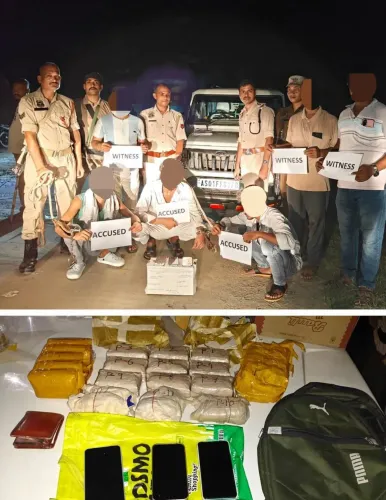
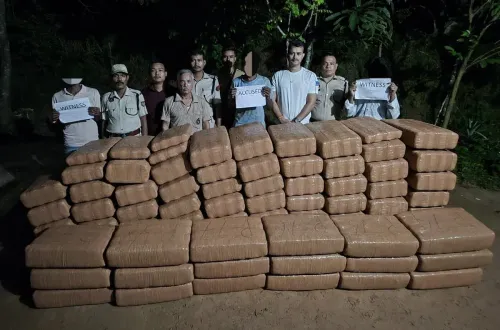
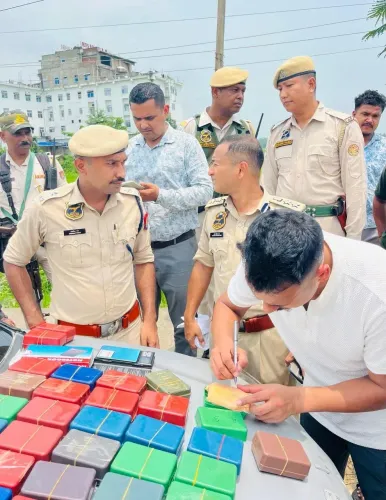
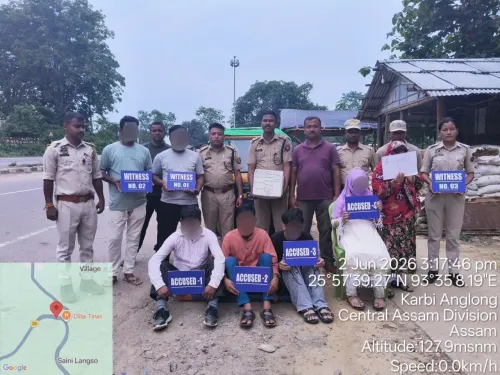
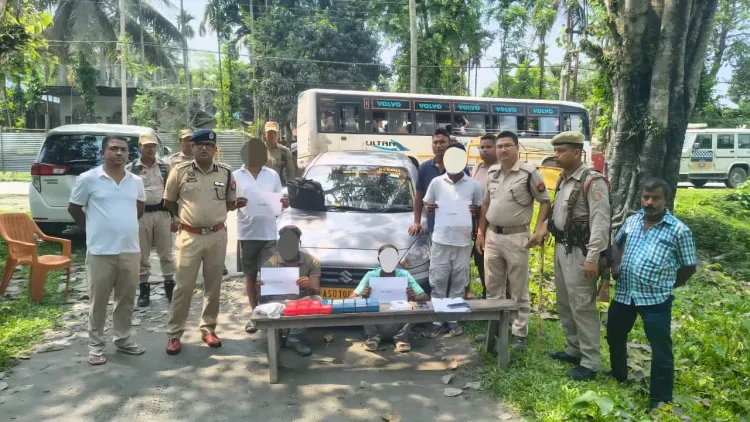
Assam Chief Minister Himanta Biswa Sarma on 24 June 2026 applauded Nalbari Police for busting a ₹1.48 crore heroin consignment — 211.5 grams concealed in 16 soap boxes — and arresting two suspects, reinforcing the state's sustained #AssamAgainstDrugs enforcement drive.
Key Takeaways
211.5 grams of suspected heroin were recovered by Nalbari Police on 24 June 2026 .
The contraband, valued at ₹1.48 crore , was concealed inside 16 soap boxes to evade detection.
Two individuals were apprehended in connection with the seizure.
CM Himanta Biswa Sarma publicly commended Nalbari Police on X under the #AssamAgainstDrugs campaign.
Assam lies on transit routes for heroin from the Golden Triangle via Myanmar and Bangladesh .
Operations are conducted under the Narcotic Drugs and Psychotropic Substances (NDPS) Act .
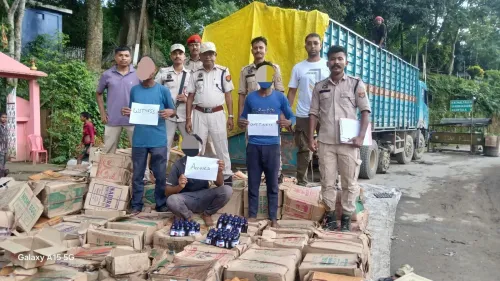
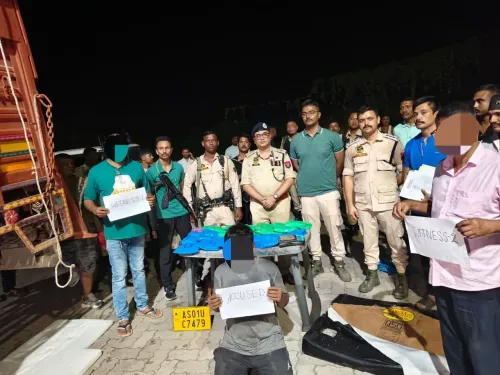
Assam Chief Minister Himanta Biswa Sarma on Wednesday, 24 June 2026, publicly commended Nalbari Police for intercepting a heroin consignment valued at ₹1.48 crore, with 211.5 grams of the suspected narcotic found concealed inside 16 soap boxes. Two individuals have been apprehended in connection with the seizure. The Chief Minister used the announcement to send a pointed warning to drug traffickers operating in the state.
Context
Posting on X, CM Sarma wrote: 'Another consignment intercepted before it could poison our communities. Kudos to Nalbari Police for recovering 211.5 gms of suspected heroin concealed in 16 soap boxes, valued at ₹1.48 crore. 2 apprehended. Beware, Assam Police is watching.' The post was tagged #AssamAgainstDrugs, the state administration's running social-media campaign that accompanies its narcotics enforcement drives. The concealment method — hiding contraband inside ordinary household soap boxes — points to the increasingly inventive smuggling techniques that enforcement agencies are encountering on the ground.
Policy Backdrop
Assam sits on well-documented transit corridors for heroin originating from the Golden Triangle — the tri-border region of Myanmar, Laos, and Thailand — with consignments typically routed through Myanmar and Bangladesh before entering India's north-east. Since CM Sarma took office in May 2021, the state government has maintained a visible pattern of frequent district-level seizures accompanied by real-time public reporting, framing each bust as part of a broader social mission. This approach aligns with the nationally launched Nasha Mukt Bharat Abhiyan (2020), a demand-reduction and de-addiction programme under which state police forces have stepped up narcotics interceptions. All such operations are conducted under the framework of the Narcotic Drugs and Psychotropic Substances (NDPS) Act, with district units like Nalbari Police playing a frontline role.
Stakeholders and Impact
Nalbari district in western Assam has emerged as a pressure point in the state's anti-drug geography, with its proximity to inter-state and international transit routes making it a recurring site of interceptions. The communities most directly affected are Assam's youth and residents of border-adjacent areas, who face the dual burden of drug availability and the social disruption it brings. For Assam Police, the Chief Minister's repeated public acknowledgements serve as institutional motivation, reinforcing the message that enforcement outcomes receive direct political attention at the top.
What's Next
The two apprehended individuals are expected to face proceedings under the NDPS Act, which prescribes stringent bail conditions and mandatory minimum sentences for commercial-quantity offences. Observers will watch for whether this seizure prompts a coordinated sweep across neighbouring districts, a pattern seen after previous high-profile interceptions in the state. Longer-term, the next Assam Legislative Assembly session could see debate on fresh budget allocations or revised standard operating procedures for border check-posts, as the administration looks to institutionalise its enforcement gains.
Point of View
Where Assam serves as both a destination and a transit state, this messaging also functions as a deterrence communication directed at trafficking networks. The pattern suggests the administration views public accountability as a force-multiplier alongside conventional policing.
NationPress
22 Sept 2026
Frequently Asked Questions
What did Nalbari Police seize in the June 2026 drug bust?
Nalbari Police recovered 211.5 grams of suspected heroin concealed inside 16 soap boxes , with the consignment valued at approximately ₹1.48 crore .
How many people were arrested in the Nalbari heroin case?
Two individuals were apprehended by Nalbari Police in connection with the heroin seizure announced on 24 June 2026 .
What is the #AssamAgainstDrugs campaign?
#AssamAgainstDrugs is a social-media campaign run by the Assam government under Chief Minister Himanta Biswa Sarma to publicly highlight narcotics seizures and reinforce the state's anti-drug enforcement message.
Why is Assam a hub for drug trafficking in India?
Assam lies on established transit corridors for heroin originating from the Golden Triangle region, with smuggling routes passing through Myanmar and Bangladesh into India's north-east, making it a recurring hotspot for interceptions.
Under which law are drug offenders prosecuted in Assam?
Drug-related arrests in Assam are prosecuted under the Narcotic Drugs and Psychotropic Substances (NDPS) Act , which prescribes stringent bail conditions and mandatory minimum sentences for commercial-quantity offences.