Assam CM Himanta hails Karbi Anglong opium seizure worth ₹1 crore
Synopsis
Assam Chief Minister Himanta Biswa Sarma announced a major opium seizure by Karbi Anglong Police at Dillai Gate, with 13.482 kg of the narcotic worth nearly ₹1 crore recovered and five persons apprehended, reiterating the state's zero-tolerance stance on narcotics trafficking.
Key Takeaways
Karbi Anglong Police seized 13.482 kg of opium worth nearly ₹1 crore at Dillai Gate .
Five persons were apprehended during the operation.
CM Himanta Biswa Sarma declared 'drugs have no safe passage through Assam'.
The bust fits the Assam government's stated zero-tolerance policy on narcotics.
Karbi Anglong lies on internal Northeast transit routes associated with opiate movement.
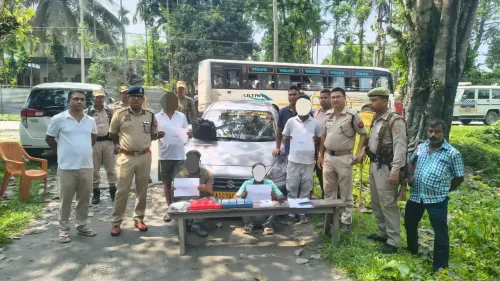
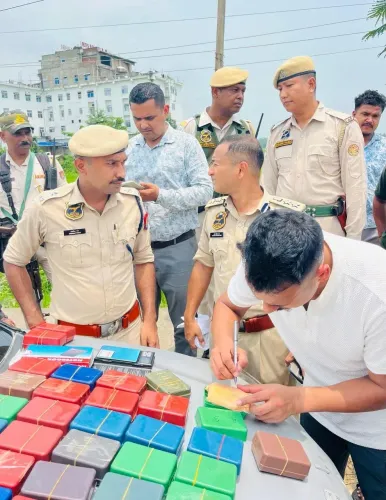
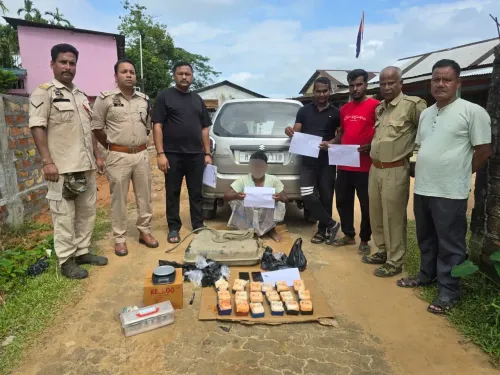
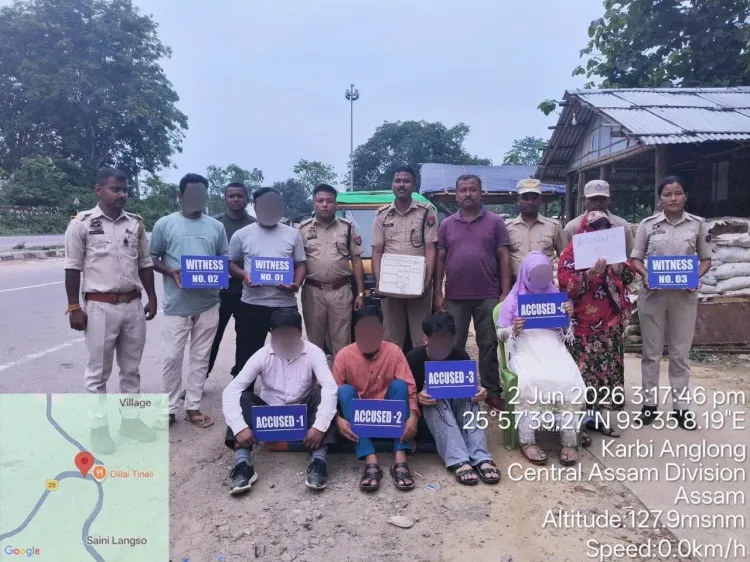
Assam Chief Minister Himanta Biswa Sarma on 3 June 2026 announced that Karbi Anglong Police had seized 13.482 kg of opium worth nearly ₹1 crore at Dillai Gate and apprehended five persons, calling the operation part of the state's continuing crackdown on narcotics trafficking. The Chief Minister congratulated the district unit and the wider Assam Police for the interdiction.
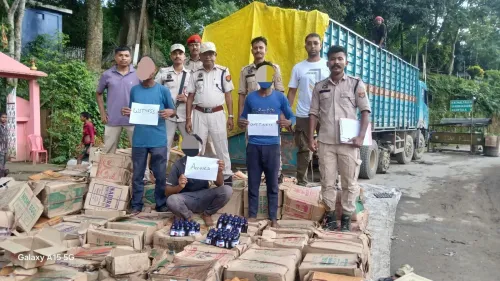
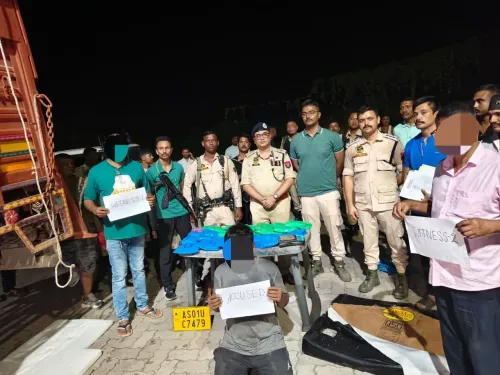
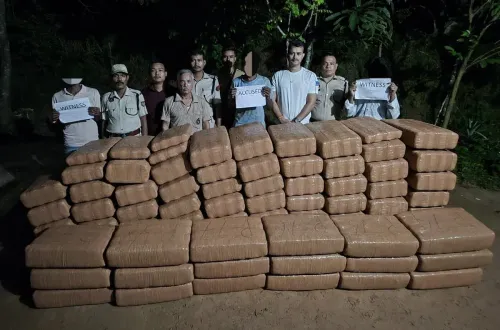
'Drugs have no safe passage through Assam,' Sarma wrote, tagging Karbi Anglong Police and Assam Police and using the hashtag #AssamAgainstDrugs. The post was accompanied by two images from the operation.
Context
The seizure took place at Dillai Gate in Karbi Anglong, a central Assam district whose hilly terrain straddles internal transit corridors linking other Northeast states. The area has periodically figured in narcotics interdiction operations, given its location along routes used to move contraband across the region.
Sarma, who has held the chief ministership since 2021 and serves as convenor of the North-East Democratic Alliance (NEDA), has frequently used his social media handle to publicise individual drug busts by district police units, framing them as proof points of a wider state policy.
Policy backdrop
The Assam government has pursued a zero-tolerance stance on narcotics trafficking, with the state administration repeatedly positioning anti-drug enforcement as a flagship law-and-order priority. District-level operations under the Narcotic Drugs and Psychotropic Substances (NDPS) Act have become a recurring feature of official communications from the Chief Minister's Office.
Assam's geography places it on overland routes long associated with the movement of opiates from Myanmar into mainland India. State police operations in interior districts typically complement central enforcement and, on occasion, coordinated actions with neighbouring states in the Northeast.
Stakeholders and impact
Anti-narcotics campaigners and public-health officials have argued that interdictions of the kind reported at Dillai Gate matter both for supply disruption and for signalling to trafficking networks. Youth groups in Assam's border and transit districts are among the most directly affected stakeholders, given concerns over local consumption patterns.
For the five persons apprehended in the operation, the next steps will involve proceedings under the NDPS Act, which prescribes stringent penalties for commercial-quantity offences. Forensic verification of the seized material and the chain of custody typically follow such field seizures.
What's next
The Chief Minister's post signals that further district-level operations are likely to be publicised in the coming weeks, as the state continues to build its anti-narcotics narrative ahead of upcoming legislative business. Observers will watch for any fresh state-level directives on narcotics control, as well as the progress of investigations linked to the Dillai Gate seizure.
The broader implication is political as much as administrative: by personally amplifying each major bust, Sarma is binding the BJP-led government's record in Assam to visible, measurable enforcement outcomes — a frame he is likely to lean on in continued messaging on governance.
Point of View
Converting routine policing into a visible governance metric. The underlying policy arc — treating Assam as a frontline state against opiate flows from Myanmar — has been consistent since 2016, but the cadence of CMO publicity has sharpened under Sarma. For observers, the question is less whether seizures will continue and more whether interdiction is being matched by demand-side interventions in affected districts.
NationPress
19 Sept 2026
Frequently Asked Questions
How much opium was seized at Dillai Gate in Assam?
Karbi Anglong Police seized 13.482 kg of opium worth nearly ₹1 crore at Dillai Gate, according to Chief Minister Himanta Biswa Sarma's announcement on 3 June 2026.
Where is Dillai Gate located?
Dillai Gate falls within the Karbi Anglong district of central Assam, a hilly area that lies along internal transit routes connecting parts of the Northeast.
How many people were arrested in the Karbi Anglong opium case?
Five persons were apprehended in the operation conducted by Karbi Anglong Police, as confirmed by the Chief Minister.
What law applies to opium seizures in India?
Opium seizures in India are prosecuted under the Narcotic Drugs and Psychotropic Substances (NDPS) Act, which prescribes stringent penalties for commercial-quantity offences.
What is Assam's policy on drug trafficking?
The Assam government has adopted a zero-tolerance stance on narcotics trafficking, with regular district-level interdictions publicised by the Chief Minister's Office as part of a wider law-and-order push.