Namaz offered inside Hanumangarhi premises, not on steps: Brij Bhushan
Synopsis
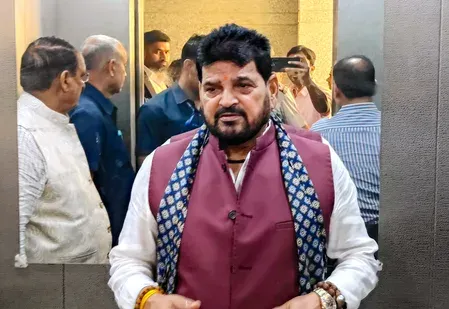
BJP leader Brij Bhushan Sharan Singh has confirmed that namaz was offered inside the 52-bigha premises of Hanumangarhi temple in Ayodhya — contradicting the impression left by his earlier denial, which he now says was limited only to the question of whether prayers were offered on the temple steps. The clarification reignites a controversy rooted in a 2003 incident and now entangled with CM Yogi Adityanath's attacks on the SP and Congress.
Key Takeaways
Brij Bhushan Sharan Singh confirmed on 22 July that namaz was offered inside the 52-bigha premises of Hanumangarhi temple in Ayodhya .
He clarified his earlier denial was specific to namaz being offered on the steps — not within the broader temple grounds.
Singh also walked back his remark that a Muslim 'constructed' Hanumangarhi, calling it an incomplete statement requiring scriptural context.
CM Yogi Adityanath had earlier alleged that previous SP governments allowed namaz on the temple steps, targeting the SP and Congress .
The controversy originates from a 2003 incident and has re-emerged as a political flashpoint in Uttar Pradesh .
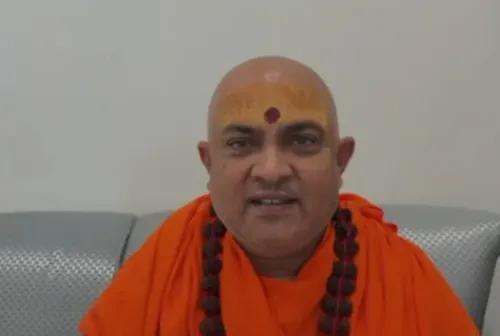
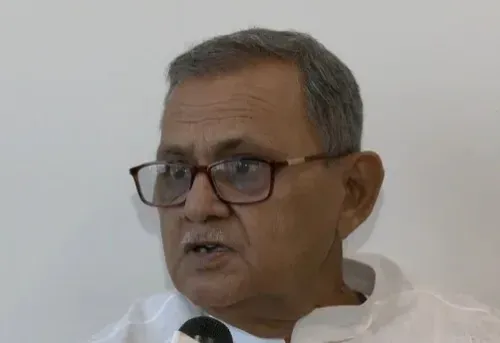
Brij Bhushan Sharan Singh, a senior Bharatiya Janata Party (BJP) leader, on Wednesday, 22 July clarified that namaz was indeed offered within the 52-bigha premises of the Hanumangarhi temple in Ayodhya — but not on its steps, as had been alleged. The statement marks a significant shift from his earlier denial and has deepened an already charged political controversy around one of Ayodhya's most revered shrines.
What Singh Actually Said
Singh explained that his original response was narrowly tailored to a media question about whether namaz had been offered on the steps of Hanumangarhi — which he denied. He now acknowledges that the incident occurred inside the temple's larger grounds.
'The question the media asked me was very straightforward — whether namaz had been offered on the steps of Hanumangarhi. I said no. Yes, I should have clarified that it was not offered on the steps, but whether it was offered within the premises, inside the 52-bigha area, or at the premises of a saint is a different matter,' Singh said.
The Construction Remark: A Clarification
Singh also walked back a separate statement in which he had said a Muslim had constructed Hanumangarhi, calling it 'only a partial statement' that lacked religious and historical context.
He invoked the Ayodhya Mahatmya, citing a scriptural reference in which Lord Shiva describes Lord Hanuman's presence at the northern gateway of Ayodhya. 'If Lord Shiva himself describes Hanumangarhi as existing, then it is not something that was built by any individual. It is a garhi (fortified shrine),' Singh said.
The Yogi Adityanath Angle
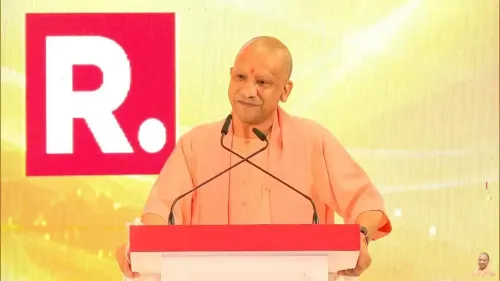
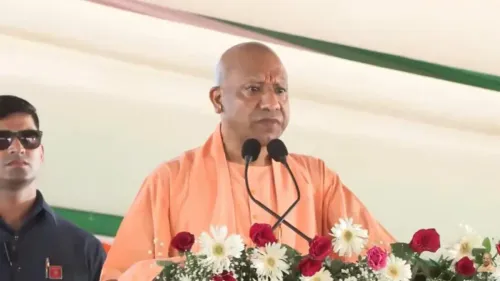
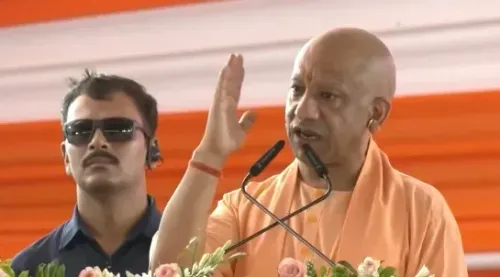
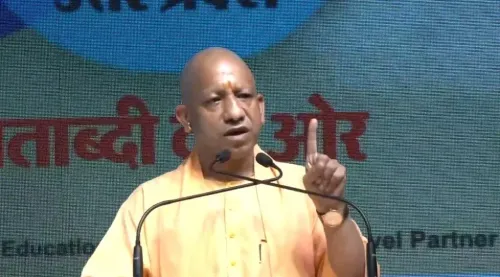
The controversy gained fresh momentum earlier this month when Uttar Pradesh Chief Minister Yogi Adityanath visited Ayodhya amid a separate row over alleged theft of Ram temple donation money. Addressing a public meeting in Bikapur, Adityanath alleged that previous Samajwadi Party (SP) governments had permitted namaz to be offered on the steps of Hanumangarhi.
'Imagine, can anyone have the Hanuman Chalisa recited inside the Jama Masjid? Can any government of the day, be it the Samajwadi Party or the Congress, make that happen? Then why did they commit that sin of letting namaz be offered on the steps of Hanumangarhi temple?' Adityanath said.
Roots of the Controversy
The dispute traces back to 2003, when claims about namaz being offered near Hanumangarhi first surfaced as a flashpoint in Uttar Pradesh politics. The episode has periodically resurfaced in electoral and religious discourse, and Singh's latest clarification — confirming the incident occurred within the premises while disputing the 'steps' framing — is unlikely to settle the debate.
With the BJP, SP, and Congress all now invested in the narrative, the Hanumangarhi episode is set to remain a contested element of the political landscape in the run-up to future state elections.
Point of View
But it does little to defuse the controversy; if anything, it hands the opposition a sharper line of attack. Notably, the BJP itself is now divided between Singh's admission and Yogi Adityanath's more sweeping allegation, which accused SP governments of permitting prayers on the steps specifically. That internal inconsistency — between two senior BJP figures — is what mainstream coverage has largely glossed over. The 2003 reference also signals that this is less a new controversy than a recurring one, revived whenever Ayodhya's religious politics need stoking.
NationPress
20 Oct 2026
Frequently Asked Questions
What did Brij Bhushan Sharan Singh say about namaz at Hanumangarhi?
Singh confirmed that namaz was offered within the 52-bigha premises of Hanumangarhi temple in Ayodhya, while clarifying that his earlier denial referred only to prayers being offered on the temple steps, not within the broader grounds.
What is the Hanumangarhi temple controversy about?
The controversy centres on claims that namaz was offered at or near the Hanumangarhi temple in Ayodhya, an incident reportedly dating to 2003. It has resurfaced as a political dispute involving the BJP, SP, and Congress, with competing claims about where exactly the prayers took place.
What did CM Yogi Adityanath allege about Hanumangarhi?
Uttar Pradesh Chief Minister Yogi Adityanath alleged at a public meeting in Bikapur that previous SP governments had allowed namaz to be offered on the steps of Hanumangarhi temple. He used the allegation to target both the SP and Congress.
Why did Brij Bhushan Singh clarify his remark about a Muslim constructing Hanumangarhi?
Singh said his original statement — that a Muslim had constructed Hanumangarhi — was incomplete. He invoked the Ayodhya Mahatmya, citing a scriptural reference in which Lord Shiva describes Hanumangarhi's existence, arguing the shrine predates any individual's construction.
When did the original Hanumangarhi namaz incident occur?
The incident is traced to 2003, when claims about namaz being offered near Hanumangarhi first became a subject of political debate in Uttar Pradesh. It has periodically resurfaced in religious and electoral discourse since then.