Namaz off roads, use designated spots or shifts: UP CM Yogi
Synopsis
UP Chief Minister Yogi Adityanath has flatly denied that road namaz still occurs in Uttar Pradesh and proposed shift-based congregations as an alternative to public-road gatherings — remarks that echo his 2026 West Bengal campaign trail and reinforce a consistent BJP governance posture on public-space religion.
Key Takeaways
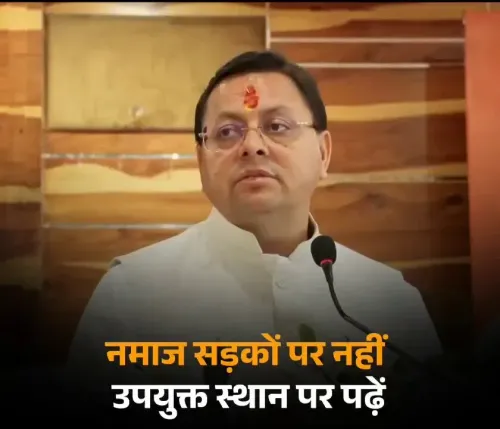
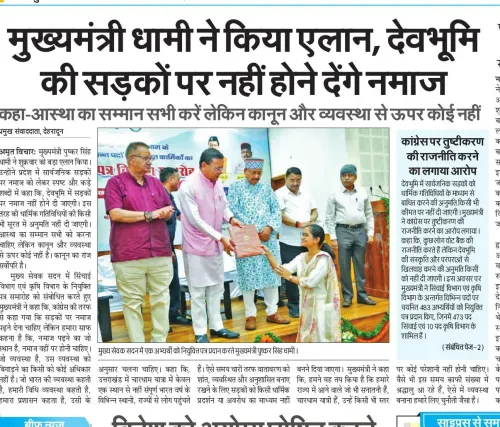
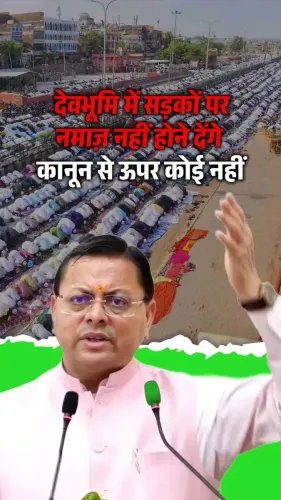
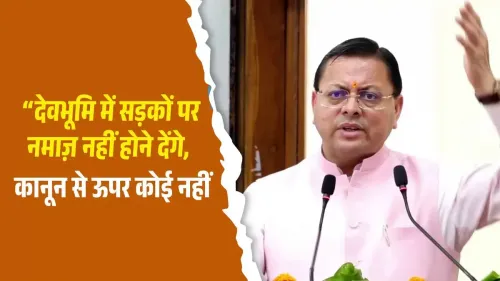
UP CM Yogi Adityanath on 18 May declared that namaz on public roads is not permitted in Uttar Pradesh .
He said roads are public infrastructure for traffic movement and cannot be blocked for any activity that causes inconvenience.
Yogi proposed conducting large religious gatherings in multiple shifts at designated venues when crowd size exceeds available space.
He shared the video of his remarks on his X handle, stating: 'We’ll get you to agree with love; if you don’t agree, we’ll adopt another method.' The Chief Minister made similar remarks during the 2026 West Bengal Assembly election campaign, targeting the TMC government.
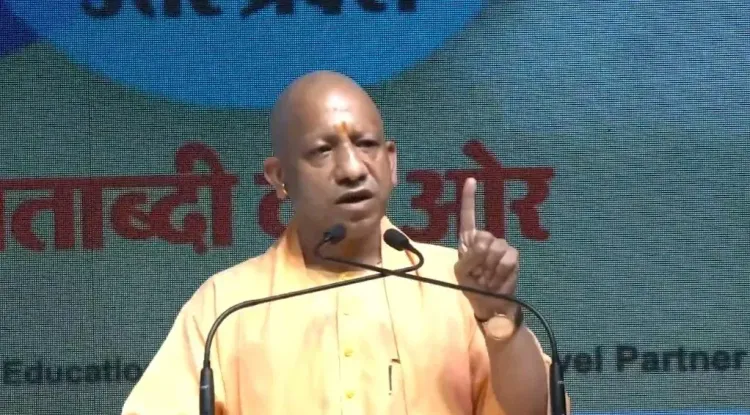
Uttar Pradesh Chief Minister Yogi Adityanath on Monday, 18 May stated unequivocally that offering namaz on public roads must not be permitted, asserting that roads exist for traffic movement and commuting — not for activities that block public spaces or inconvenience ordinary citizens. The remarks were made at a public event in Lucknow and were later shared by the Chief Minister on his X handle.
What Yogi Adityanath Said
Addressing the gathering, CM Yogi said he is routinely asked whether road namaz continues in Uttar Pradesh, and he flatly denied it. 'I am often asked whether people in Uttar Pradesh really do not offer namaz on the roads. I clearly say that this does not happen at all. You can go and see for yourself. Roads are for traffic movement,' he said.
He further argued that no individual holds the right to block an intersection or public thoroughfare for any purpose that impedes the movement of people or vehicles. 'Can anyone come and set up a drama at an intersection? What right does he have to stop traffic? They should go and offer it at the designated places,' he added.
Shifts as a Solution to Overcrowding
The Chief Minister proposed conducting large religious gatherings in multiple shifts when the crowd exceeds available space at designated venues, rather than allowing the overflow onto public roads. He recalled that when concerns were raised about accommodating large congregations, the administration had already suggested a shift-based approach.
'Some people told me, ‘How will this happen, our numbers are very large?’ We responded that we would offer it in shifts. If there is no space at home, then control the numbers. Unnecessary crowding should not be increased,' he said.
Rule of Law Applies Equally, Yogi Asserts
Yogi underlined that the rule of law applies equally to every citizen, and that public spaces cannot be used in ways that create civic disorder or inconvenience others. He was careful to frame the directive as a matter of public order rather than religious restriction. 'We will not stop namaz, but it should not happen on roads,' he stated.
Sharing the video on his X handle, CM Yogi added: 'We’ll get you to agree with love; if you don’t agree, we’ll adopt another method.'
Pattern of Similar Remarks
This is not the first time Yogi Adityanath has raised the road namaz issue. He made comparable remarks during the 2026 West Bengal Assembly election campaign, where he criticised the ruling All India Trinamool Congress (TMC) government over law-and-order concerns and religious gatherings in public spaces. The recurrence of the theme signals that it remains a consistent political and administrative position for the Bharatiya Janata Party (BJP)-led government in Uttar Pradesh. Critics argue that such statements, while framed around civic order, carry a communal undertone that can deepen social polarisation.
With assembly election cycles approaching in several states, the remarks are likely to reverberate beyond Lucknow and into the national political discourse.
Point of View
But it also functions as a campaign signal, as the repetition of this theme from Lucknow to the West Bengal trail makes clear. What mainstream coverage often underplays is the absence of any independent verification of the claim that the practice has been fully eliminated. The addendum — 'if you don’t agree, we’ll adopt another method' — is the line that deserves scrutiny: it is vague enough to be deniable, pointed enough to be heard as a warning. In a state heading toward local body elections, the line between governance and mobilisation is deliberately blurred.
NationPress
20 Sept 2026
Frequently Asked Questions
What did UP CM Yogi Adityanath say about namaz on roads?
Yogi Adityanath stated on 18 May that offering namaz on public roads is not permitted in Uttar Pradesh, arguing that roads exist solely for traffic movement. He said large religious gatherings must be held at designated places or conducted in shifts if crowd size is an issue.
Why did Yogi suggest offering namaz in shifts?
He proposed a shift-based system as a practical alternative when the number of worshippers exceeds the capacity of designated prayer venues, to prevent crowds from spilling onto public roads and causing disruption.
Has Yogi Adityanath made similar remarks before?
Yes. He made comparable statements during the 2026 West Bengal Assembly election campaign, criticising the TMC government over law-and-order issues and religious gatherings on public roads. The road namaz issue has been a recurring theme in his public addresses.
What did Yogi Adityanath post on X about the issue?
CM Yogi shared the video of his remarks on his X handle with the message: 'We’ll get you to agree with love; if you don’t agree, we’ll adopt another method.'
Is road namaz banned in Uttar Pradesh?
Yogi Adityanath has asserted that the practice no longer occurs in UP and has invited people to verify this themselves. However, no formal statutory ban was cited in his remarks; the restriction appears to be enforced through administrative directives rather than legislation.