CM Dhami Bans Namaz on Roads in Uttarakhand
Synopsis
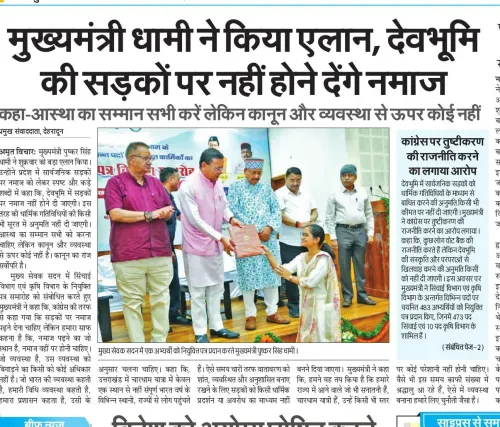
Uttarakhand CM Pushkar Singh Dhami on 22 May 2026 declared that namaz will not be allowed on public roads in the state, warning of strict action against those obstructing traffic or law and order. He invoked Uttarakhand's identity as Devbhoomi, a land of religious and spiritual tourism.
Key Takeaways
CM Pushkar Singh Dhami declared on 22 May 2026 that namaz will not be permitted on public roads in Uttarakhand .
He warned of 'strict action' against anyone creating obstruction in traffic movement or law and order.
Uttarakhand was described by the Chief Minister as Devbhoomi — a land of religious and spiritual tourism — where no one has the right to 'vitiate the atmosphere.' The directive aligns with Uttarakhand's 2024 Uniform Civil Code , the first state-level UCC in India, reflecting a consistent public-order governance posture.
Several BJP -governed states have issued similar restrictions on road-based religious congregations, citing traffic and public safety concerns.
Formal police or traffic circulars from Dehradun , Haridwar , and pilgrimage towns are the next expected administrative step.
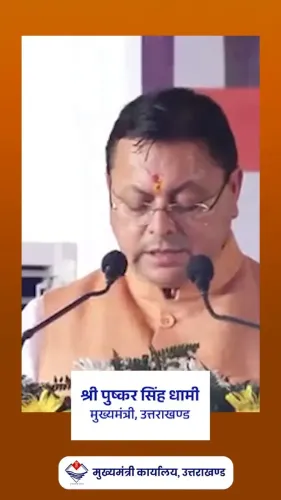
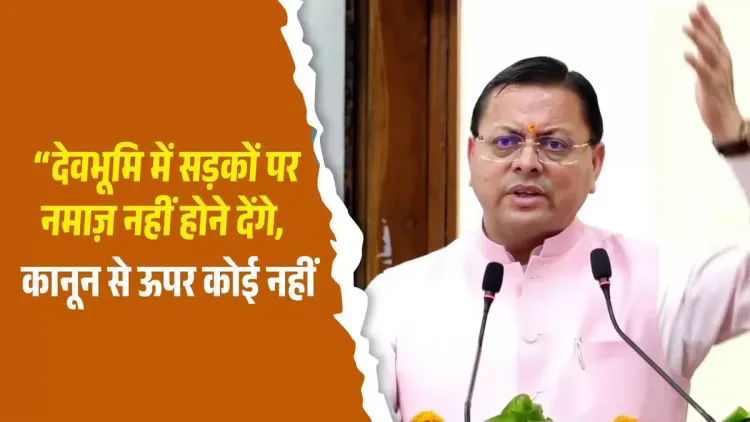
Uttarakhand Chief Minister Pushkar Singh Dhami on Friday, 22 May 2026, declared that namaz will not be permitted on public roads in the state, warning of strict action against anyone disrupting traffic movement or law and order. The statement, posted on his official X account, invoked Uttarakhand's identity as a land of religious and spiritual tourism.
What the Chief Minister Said
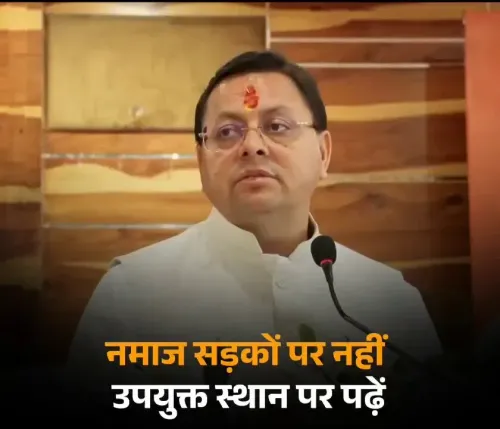
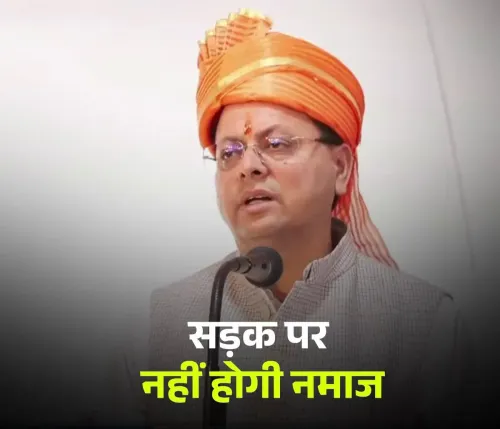
In Hindi, CM Dhami wrote: 'सड़कों पर नमाज़ की अनुमति नहीं देंगे, आवागमन और क़ानून व्यवस्था में अवरोध पैदा करने वालों पर सख़्त कार्रवाई करेंगे।' — translated: 'We will not allow namaz on roads; strict action will be taken against those who create obstruction in movement and law and order.' He added that Devbhoomi Uttarakhand is a land of religious and spiritual tourism, and 'no one has the right to vitiate the atmosphere here.'
The post accompanied a video, though no specific incident was cited in the text. The declaration is categorical in scope, applying to all public road-based religious congregations that obstruct civic movement.
Context
Uttarakhand is constitutionally and colloquially referred to as Devbhoomi — the 'Land of Gods' — home to major Hindu pilgrimage circuits including the Char Dham sites, Haridwar, and Rishikesh. Millions of pilgrims and tourists pass through the state each year, making unobstructed access to roads and public spaces a direct administrative and economic concern.
The state has previously positioned itself as a model for law-and-order governance under CM Dhami, who has served as Chief Minister since 2021. His government has consistently emphasised that religious practice must not encroach on public infrastructure or disrupt daily life.
Policy Backdrop
In 2024, Uttarakhand became the first state in India to implement a state-level Uniform Civil Code (UCC), signalling a legislative intent to apply uniform civic rules across communities. The current directive on road namaz fits within that broader administrative posture of enforcing equal application of public-order rules regardless of religious affiliation.
Several BJP-governed states have issued similar directives restricting religious congregations on public roads, citing traffic obstruction and public safety. Uttarakhand's particular emphasis on pilgrimage tourism lends additional administrative weight to such policies, as clogged arterial roads can directly impede access to shrine towns.
Stakeholders and Impact
Road commuters, pilgrims, and the broader tourism sector stand to be directly affected by enforcement of this directive. Pilgrimage routes in Haridwar, Rishikesh, and the Char Dham corridor are already under seasonal pressure during the Yatra season, and any congregation-related blockages amplify those bottlenecks.
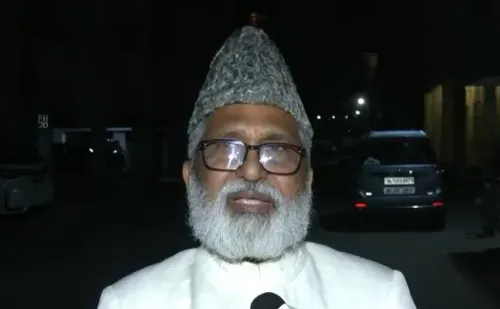
Muslim communities who have historically offered Friday prayers in open spaces near mosques — a common practice in dense urban areas across India — would be the primary group subject to the restriction. Civil liberties advocates and religious bodies may contest the directive's scope and implementation.
What's Next
Attention will now turn to whether the Uttarakhand government issues formal police or traffic circulars to Dehradun, Haridwar, and pilgrimage towns operationalising the Chief Minister's statement. Any response from local religious bodies or a potential petition before the Uttarakhand High Court would be the next significant development to watch. The directive's consistency with constitutional protections for religious practice is likely to be tested if enforcement actions follow.
Point of View
Tying public-order governance directly to the state's religious tourism brand. Coming after Uttarakhand's pioneering Uniform Civil Code in 2024, this directive reinforces a pattern of using civic-regulation language to enforce community-neutral rules that, in practice, disproportionately affect Muslim congregants who pray on roads due to mosque capacity constraints. The statement is notable for its pre-emptive, declaratory tone — no specific incident is cited — suggesting it is as much a political signal as an administrative order. Whether it translates into formal enforcement machinery or remains a rhetorical posture will determine its real-world significance.
NationPress
5 Oct 2026
Frequently Asked Questions
Why did CM Dhami ban namaz on roads in Uttarakhand?
CM Pushkar Singh Dhami stated that road namaz creates obstruction in traffic movement and law and order, which is incompatible with Uttarakhand's identity as a religious and spiritual tourism destination called Devbhoomi . No specific triggering incident was cited in his post.
Is offering namaz on roads illegal in Uttarakhand?
CM Dhami's statement declares that permission for road namaz will not be given and that strict action will follow any obstruction to traffic or law and order. Formal legal circulars operationalising this as a codified restriction had not been confirmed as of the date of the post.
What is Devbhoomi Uttarakhand?
Devbhoomi — meaning 'Land of Gods' — is the official and popular name for Uttarakhand , reflecting its status as home to major Hindu pilgrimage sites including the Char Dham circuit, Haridwar , and Rishikesh . The state draws millions of religious tourists annually.
What is the Uttarakhand Uniform Civil Code?
In 2024 , Uttarakhand became the first Indian state to implement a Uniform Civil Code (UCC) , mandating equal application of civil laws — such as those governing marriage, inheritance, and adoption — across all religious communities in the state.
Have other states banned namaz on public roads?
Yes, several BJP -governed states have issued directives restricting religious congregations on public roads, citing traffic disruption and public safety. Uttarakhand's directive follows this broader pattern while adding the specific context of protecting pilgrimage route access.