Namaz on roads wrong, I back Yogi's stand: Uttarakhand Madrasa Board chief
Synopsis
In an unusual cross-community endorsement, the chairman of Uttarakhand's Madrasa Education Board has publicly backed CM Yogi Adityanath's stand against namaz on public roads — arguing that genuine Islamic knowledge would lead Muslim leaders to the same conclusion. It is a rare moment of religious establishment alignment with a BJP chief minister on a deeply contested public-order issue.
Key Takeaways
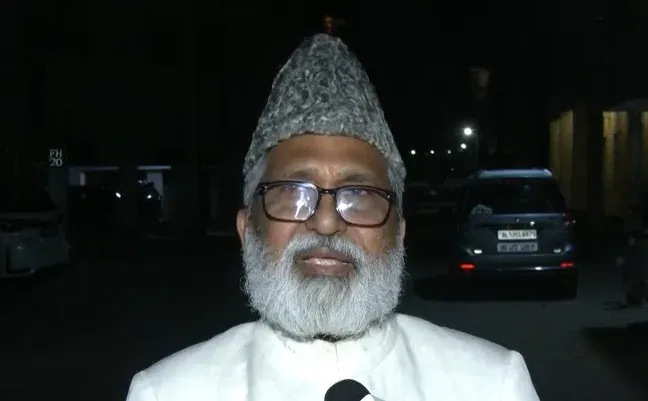
Mufti Shamoon Qasmi , chairman of the Uttarakhand Madrasa Education Board , on 19 May backed CM Yogi Adityanath's call against namaz on public roads.
CM Yogi on Monday said roads are for traffic movement and should not be blocked for religious activities, suggesting prayers be held at designated spots or in shifts.
Qasmi argued that blocking roads endangers emergency services, citing the example of ambulances being unable to pass.
He rejected comparisons between namaz on roads and Hindu processions such as Rath Yatras, saying religion must be practised consistently, not selectively.
Qasmi said self-proclaimed Muslim community representatives who oppose Yogi's remarks lack proper understanding of Islamic teachings.
He noted that in Uttarakhand , madrasa authorities actively educate people against offering namaz on public roads.
Uttarakhand Madrasa Education Board Chairman Mufti Shamoon Qasmi on Tuesday, 19 May backed Uttar Pradesh Chief Minister Yogi Adityanath's position against offering namaz on public roads, arguing that those who claim to speak for the Muslim community frequently misunderstand the core principles of Islam.
What CM Yogi Said
CM Yogi Adityanath on Monday stated that public roads exist for traffic movement and daily commuting, and should not be blocked by activities that inconvenience citizens. He suggested that large religious gatherings be held at designated spaces and, where numbers are high, conducted in shifts to prevent overcrowding and disruption.
Qasmi's Support and Reasoning
Qasmi said CM Yogi's remarks must be read in the context of public convenience and civic discipline. 'What CM Yogi Adityanath has said is something I understand because he is a saint. A saint not only primarily knows his own religion, but also has knowledge of other religions as well. I support CM Yogi's statement that namaz should not be offered on roads,' Qasmi said.
He stressed that roads are critical arteries for commuters and emergency services alike. 'People use roads to commute. Someone might be ill and would want to go to the hospital, or an ambulance might want to pass through. And in such a situation, if people offer namaz on roads, it is not the right thing to do. That is why I support CM Yogi's remarks. He has said a very nice thing that if there are many people, namaz can be conducted in shifts,' he added.
On Comparisons With Religious Processions
Qasmi also pushed back against arguments that equate namaz on roads with Hindu religious processions such as Rath Yatras. He maintained that religion must be practised sincerely and consistently, not selectively. 'People try to compare these things with the Rath Yatras and other processions. This is not right. I adopt my religion as a whole and not in a hypocritical way,' he said.
A Rebuke of Self-Proclaimed Muslim Representatives
Taking direct aim at community leaders who have criticised CM Yogi's remarks, Qasmi argued that a deeper grounding in Islamic principles would lead them to a different conclusion. 'These people who claim to be representatives of the Muslim community, if they gain true knowledge of Islam, they will thank CM Yogi for this announcement. In Uttarakhand, you will never see people reading namaz on roads, and we also educate people about how this is not the right thing to do,' he said.
Notably, this is not the first time the namaz-on-roads debate has surfaced in Indian public discourse — it has periodically drawn political and religious commentary across several states. Qasmi's endorsement, coming from within a state madrasa establishment, adds an unusual dimension to a debate that is typically framed along communal lines.
Point of View
But the head of a state madrasa regulatory body. His framing, that genuine Islamic scholarship supports civic order, cuts against the narrative that Yogi's remarks are inherently anti-Muslim. What mainstream coverage risks missing is the internal Muslim discourse this surfaces: the tension between community leaders who see road namaz as a rights issue and clerics who view it as an avoidable provocation. The comparison with Rath Yatras, which Qasmi explicitly rejected, remains the live fault line — and one that neither the government nor opposition has addressed with any consistency.
NationPress
15 Oct 2026
Frequently Asked Questions
What did CM Yogi Adityanath say about namaz on public roads?
CM Yogi Adityanath stated on Monday that public roads are meant for traffic movement and daily commuting, and should not be blocked for religious activities. He suggested large religious gatherings be held at designated places and, if numbers are high, conducted in shifts to avoid disruption.
Who is Mufti Shamoon Qasmi and why does his support matter?
Mufti Shamoon Qasmi is the Chairman of the Uttarakhand Madrasa Education Board, a state-level regulatory authority overseeing Islamic education. His backing of CM Yogi's position is notable because it comes from within a Muslim religious establishment rather than from a political ally.
What reason did Qasmi give for opposing namaz on roads?
Qasmi argued that roads are essential for commuters and emergency services, and that blocking them — even for prayers — could prevent ambulances from passing and endanger lives. He said this position is consistent with Islamic principles of public welfare.
How did Qasmi respond to comparisons with Hindu religious processions?
Qasmi rejected the comparison with Rath Yatras and other processions, saying the two should not be equated. He stated that religion must be adopted wholly and sincerely, not selectively invoked to justify specific practices.
What is the situation regarding namaz on roads in Uttarakhand?
According to Qasmi, namaz on public roads is not practised in Uttarakhand, and the Madrasa Education Board actively educates people that doing so is inappropriate. He held this up as a model for other states.