Road namaz row: Congress backs Yogi, demands uniform rules for all faiths
Synopsis
Congress has offered Yogi Adityanath an unexpected hand — backing his road namaz crackdown, but with a catch: any ban must apply equally to Hindu, Muslim, Sikh, and Christian gatherings alike. It is a politically loaded move that puts the onus squarely on the BJP government to prove its enforcement is not selective.
Key Takeaways
Congress MP Pramod Tiwari said religious practice must not inconvenience others, implicitly endorsing CM Yogi Adityanath's stance on road namaz.
Congress spokesperson Surendra Rajput demanded a uniform policy covering all religions — Hindu, Muslim, Sikh, and Christian — for any road-gathering restrictions.
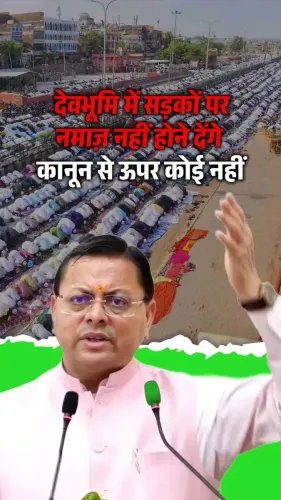
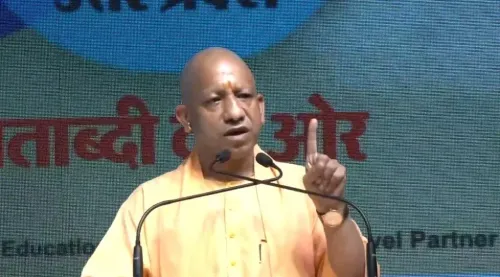
CM Yogi Adityanath warned in Lucknow that blocking traffic for congregational prayers ahead of Bakrid would not be permitted.
Srinivas fully backed Yogi, also questioning why Waqf lands were not being used for prayers.
The controversy comes with Bakrid approaching, intensifying political debate over public space and religious practice in Uttar Pradesh .
Congress MP Pramod Tiwari on Tuesday said religious freedom must not come at the cost of public convenience, offering a qualified endorsement of Uttar Pradesh Chief Minister Yogi Adityanath's directive against offering namaz on public roads — while insisting that any such restriction must apply equally to all religions across the country.
What Congress Said
Tiwari stated plainly: 'I only want to say that everyone has religious freedom, and people should practice their faith in a manner they consider appropriate, provided it does not cause inconvenience to others.'
Congress spokesperson Surendra Rajput went further, calling for a legally uniform policy. 'There must be a uniform policy applicable to all religions, Hindu, Muslim, Sikh, and Christian alike. If a ban is to be imposed on offering Namaz on the streets, then all religious events and gatherings held on public roads by other faiths must be subjected to an equal and corresponding ban; only then can such a measure be deemed impartial,' Rajput said.
CM Yogi's Original Warning
The Congress reaction came after Chief Minister Yogi Adityanath issued a stern warning earlier in the day at an event in Lucknow, stating that blocking traffic for congregational prayers ahead of Bakrid would not be tolerated. He said the administration would first attempt persuasion but would not hesitate to enforce public order norms if compliance was not achieved voluntarily.
BJP's Backing and the Waqf Question
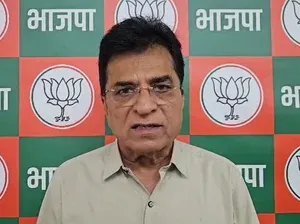
BJP leader T.R. Srinivas backed the Chief Minister unreservedly, arguing that prayers blocking public movement inconvenience people of other faiths. Srinivas also questioned why the Muslim community was not utilising available Waqf lands for congregational prayers. 'Are you trying to do this as a show of strength? Please follow the rule of the land,' he said, aligning fully with Yogi Adityanath's position.
The Broader Context
The debate has intensified with Bakrid approaching, a festival that typically sees large congregational prayers, sometimes spilling onto public roads in densely populated areas. This is not the first time the issue of road namaz has sparked political controversy in Uttar Pradesh — the state has previously seen local administrations warn against the practice, though a comprehensive statewide policy has not been formalised. Notably, the Congress party's conditional support marks a departure from its usual posture on minority religious rights, signalling a broader political recalibration ahead of upcoming state elections.
What Happens Next
The key question is whether the Uttar Pradesh government will codify its stance into a formal, religion-neutral order — something Congress has explicitly demanded. Without such uniformity, critics argue, any enforcement risks being seen as selectively targeting one community. The administration's next steps, particularly as Bakrid draws closer, will be closely watched by both religious groups and civil liberties organisations.
Point of View
The party sidesteps accusations of minority appeasement while putting the BJP in an uncomfortable position: either extend restrictions to all religious gatherings on public roads — including Hindu processions and events — or face charges of selective enforcement. The BJP has historically been reluctant to apply such restrictions symmetrically. What is missing from the entire debate is a clear legal framework: India has no codified national policy on religious use of public roads, and without one, enforcement will remain discretionary, contested, and politically weaponised on both sides.
NationPress
2 Oct 2026
Frequently Asked Questions
What did Congress say about CM Yogi's road namaz warning?
Congress MP Pramod Tiwari backed the principle that religious activities must not inconvenience others, aligning broadly with CM Yogi Adityanath's stance. However, the party insisted that any restriction must apply uniformly to all religions, not just Muslims offering namaz.
What exactly did CM Yogi Adityanath say about road namaz?
Chief Minister Yogi Adityanath warned at an event in Lucknow that blocking public roads for congregational prayers ahead of Bakrid would not be permitted. He said authorities would first try persuasion, and if that failed, would take enforcement measures to maintain public order.
Why is the road namaz issue politically significant now?
The debate has flared up ahead of Bakrid, when large congregational prayers often spill onto public roads in densely populated areas of Uttar Pradesh. The timing, combined with upcoming political cycles, has made it a flashpoint between the BJP and opposition parties.
What is the Congress demand regarding the road namaz ban?
Congress spokesperson Surendra Rajput demanded a uniform policy applicable to all religions — Hindu, Muslim, Sikh, and Christian. He argued that a ban on road namaz is impartial only if all religious gatherings on public roads, regardless of faith, are treated identically.
What did BJP leader T.R. Srinivas say about the controversy?
BJP leader T.R. Srinivas fully supported CM Yogi Adityanath, saying it was right to object to prayers blocking public movement. He also questioned why the Muslim community was not using available Waqf lands for congregational prayers instead of public roads.