CM Dhami: No Namaz on Roads in Uttarakhand
Synopsis
Chief Minister Pushkar Singh Dhami has declared that namaz will not be permitted on public roads in Uttarakhand, invoking the state's identity as Devbhoomi. The statement extends a pattern of BJP-governed states restricting public religious observance on thoroughfares and is expected to prompt formal government orders and possible legal challenges.
Key Takeaways
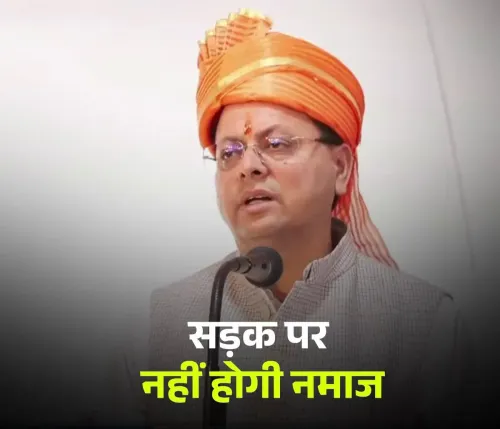
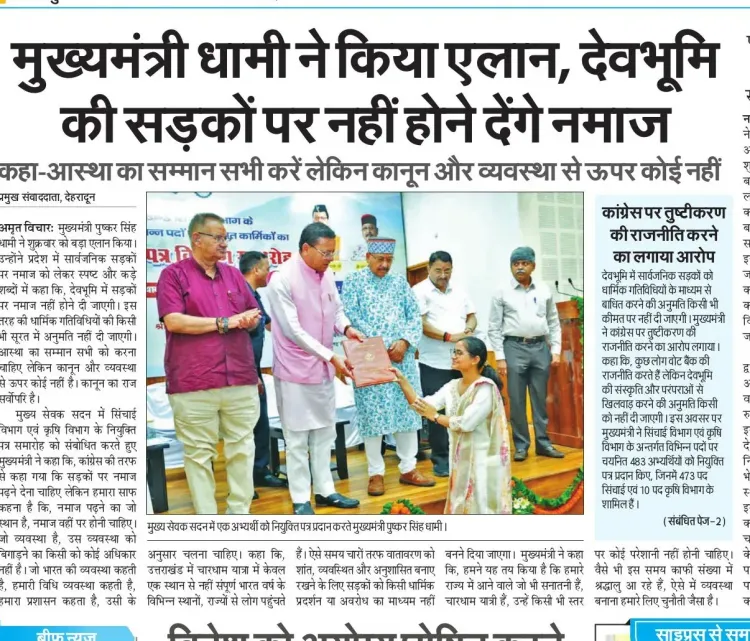
CM Pushkar Singh Dhami declared on 23 May 2026 that offering namaz on public roads will not be allowed in Uttarakhand .
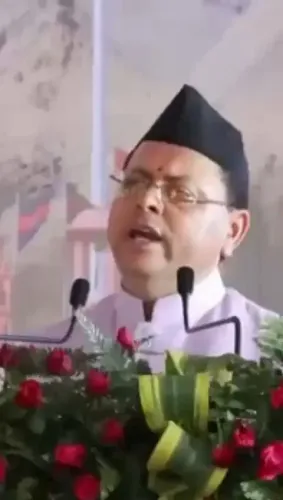
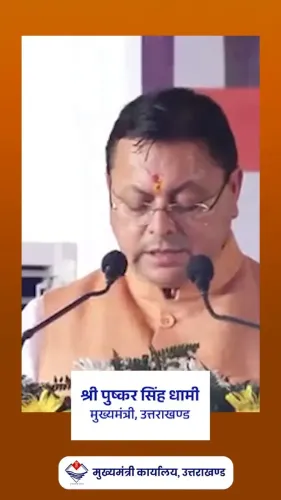
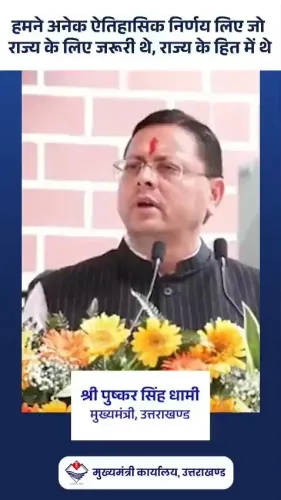
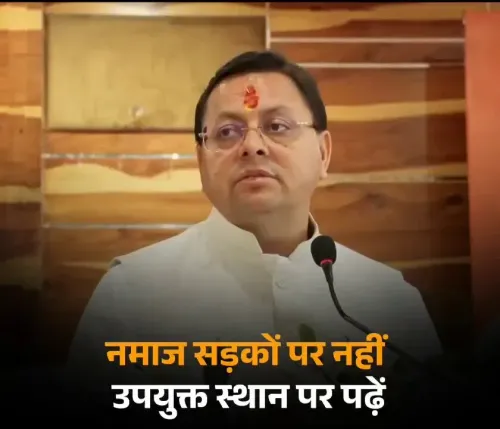
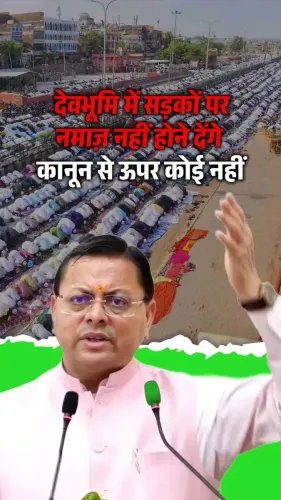
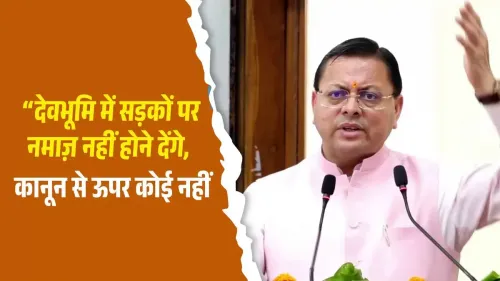
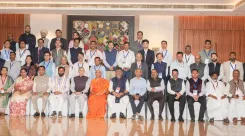
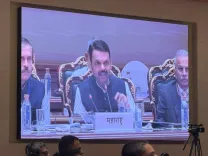
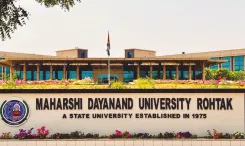
The announcement was made by the Chief Minister's Office of Uttarakhand on X, accompanied by 4 images .
Uttarakhand is officially promoted as Devbhoomi and has been governed by the BJP since 2017 .
The state passed the Uniform Civil Code in 2024 , the first Indian state to do so, reflecting an assertive cultural-identity policy stance.
Formal government orders to district administrations and possible High Court petitions are anticipated as next steps.
Muslim residents in cities such as Dehradun and Haridwar are the most directly affected community.
The Chief Minister's Office of Uttarakhand on Saturday, 23 May 2026 shared a statement from Chief Minister Pushkar Singh Dhami declaring that offering namaz on public roads will not be permitted in the state. The announcement, made in the context of Uttarakhand's identity as Devbhoomi (land of the gods), signals a firm administrative position on the use of public thoroughfares for religious observance.
Context
The post quotes CM Dhami directly: 'Devbhoomi Uttarakhand mein sadon par nahin padhne denge namaz' — 'We will not allow namaz to be offered on the roads in Devbhoomi Uttarakhand.' The statement does not cite a specific incident as its trigger, but comes amid periodic tensions in several Indian states over religious gatherings on public roads, particularly on Fridays. Uttarakhand is home to major Hindu pilgrimage centres including Haridwar, Rishikesh, Kedarnath, and Badrinath, and the state government has consistently invoked its Devbhoomi status in policy framing.
Policy Backdrop
Uttarakhand has been governed by the Bharatiya Janata Party (BJP) since 2017, and CM Dhami has held office since 2021. The state enacted the Uttarakhand Prohibition of Unlawful Conversion of Religion Act in 2020, part of a broader legislative push emphasising the state's religious and cultural character. Restrictions on public religious observance on roads have appeared across multiple BJP-governed states, framed variously as public order, traffic management, and cultural heritage measures. Uttarakhand has also been at the centre of discussions around a Uniform Civil Code, which the state assembly passed in 2024, making it the first state in independent India to do so.
Stakeholders and Impact
Muslim residents in Uttarakhand, concentrated in towns such as Dehradun, Haridwar, and Roorkee, are the most directly affected community. Friday congregational prayers sometimes spill onto adjacent roads when mosque capacity is insufficient, a practice that has drawn objections in several states. Urban traffic authorities and district administrations will be expected to enforce any formal orders that follow from the CM's statement. Opposition parties and Muslim religious organisations are expected to respond; no formal statement from either had been recorded at the time of publication.
What's Next
The announcement is likely to be followed by formal government orders to district magistrates and police superintendents across Uttarakhand, translating the CM's public position into enforceable directives. Legal challenges through the Uttarakhand High Court or the Supreme Court of India remain a possibility, given that restrictions on religious practice in public spaces carry constitutional implications under Articles 25 and 26. Statements from state opposition leaders and national minority bodies will shape the political temperature around this directive in the coming days.
Point of View
A strategy that simultaneously consolidates the party's Hindu-identity voter base and invites legal scrutiny. The invocation of Devbhoomi elevates the directive beyond routine traffic management into a statement of civilisational priority, signalling that Uttarakhand intends to position itself as a model for cultural-heritage governance ahead of future electoral cycles. The absence of a cited specific incident suggests this is a proactive policy signal rather than a reactive enforcement measure. Whether formal orders follow — and how courts respond — will determine whether this remains political messaging or becomes actionable law.
NationPress
9 Oct 2026
Frequently Asked Questions
What did CM Dhami say about namaz on roads in Uttarakhand?
CM Pushkar Singh Dhami stated on 23 May 2026 that offering namaz on public roads will not be permitted in Uttarakhand, describing the state as Devbhoomi.
Is offering namaz on roads illegal in Uttarakhand?
CM Dhami's statement signals a firm government position against the practice, but formal legal orders from district administrations would be required to make enforcement actionable. No specific law banning roadside namaz exclusively was cited in the announcement.
Why is Uttarakhand called Devbhoomi?
Uttarakhand is called Devbhoomi, meaning 'land of the gods', because it is home to major Hindu pilgrimage sites including Kedarnath, Badrinath, Haridwar, and Rishikesh. The BJP government has consistently used this identity to frame its cultural and governance policies.
Has Uttarakhand taken similar religious policy steps before?
Yes. Uttarakhand enacted the Prohibition of Unlawful Conversion of Religion Act in 2020 and became the first Indian state to pass a Uniform Civil Code in 2024, reflecting an ongoing emphasis on cultural-identity legislation under CM Dhami.
Can CM Dhami's namaz ban be challenged in court?
Legal experts are likely to examine the directive against Articles 25 and 26 of the Constitution, which protect freedom of religion. Petitions in the Uttarakhand High Court or the Supreme Court of India are a plausible next step if formal orders are issued.