Women driving India's growth: Key milestones in Nari Shakti push
Synopsis
Indian women took eight of 13 gold medals at Commonwealth Games 2026 in Glasgow — and that podium sweep is just the headline number. From 158 NDA cadets to ₹12.18 lakh crore in SHG credit access and a constitutional guarantee of 33% parliamentary seats, the 'Sashakt Nari, Sashakt Bharat' document released ahead of Independence Day 2026 maps a structural shift: women are no longer at the margins of India's growth story.
Key Takeaways
Indian women athletes won 8 of India's 13 gold medals at the Commonwealth Games 2026 in Glasgow ; India finished fourth overall with 39 medals .
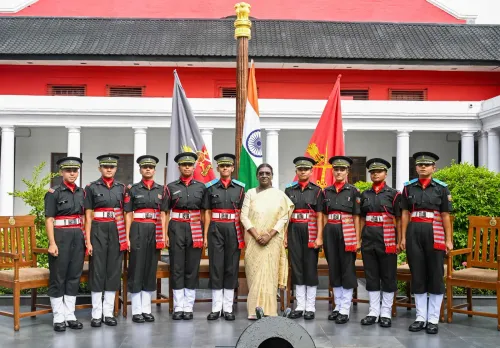
158 women cadets have joined the National Defence Academy since 2022 ; the first batch of 17 graduated in 2025 .
The sex ratio improved to 1,020 females per 1,000 males (NFHS-5, 2019–21), up from 943 in Census 2011.
PMMVY has disbursed over ₹20,571 crore in maternity benefits to more than 5.13 crore beneficiaries.
SHGs under DAY-NRLM have accessed bank credit worth more than ₹12.18 lakh crore ; the Lakhpati Didi Scheme covers over 10 crore women .
The Nari Shakti Vandan Adhiniyam, 2023 guarantees 33% reservation for women in Parliament and state assemblies, pending post-census delimitation.
From the Commonwealth Games podium to the National Defence Academy, Indian women have shifted decisively from being policy beneficiaries to active architects of the country's development. A government document titled 'Sashakt Nari, Sashakt Bharat', released ahead of Independence Day 2026, catalogues the breadth of this transformation under the Union government led by Prime Minister Narendra Modi, framing women's empowerment as central to the vision of a Viksit Bharat by 2047.
Sports and Defence: Breaking Barriers
At the Commonwealth Games 2026 in Glasgow, Indian women athletes claimed eight of the nation's 13 gold medals, anchoring a campaign that saw India finish fourth overall with 39 medals. The performance underscored a generational shift in women's competitive sport.
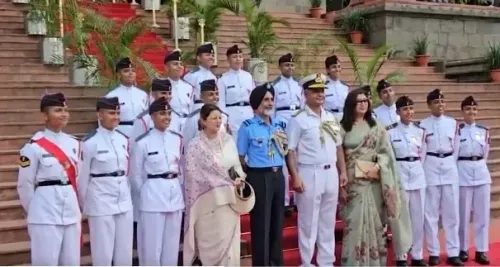
In defence, 2025 marked a landmark: the first batch of 17 women cadets graduated from the National Defence Academy (NDA). By early 2026, a cumulative 158 women cadets had enrolled at the NDA since the doors opened to them in 2022 — a structural change in an institution that had been exclusively male for seven decades.
Health and Maternal Care
Maternal health indicators have shown measurable improvement. Institutional births have risen to 90.6 per cent nationally, a significant jump from a decade ago. The Pradhan Mantri Matru Vandana Yojana (PMMVY) has reached more than 5.13 crore beneficiaries as of end-July 2026, disbursing over ₹20,571 crore in maternity benefits through direct benefit transfers. Women receive ₹5,000 in two instalments for their first living child, and ₹6,000 if the second child is a girl.
The Pradhan Mantri Surakshit Matritva Abhiyan (PMSMA) has conducted more than 6.85 crore antenatal check-ups, flagging over one crore high-risk pregnancies for focused intervention. The Janani Shishu Suraksha Karyakram (JSSK) supports nearly two crore pregnant women annually with free institutional deliveries, including Caesarean sections, plus free transport, medicines, and diagnostics.
On nutrition, Saksham Anganwadi and Poshan 2.0 now serve nearly nine crore beneficiaries, covering pregnant women, lactating mothers, and adolescent girls. A nationwide Human Papillomavirus (HPV) vaccination campaign — HPV being a common viral infection linked to cervical cancer — has further strengthened preventive care. Under Ayushman Bharat Pradhan Mantri Jan Arogya Yojana (AB-PMJAY), 22.48 crore women have received health cards enabling cashless access to secondary and tertiary care.
The Beti Bachao Beti Padhao (BBBP) programme, targeting the declining child sex ratio, has contributed to a measurable shift: according to the National Family Health Survey-5 (NFHS-5) of 2019–21, the sex ratio improved to 1,020 females per 1,000 males, up from 943 females per 1,000 males recorded in the Census 2011.
Education and STEM Access
Female school enrolment reached nearly 12 crore in 2025–26, while higher education enrolment stood at 2.18 crore in 2022–23. Schemes including Samagra Shiksha, Kasturba Gandhi Balika Vidyalayas (KGBV), and the AICTE Pragati Scholarship have worked to reduce dropout rates and widen access.
Women's presence in Science, Technology, Engineering, and Mathematics (STEM) has grown notably. The Vigyan Jyoti Scheme has benefited more than 1.12 lakh girls, and supernumerary seats at IITs and NITs have doubled female representation. Women now constitute more than 53 per cent of University Grants Commission–National Eligibility Test (UGC-NET) Junior Research Fellowship scholars in STEM subjects. The newly launched NAVYA initiative targets digital skills for adolescent girls, focusing on careers in cybersecurity, artificial intelligence, and digital marketing.
Economic Empowerment and Political Representation
Self Help Groups (SHGs) under the Deendayal Antyodaya Yojana – National Rural Livelihoods Mission (DAY-NRLM) have collectively accessed bank credit worth more than ₹12.18 lakh crore. The Lakhpati Didi Scheme aims to ensure annual incomes of at least ₹1 lakh for SHG members, with coverage extending to more than 10 crore women nationwide. Skill development under the Pradhan Mantri Kaushal Vikas Yojana (PMKVY) has trained millions, with women comprising nearly 45 per cent of beneficiaries.
On housing, nearly 96 lakh houses under Pradhan Mantri Awas Yojana (PMAY)-Gramin were allotted exclusively to women, while PMAY-Urban 2.0 sanctioned 1.25 crore houses, with one crore allotted to women.
Politically, women now account for nearly half of India's electorate, and 14.5 lakh serve as elected Panchayati Raj representatives. The landmark Nari Shakti Vandan Adhiniyam, 2023 — the 106th Constitutional Amendment Act — mandates 33 per cent reservation for women in the Lok Sabha, state legislative assemblies, and the Delhi Assembly, though it will take effect only after the post-census delimitation exercise is completed.
Women's safety infrastructure has also expanded: more than 15 lakh One Stop Centres and 642 Nari Adalats are operational under Mission Shakti, and the Women Helpline (181) has assisted more than one crore women. As India counts down to Independence Day 2026, the data points to measurable gains — with the pace and depth of implementation set to determine whether the Viksit Bharat 2047 vision translates into lived reality for the country's women.
Point of View
Sashakt Bharat' document is a compelling aggregation of numbers, but aggregation is not the same as transformation. The 33% parliamentary reservation under the Nari Shakti Vandan Adhiniyam remains contingent on a delimitation exercise with no fixed timeline — meaning the most consequential political reform for women could be a decade away. The sex ratio improvement and the NDA milestone are genuine structural shifts; the SHG credit figures, while large, say more about access to debt than about income mobility. The Lakhpati Didi target of ₹1 lakh annually — roughly ₹8,300 a month — sets a floor that, in urban cost terms, barely clears subsistence. India's women are undeniably more visible in every domain the document surveys; the harder question is whether visibility is translating into commensurate agency, safety, and economic security at scale.
NationPress
29 Sept 2026
Frequently Asked Questions
How did Indian women perform at the Commonwealth Games 2026?
Indian women athletes won eight of the country's 13 gold medals at the Commonwealth Games 2026 in Glasgow, playing a decisive role in India finishing fourth overall with 39 medals. It was described as a historic campaign for Indian women's sport.
What is the Nari Shakti Vandan Adhiniyam, 2023?
It is the 106th Constitutional Amendment Act, which provides 33 per cent reservation for women in the Lok Sabha, state legislative assemblies, and the Delhi Assembly. The reservation will take effect after the post-census delimitation exercise is completed.
How many women have benefited from the PMMVY maternity scheme?
More than 5.13 crore women have benefited from the Pradhan Mantri Matru Vandana Yojana as of end-July 2026, with over ₹20,571 crore disbursed in maternity benefits. The scheme provides ₹5,000 for the first living child and ₹6,000 if the second child is a girl.
What progress has India made on the child sex ratio?
According to the National Family Health Survey-5 (2019–21), India's sex ratio improved to 1,020 females per 1,000 males, up significantly from 943 females per 1,000 males recorded in Census 2011. The Beti Bachao Beti Padhao programme is credited as a key driver of this shift.
What is the Lakhpati Didi Scheme?
The Lakhpati Didi Scheme aims to ensure a sustainable annual income of at least ₹1 lakh for members of Self Help Groups (SHGs) under the DAY-NRLM programme. It currently covers more than 10 crore women across India, supported by SHGs that have collectively accessed over ₹12.18 lakh crore in bank credit.