Indian Navy defuses missile warhead from tanker MT Olympic Life off Kochi
Synopsis
An unexploded missile warhead lodged inside a fuel tank of a crude oil tanker — the kind of scenario that could have triggered a catastrophic explosion at sea or in port. The Indian Navy's EOD team pulled it off safely, and the recovered ordnance now holds potential intelligence clues about who targeted MT Olympic Life off Oman on 26 May.
Key Takeaways
The Indian Navy recovered an unexploded missile warhead from crude oil tanker MT Olympic Life , confirmed on 11 June 2025 .
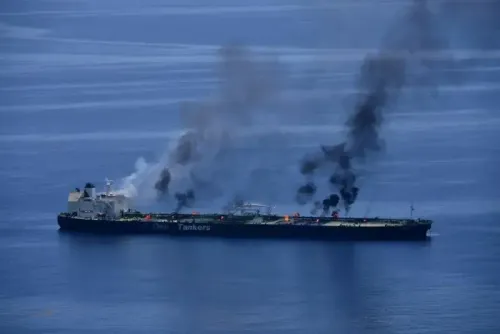
The Marshall Islands-flagged vessel reported a hull explosion off the coast of Oman on 26 May , while sailing from Fujairah, UAE to Kochi .
A specialist EOD team from Southern Naval Command, Kochi confirmed the projectile had penetrated the hull and lodged inside a fuel storage tank .
The warhead was safely extracted using advanced diagnostic methods to first isolate the detonation mechanism.
The recovered ordnance has been moved to a secure facility for forensic examination; the missile's origin has not yet been disclosed.
The alert was routed through the Information Fusion Centre – Indian Ocean Region (IFC-IOR) , highlighting its role in coordinating regional maritime security responses.
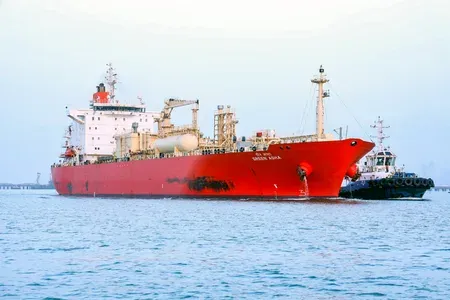
The Indian Navy has successfully completed a high-risk Explosive Ordnance Disposal (EOD) operation, recovering an unexploded missile warhead from the crude oil tanker MT Olympic Life near Kochi, officials confirmed on Thursday, 11 June. The Marshall Islands-flagged vessel had reported an explosion in its hull while transiting off the coast of Oman on 26 May, en route from Fujairah, UAE to Kochi.
How the Emergency Unfolded
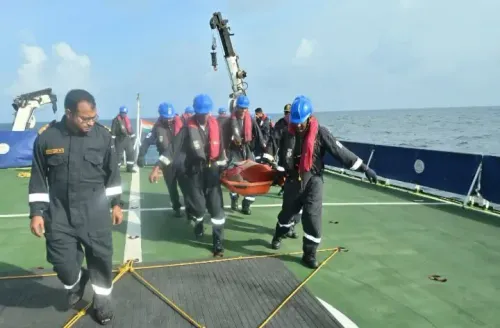
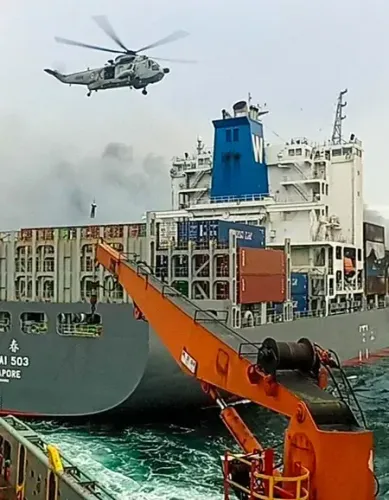
The tanker, carrying crude oil and with no Indian nationals onboard, reported the presence of unexploded ordnance as it continued its passage toward Kochi. The alert was received through the Information Fusion Centre – Indian Ocean Region (IFC-IOR), which serves as the Navy's regional maritime intelligence hub. The Southern Naval Command, based in Kochi, was immediately activated to mount a coordinated response.
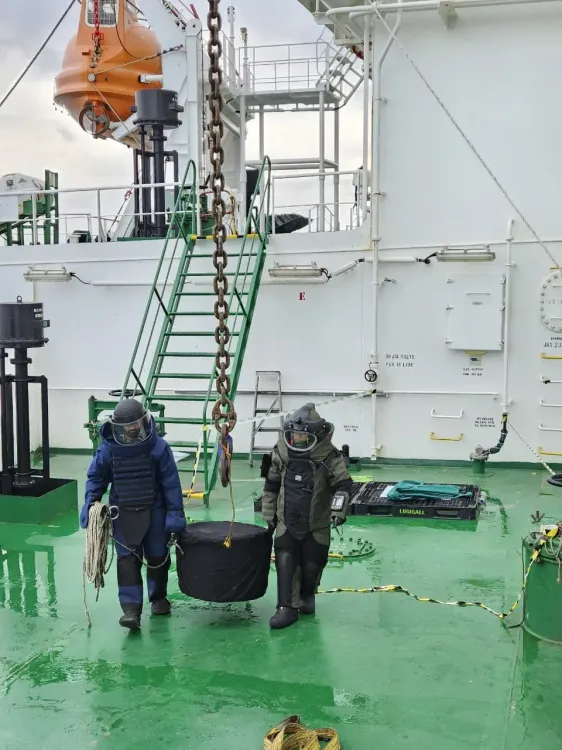
A specialist EOD team was deployed for a detailed on-board assessment. The team confirmed that a projectile had penetrated the vessel's hull, traversed multiple structural compartments, and lodged itself inside a fuel storage tank — a scenario carrying extreme risk of detonation.
The Extraction Operation
'After completion of prescribed safety procedures, the EOD team employed advanced diagnostic methods to identify and isolate the detonation mechanism before carrying out the safe extraction of the warhead along with the associated debris,' the Navy said in an official statement.
The team adopted a deliberate, phased approach to protect the ship, its crew, and surrounding port infrastructure. The operation was conducted over an extended duration, underscoring the complexity of extracting live ordnance from within a fuel compartment of an active commercial vessel.
Recovered Ordnance Under Examination
The extracted warhead and associated debris have been transported to a secure facility for safe storage and detailed forensic examination. Officials have not yet disclosed the type or origin of the missile, and the examination is ongoing. Notably, the explosion off Oman occurred in a region that has witnessed multiple maritime security incidents in recent years, particularly targeting commercial shipping in the Arabian Sea and Gulf of Oman.
Navy's Role as Regional Security Partner
The Indian Navy emphasised that its response was extended regardless of the nationality of the crew or the ownership of the vessel. 'The Indian Navy's prompt response, to an emergency at sea, irrespective of the nationality of the crew or the ownership of MT Olympic Life, reaffirms its role as a responsible maritime force dedicated to global maritime safety and a trusted and preferred security partner in the region,' the statement said.
This operation comes amid heightened maritime security concerns in the Indian Ocean Region, where the Navy has significantly expanded its surveillance and rapid-response capabilities in recent years. The IFC-IOR, established in Gurugram, has been central to coordinating multi-agency responses to such emergencies. The outcome of the forensic examination of the recovered warhead is expected to provide critical intelligence on the source and nature of the attack on MT Olympic Life.
Point of View
Suggesting active intelligence work is underway. In the context of repeated attacks on commercial vessels in the Arabian Sea over the past two years, this recovery could be a rare forensic breakthrough. Whether that intelligence is shared with regional partners — and how publicly — will say as much about India's strategic posture in the Indian Ocean as the rescue operation itself.
NationPress
13 Sept 2026
Frequently Asked Questions
What happened to the crude oil tanker MT Olympic Life?
MT Olympic Life, a Marshall Islands-flagged crude oil tanker, reported an explosion in its hull while sailing off the coast of Oman on 26 May, en route from Fujairah, UAE to Kochi. An unexploded missile warhead was subsequently found lodged inside one of its fuel storage tanks.
How did the Indian Navy respond to the MT Olympic Life emergency?
On receiving the alert through the Information Fusion Centre – Indian Ocean Region (IFC-IOR), the Indian Navy deployed a specialist Explosive Ordnance Disposal (EOD) team from its Southern Naval Command in Kochi. The team assessed the threat, isolated the detonation mechanism, and safely extracted the warhead over an extended operation.
What is the current status of the recovered missile warhead?
The recovered warhead and associated debris have been transported to a secure facility for safe storage and detailed forensic examination. The Navy has not yet disclosed the type or origin of the missile.
Were any Indian nationals onboard MT Olympic Life?
No. The Marshall Islands-flagged vessel did not have any Indian nationals among its crew at the time of the incident. The Indian Navy confirmed it responded regardless of crew nationality or vessel ownership.
Why is this operation significant for Indian maritime security?
The operation demonstrates the Indian Navy's EOD proficiency and its capacity to respond to complex maritime emergencies in the Indian Ocean Region. It also highlights the IFC-IOR's role as a regional intelligence and coordination hub, reinforcing India's position as a preferred security partner in the area.