NCBC Chief Sadhvi Niranjan Jyoti Calls on FM Sitharaman
Synopsis
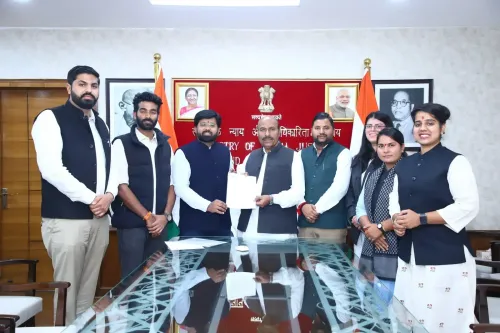
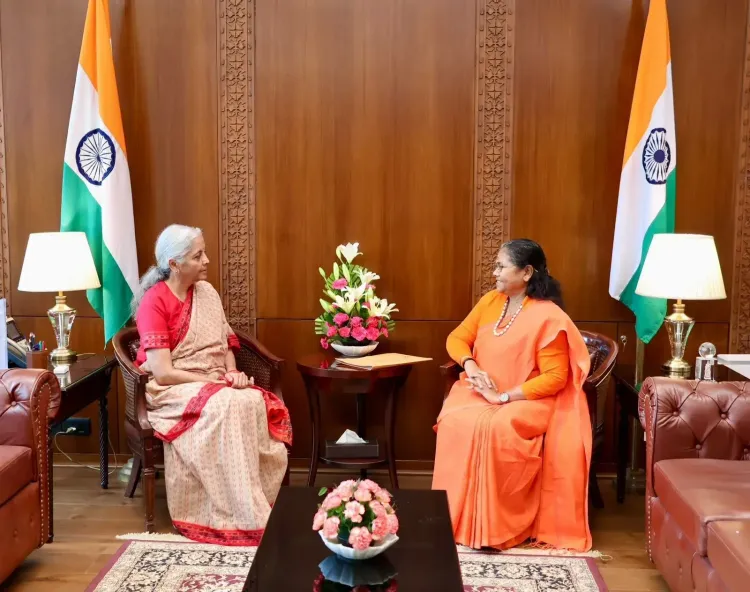
NCBC Chairperson Sadhvi Niranjan Jyoti called on Union Finance Minister Nirmala Sitharaman in New Delhi on June 2, 2026. The meeting brought together the constitutional body for OBC welfare and the Finance Ministry, with budgetary allocations for scholarships and OBC schemes likely on the agenda.
Key Takeaways
Sadhvi Niranjan Jyoti , Chairperson of the National Commission for Backward Classes , met Finance Minister Nirmala Sitharaman on June 2, 2026 in New Delhi.
The NCBC is a constitutional body under Article 338B , empowered to examine complaints and advise on welfare measures for OBCs.
The Commission gained constitutional status through the Constitution (102nd Amendment) Act, 2018 , elevating it from a statutory to a constitutional body.
Such meetings typically address budgetary support for OBC scholarships, fellowships, and reservation implementation in education and employment.
The specific outcomes of the meeting were not publicly disclosed; follow-through may be visible in upcoming supplementary demands for grants.
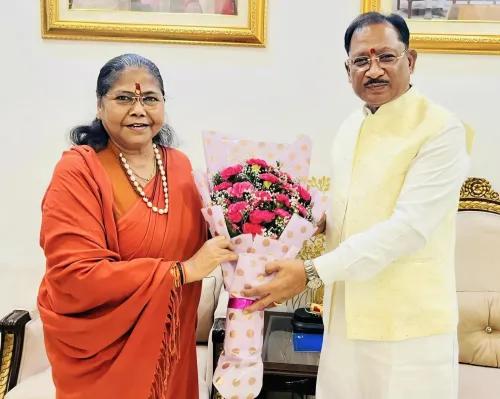
Union Finance Minister Nirmala Sitharaman received Sadhvi Niranjan Jyoti, Chairperson of the National Commission for Backward Classes (NCBC), at a courtesy call in New Delhi on Tuesday, June 2, 2026. The meeting brought together the custodian of the Union Budget and the constitutional body mandated to safeguard the welfare of Other Backward Classes (OBCs) across India.
Context
Sadhvi Niranjan Jyoti, a senior BJP leader and former Union Minister of State, heads the NCBC — a constitutional body established under Article 338B of the Constitution. The Commission is empowered to examine complaints, investigate welfare measures, and advise the government on matters concerning socially and educationally backward classes. Its reports are tabled directly before Parliament, giving it significant institutional weight in shaping OBC policy.
The National Commission for Backward Classes received its constitutional status through the Constitution (102nd Amendment) Act, 2018, which also inserted Article 342A, empowering the President to notify central lists of backward classes. This upgrade elevated the NCBC from a statutory body to a constitutional one, placing it on par with commissions for Scheduled Castes and Scheduled Tribes.
Policy Backdrop
Meetings between the Finance Ministry and NCBC leadership typically touch on budgetary allocations for OBC welfare — including scholarships, fellowships, and reservation implementation in education and public employment. Schemes such as the National Fellowship for OBCs fall within the ambit of discussions that the Commission periodically initiates with the Finance Minister ahead of budget cycles or supplementary demand exercises.
The post-2018 constitutional framework places a direct reporting obligation on the NCBC to Parliament, making its engagement with the Finance Ministry critical for translating its recommendations into funded programmes. Any gaps in OBC welfare allocations can be flagged by the Commission in its annual reports, creating a formal accountability loop between the two institutions.
Stakeholders and Impact
OBC communities — who constitute a substantial share of India's population — stand as the primary stakeholders in any outcome of such engagements. State-level backward class commissions also watch these interactions closely, as central allocations and policy signals from New Delhi often shape what states can implement on the ground.
Civil society groups working on educational access and employment equity for backward classes view Finance Ministry-NCBC dialogue as a barometer of the government's commitment to OBC welfare beyond electoral cycles. Budgetary support for fellowships, pre-examination coaching, and hostel facilities for OBC students are among the perennial demands the Commission carries into such meetings.
What's Next
The specific agenda and outcomes of the June 2, 2026 meeting have not been disclosed publicly. Observers will watch for any follow-through in the next round of supplementary demands for grants, where additional allocations for OBC welfare schemes could reflect the priorities discussed. The NCBC's forthcoming annual report to Parliament may also offer a clearer picture of the Commission's current recommendations to the Finance Ministry.
Point of View
Its recommendations carry formal weight that the Finance Ministry cannot easily set aside. The engagement signals that OBC welfare — spanning fellowships, scholarships, and reservation implementation — remains an active pressure point in the Centre's fiscal calculus. Whether this interaction translates into enhanced allocations will be the real test of institutional influence.
NationPress
17 Oct 2026
Frequently Asked Questions
Why did NCBC Chairperson Sadhvi Niranjan Jyoti meet Finance Minister Nirmala Sitharaman?
Sadhvi Niranjan Jyoti, as Chairperson of the National Commission for Backward Classes, called on Finance Minister Nirmala Sitharaman on June 2, 2026. Such meetings typically involve discussions on budgetary allocations for OBC welfare schemes including scholarships, fellowships, and reservation implementation.
What is the National Commission for Backward Classes (NCBC)?
The NCBC is a constitutional body established under Article 338B of the Indian Constitution. It examines complaints, investigates welfare measures for OBCs, and advises the government on matters related to socially and educationally backward classes, with its reports tabled before Parliament.
When did NCBC become a constitutional body?
The NCBC was elevated from a statutory to a constitutional body through the Constitution (102nd Amendment) Act, 2018, which inserted Articles 338B and 342A into the Constitution.
What OBC welfare schemes does the Finance Ministry fund?
Key centrally funded OBC welfare schemes include the National Fellowship for OBCs, pre-examination coaching, post-matric scholarships, and hostel facilities for OBC students. Allocations for these are decided through the Union Budget and supplementary demands for grants.
Who is Sadhvi Niranjan Jyoti?
Sadhvi Niranjan Jyoti is a senior BJP leader and the Chairperson of the National Commission for Backward Classes. She previously served as Union Minister of State for Food Processing Industries in the central government.