NCERT adds Emergency chapter in Class 9 textbook for first time in 50 years
Synopsis
For the first time in 50 years, Indian Class 9 students will read about the 1975 Emergency in their NCERT Social Science textbook. The new chapter covers press censorship, detention of opposition leaders, Jayaprakash Narayan's resistance movement, and the 1977 elections — framing the episode as a defining test of India's democracy.
Key Takeaways
NCERT has included a chapter on the 1975 Emergency in a Class 9 Social Science textbook for the first time, announced on 25 June .
The new textbook is titled 'Understanding Society: India and Beyond' .
The chapter covers the 21-month Emergency period, including press censorship, curtailment of constitutional freedoms, and detention of opposition figures.
The role of Jayaprakash Narayan (Lok Nayak) in mobilising opposition — particularly in Bihar and Gujarat — is highlighted.
The textbook notes that the 1977 elections following the Emergency's withdrawal demonstrated the resilience of India's democratic framework.
A new section, 'Democracy and You' , has been added to promote civic engagement among students.
The National Council of Educational Research and Training (NCERT) has introduced a chapter on the 1975 Emergency in a Class 9 Social Science textbook for the first time, marking a significant shift in how India's school curriculum addresses one of its most contested democratic episodes. The inclusion, confirmed by NCERT officials on 25 June, coincides with the completion of 50 years since the Emergency was imposed.
What the New Textbook Covers
The revised textbook, titled 'Understanding Society: India and Beyond', situates the Emergency within a chapter examining both the achievements and challenges of Indian democracy. According to NCERT, this is the first time the subject has been covered at the Class 9 level.
The chapter outlines the political and social conditions that preceded the declaration — including rising unemployment, high inflation, and governance concerns in the early 1970s — which, the text notes, fuelled widespread protests and political unrest across several parts of the country.
How the Emergency Is Presented
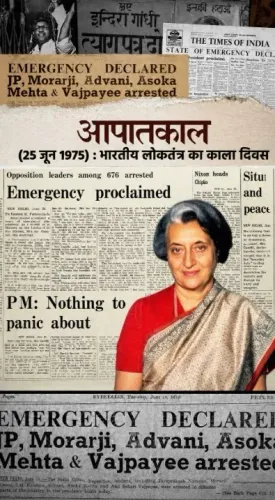
The textbook states that a National Emergency was declared in June 1975 on grounds of internal disturbance. During the 21-month period that followed, several constitutional freedoms were curtailed, press censorship was enforced, and opposition leaders and activists were detained. The chapter describes the period as a significant challenge to India's democratic institutions and to citizens' rights and freedoms.
The role of veteran leader and social reformer Jayaprakash Narayan — widely known as Lok Nayak — is highlighted as central to mobilising opposition to the Emergency. The text notes how movements led by him drew together students, youth groups, and citizens, particularly in Bihar and Gujarat, into a broad-based campaign for democratic reforms.
The 1977 Elections and Democratic Resilience
The chapter records that the Emergency was withdrawn in 1977, after which general elections were held. The electoral outcomes, the textbook notes, demonstrated the resilience of India's democratic framework — voters were able to express their will through the ballot and bring about political change.
Broader Democratic Challenges Addressed
Beyond the Emergency, the revised textbook takes on several contemporary challenges confronting democracy: misinformation, fake news, poverty, regional divisions, social discrimination, and gender inequality. A new section titled 'Democracy and You' has been added to encourage students to engage with democratic values and understand their responsibilities as active citizens.
The textbook also covers India's democratic institutions, the role of media as the 'fourth pillar of democracy', voter participation, polling systems, and grassroots democracy through examples of panchayats. Sections on women's voting rights and reservations in local bodies are also included.
Point of View
Detention of political opponents, and the curtailment of constitutional rights. Whether that candour is sustained across future editions, or softened under subsequent governments, will be the real test of NCERT's editorial independence. The inclusion of Jayaprakash Narayan's resistance movement also rehabilitates a strand of non-partisan democratic activism that tends to get flattened in partisan retellings. The broader question is whether students will be equipped to think critically about the Emergency — or merely to remember it as a settled verdict.
NationPress
23 Sept 2026
Frequently Asked Questions
What is the new NCERT Class 9 chapter on the Emergency about?
The chapter, part of the textbook 'Understanding Society: India and Beyond', covers the 1975 Emergency declared on grounds of internal disturbance. It discusses the 21-month period during which constitutional freedoms were curtailed, press censorship was enforced, and opposition leaders were detained, as well as the 1977 elections that followed the Emergency's withdrawal.
Why has NCERT added the Emergency to the Class 9 syllabus now?
According to NCERT officials, this is the first time the Emergency has been covered at the Class 9 level. The inclusion coincides with the completion of 50 years since the Emergency was imposed in 1975, making it a landmark curricular addition.
Who is Jayaprakash Narayan and why does the textbook highlight his role?
Jayaprakash Narayan, popularly known as Lok Nayak, was a veteran leader and social reformer who mobilised widespread opposition to the Emergency. The textbook highlights how movements led by him brought together students, youth groups, and citizens — particularly in Bihar and Gujarat — in a broad-based campaign for democratic reforms.
What other topics does the revised Class 9 Social Science textbook cover?
Beyond the Emergency, the textbook addresses contemporary democratic challenges including misinformation, fake news, poverty, regional divisions, social discrimination, and gender inequality. It also covers India's democratic institutions, the media's role as the 'fourth pillar of democracy', voter participation, panchayats, women's voting rights, and reservations in local bodies.
What is the 'Democracy and You' section in the new NCERT textbook?
'Democracy and You' is a newly added section in the revised Class 9 textbook designed to encourage students to engage with democratic values and understand their responsibilities as active citizens. It is part of a broader effort to make civic education more participatory.