Emergency verdict already delivered by people in 1977: Salman Khurshid
Synopsis
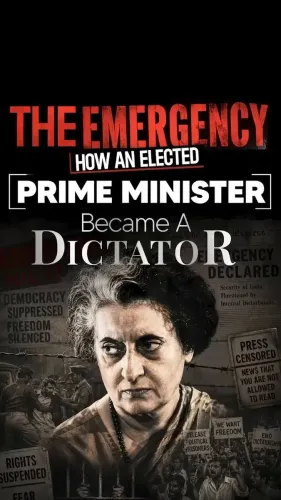
On the 51st anniversary of the Emergency, Congress leader Salman Khurshid turned the BJP's 'Samvidhan Hatya Diwas' argument on its head — arguing that voters already settled the Emergency's verdict in 1977, and that the real constitutional questions concern what is happening today, not five decades ago.
Key Takeaways
Salman Khurshid said the people delivered their verdict on the 1975 Emergency by voting out Congress in the 1977 elections held after it was lifted.
He argued that BJP 's 'Samvidhan Hatya Diwas' observance itself relies on constitutional freedoms, and redirected focus to present-day governance concerns including the alleged police killing of Bharat Tiwari in Bihar .
On the NCERT Class 9 Emergency chapter, Khurshid said the full historical picture — including Congress's defeat and later return with a two-thirds majority — must be included, not cherry-picked facts.
He questioned the MEA 's clarification that a passport is not proof of citizenship, citing the Passport Act 's own provisions linking passport denial to non-citizenship.
Khurshid said he cannot see a clear Indian foreign policy toward Iran , and questioned whether India reciprocated Iran's longstanding goodwill during difficult periods.
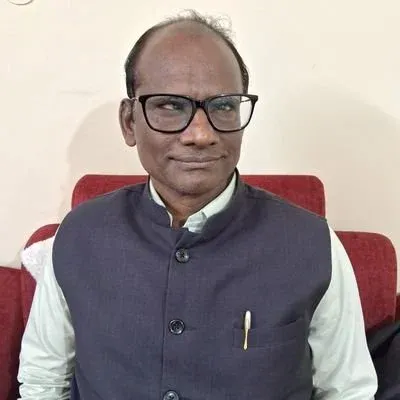
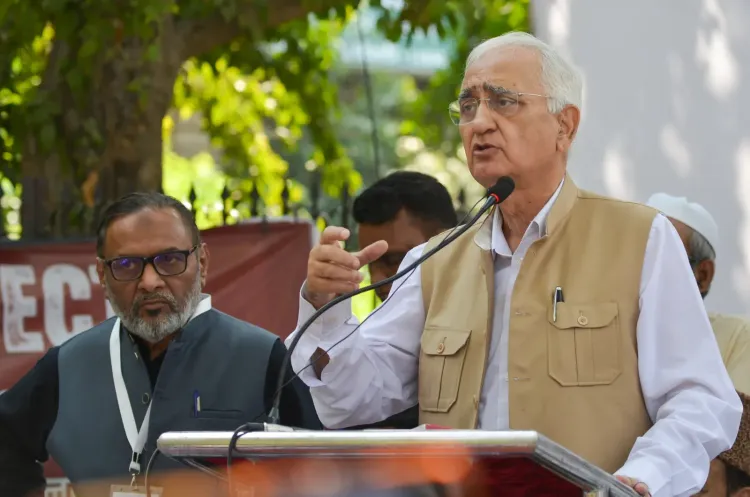
Congress leader and senior advocate Salman Khurshid on Thursday, 25 June said the people of India had already rendered their verdict on the 1975 Emergency by voting out the Congress in the elections held immediately after it was lifted in 1977. Speaking on the occasion of the 51st anniversary of the Emergency, Khurshid addressed a range of issues — from the Bharatiya Janata Party's (BJP) observance of 'Samvidhan Hatya Diwas' to the NCERT's new chapter on Emergency and the government's clarification that a passport is not proof of citizenship.
On BJP's 'Samvidhan Hatya Diwas'
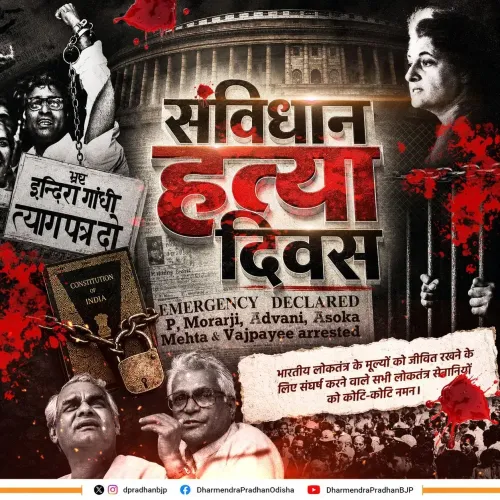
Responding to the BJP's decision to mark the Emergency anniversary as 'Samvidhan Hatya Diwas', Khurshid argued that the very right to make such statements flows from the Constitution. 'The Constitution gives everyone the right to express their views. Whether those views are right or wrong is ultimately for the people to decide. But the right to speak comes from the Constitution. If you have the freedom today to make such statements, then at least acknowledge that the Constitution is alive,' he said.
Khurshid contended that the more pressing question is what is being done to the Constitution today. He noted that many people globally are speaking of an 'undeclared Emergency' in the country, and pointed to the alleged police killing of Bharat Tiwari in Bihar and the crisis faced by NEET aspirants as examples of what he described as challenges to constitutional values. 'The Emergency itself was a constitutional provision. If someone believes that the provision was misused, then the matter must be judged either by the courts or by the people. In that case, both happened,' he said, referring to the judicial and political verdicts that followed.
On NCERT Including Emergency in Textbooks
Commenting on the National Council of Educational Research and Training (NCERT) inserting a section on the Emergency in the Class 9 Social Science textbook, Khurshid said the inclusion of historical facts was not objectionable in itself — but the manner of presentation mattered. 'No one can deny the historical fact that the Emergency took place. That reality has to be accepted,' he said.
He insisted, however, that the complete picture must be presented — including the reasons behind the Emergency, its consequences, the elections that followed, Congress's defeat, and its subsequent return to power with a two-thirds majority. 'If you want to write about historical facts, no one is objecting to that. But the complete picture should be presented. It should not be selective or what is commonly called cherry-picking of facts,' Khurshid said.
On Passport and Citizenship Controversy
On the Ministry of External Affairs (MEA) clarifying that a passport is not proof of citizenship, Khurshid pointed to what he called an inherent tension in the law. 'One thing is very clear in the Passport Act: a passport can be denied if a person is not a citizen. If non-citizenship is a ground for refusing a passport, then the issuance of a passport must have some relevance to citizenship as well,' he argued.
While acknowledging that formal citizenship determination is governed by the Citizenship Act, he said an ordinary citizen would find it difficult to understand the distinction being drawn. He called on the government to explain why this clarification was being issued now, and why it had taken so many years to articulate it in this manner.
On Modi's 12 Years in Office and India's Foreign Policy
Asked about Prime Minister Narendra Modi completing 12 years in office — making him the longest continuously serving Prime Minister — Khurshid said the sense of prosperity, trust, and confidence that should exist in the country was 'not visible today'. He cited incidents of police firing, what he described as unrestrained institutions, increasing emigration of wealth and talent, and what he perceived as a distancing of traditional allies as indicators of unease.
On India's foreign policy toward Iran amid US-Iran tensions, Khurshid said he had been unable to discern a clear policy. He noted that Iran had maintained its friendship with India through difficult periods, including tensions over the Strait of Hormuz and periods of American military action, without placing major expectations on New Delhi. 'I do not see any foreign policy towards Iran,' he said, questioning whether India had adequately reciprocated that goodwill.
What This Signals
Khurshid's remarks come as the political debate over the Emergency's legacy intensifies ahead of what observers note is an increasingly contested battle over historical narrative between the ruling BJP and the Indian National Congress (INC). The Congress's willingness to acknowledge the Emergency's political consequences — while redirecting attention to present-day governance concerns — reflects a calibrated defensive posture that the party has adopted in recent years on this issue. How the debate evolves in classrooms and courtrooms alike will be closely watched.
Point of View
Courts ruled) while arguing the current government faces analogous scrutiny. What is missing from his account, however, is any direct acknowledgement of the Emergency's specific harms — press censorship, mass detentions, forced sterilisations — which remain raw in public memory. The Congress's strategy of pivoting to 'undeclared Emergency' comparisons may energise its base but risks appearing evasive to swing voters who want contrition, not deflection. On the passport-citizenship issue, Khurshid raises a genuine legal tension that the government has not adequately explained — and that silence is itself a story.
NationPress
24 Sept 2026
Frequently Asked Questions
What did Salman Khurshid say about the 1975 Emergency on its 51st anniversary?
Khurshid said the people of India already delivered their verdict on the Emergency by removing the Congress from power in the 1977 elections held soon after it was lifted. He added that the Emergency was a constitutional provision, and that both a judicial and a political verdict had followed its imposition.
What is 'Samvidhan Hatya Diwas' and why is BJP observing it?
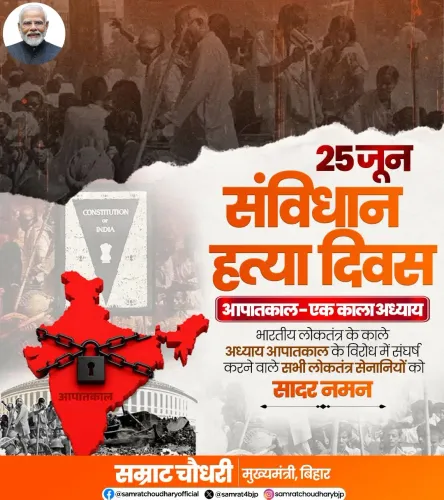
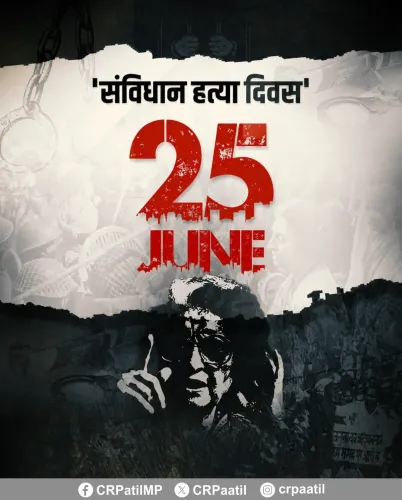
'Samvidhan Hatya Diwas' is the BJP's designation for 25 June, the date in 1975 when the Emergency was imposed by the then-Congress government. The BJP marks it to highlight what it calls a constitutional betrayal. Khurshid responded by arguing that the very freedom to make such statements exists because of the Constitution.
What did Khurshid say about the NCERT chapter on the Emergency?
Khurshid said including historical facts about the Emergency in the Class 9 Social Science textbook was not objectionable, but insisted the full picture must be presented — including the reasons for its imposition, the elections that followed, Congress's defeat, and its subsequent return to power with a two-thirds majority. He warned against selective or cherry-picked presentation of facts.
Why is there a controversy over passports and citizenship in India?
The Ministry of External Affairs recently clarified that a passport is not proof of citizenship. Khurshid argued this creates a legal tension, since the Passport Act itself allows denial of a passport on grounds of non-citizenship — implying a link between passport issuance and citizenship status. He called on the government to explain why this clarification was being issued now.
What did Khurshid say about PM Modi's 12 years in office?
Khurshid said the sense of prosperity, trust, and confidence that should exist in the country is 'not visible today'. He cited concerns including incidents of police firing, emigration of wealth and talent abroad, and what he described as a distancing of traditional allies, concluding that he cannot say the last 12 years have been good for the country.