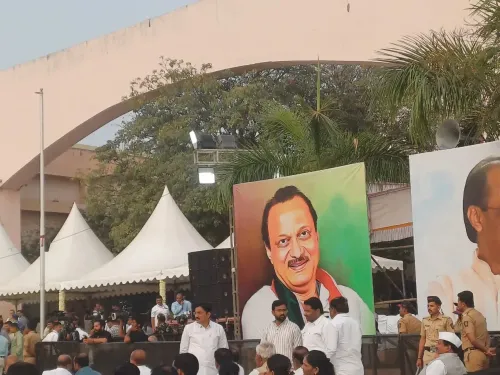
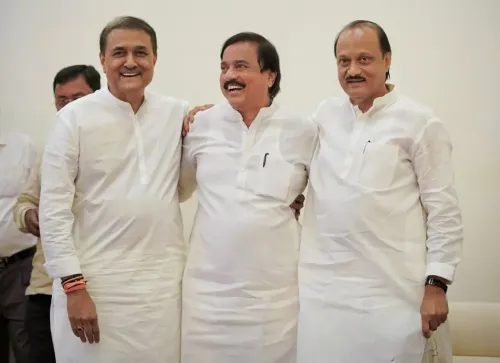
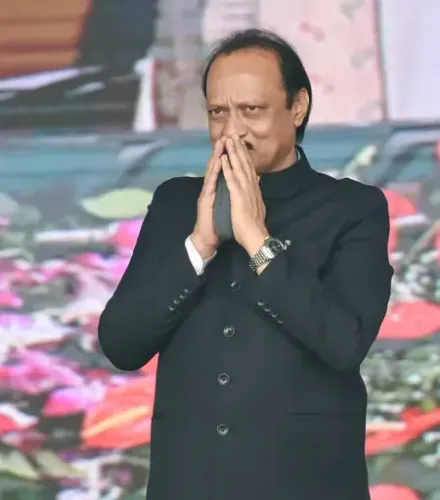
NCP Aims to Transform Ajit Pawar’s Image Post-Court Ruling on Bank Scam
Synopsis
A recent court ruling has cleared Ajit Pawar’s name in a major bank scam, providing a political boost for the NCP and allowing them to recast his legacy from one of corruption to persecution. This pivotal moment unfolds just a month after his tragic death.
Key Takeaways
Maharashtra State Cooperative Bank scam: Closure report accepted by the special court.
Ajit Pawar's legacy: Shifted from corruption to persecution.
Political implications: Boost for NCP leadership.
Impact on family: Legal relief for Pawar family.
Future collaborations: Potential easing of political hostilities.
Mumbai, February 28 (NationPress) The special court's acceptance of the closure report regarding the ₹25,000 crore Maharashtra State Cooperative Bank (MSCB) scam represents a crucial moment in Maharashtra's political and judicial environment.
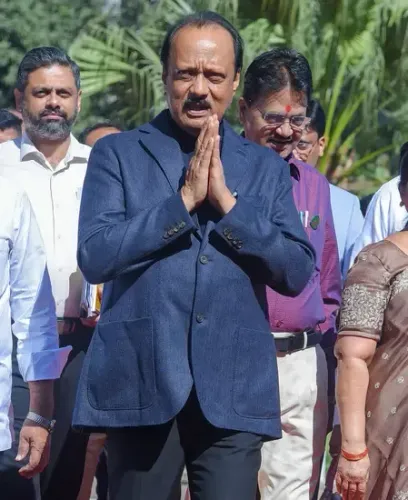
This development is particularly noteworthy as it follows closely on the heels of the tragic passing of former Deputy Chief Minister and NCP leader Ajit Pawar, who died in a plane crash on January 28.
With the court effectively concluding the case, Ajit Pawar's name has been posthumously cleared, providing both legal and political relief for his family and the current leadership of the NCP. This ruling is advantageous for nearly 70 individuals, including Deputy Chief Minister Sunetra Pawar and MLA Rohit Pawar.
For the NCP, this ruling is seen as a significant political gain and the end of a decade-long legal struggle. A senior party official characterized the timing as “coincidental yet symbolic,” emphasizing that the clean chit comes precisely a month after Ajit Pawar's untimely death.
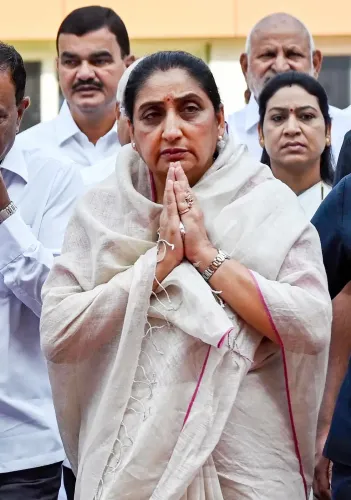
“The lifting of this ₹25,000 crore ‘stain’ enables Sunetra Pawar, now the National President of the NCP and Deputy Chief Minister, to steer the party without the overhang of Enforcement Directorate (ED) or Economic Offences Wing (EOW) scrutiny on her family,” the official stated.
Another senior NCP member with over two decades of experience in Maharashtra's cooperative sector remarked that this verdict allows the party to reframe Ajit Pawar’s political narrative.
“With these decade-old allegations cleared, the NCP can now portray his legacy as one of ‘persecution’ rather than ‘corruption’,” the member noted.
The case was linked to alleged misconduct occurring between 2007 and 2011 regarding the distribution of loans by the MSCB to sugar factories and spinning mills.
Investigators had claimed that loans were provided to financially distressed entities, which were subsequently auctioned at severely reduced prices after defaults, with buyers reportedly connected to bank directors. The alleged loss to the bank was estimated at ₹25,000 crore.
For years, the BJP, while in opposition, had leveraged the MSCB case as a political tool against the NCP and Congress. However, after Ajit Pawar joined the ruling MahaYuti coalition, which includes the BJP, Shiv Sena, and NCP factions, the state's EOW—reporting to the Home Ministry—submitted a closure report indicating that no criminal wrongdoing was found.
This action faced sharp backlash from the opposition Maha Vikas Aghadi (MVA), which accused the ruling coalition of engaging in “washing machine politics,” alleging that corruption allegations dissipate when leaders enter the government.
Rohit Pawar’s name had also emerged in the ED's perspective on the case. With the EOW case now resolved, legal analysts suggest the ED may come under pressure to reassess or retract its actions, potentially alleviating tensions within the family and party.
On a political level, the clean chit could further solidify the Pawar family’s position within Maharashtra's influential cooperative network, including the MSC Bank, free from the overshadowing corruption allegations.
Observers believe that by exonerating leaders across different political factions—including those aligned with Sharad Pawar and Uddhav Thackeray—the verdict could ease political hostilities and pave the way for future collaborations.
For the NCP, this closure not only lifts a persistent legal burden but also presents a chance to redefine Ajit Pawar’s public persona—from one steeped in controversy to one depicted as having faced enduring political antagonism.
Sanjay Jog can be reached at sanjay.j@ians.in
Point of View
It is essential to recognize the significance of the recent court ruling in Maharashtra. This event not only clears the name of a prominent political figure but also reshapes the narrative surrounding allegations of corruption, emphasizing a shift towards accountability and justice in the political landscape.
NationPress
30 Sept 2026
Frequently Asked Questions
What was the Maharashtra State Cooperative Bank scam?
The Maharashtra State Cooperative Bank scam involved alleged irregularities in loan disbursements between 2007 and 2011, leading to significant financial losses estimated at ₹25,000 crore.
What does the court’s ruling mean for Ajit Pawar?
The court's ruling posthumously clears Ajit Pawar of allegations related to the scam, allowing his family and the NCP leadership to reshape his legacy.
How does this ruling affect the NCP?
This ruling provides a significant political boost to the NCP, enabling its leaders to lead without the shadow of corruption allegations and potentially reshaping their political narrative.
What are the implications for Rohit Pawar?
With the EOW case now closed, it is expected that legal pressures on Rohit Pawar may ease, allowing for a more stable political environment within the party.
What does this mean for Maharashtra's political landscape?
The ruling could foster a new political alignment by reducing hostilities across factions, allowing for potential collaborations among different political groups.