Fast-track courts for paper leaks: NDA hails Modi directive as historic
Synopsis
PM Modi's directive to fast-track prosecution of paper leak cases has drawn a wave of NDA endorsements — from Union ministers to chief ministers — all framing it as a landmark move for student justice. The real question is whether courts alone can fix a systemic examination integrity crisis that has persisted for years.
Key Takeaways
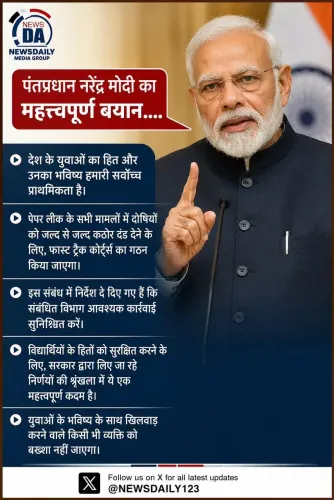
PM Narendra Modi directed the establishment of fast-track courts for paper leak cases on 23 July .
Union Minister Piyush Goyal and BJP President Nitin Nabin both endorsed the move via posts on X, calling it a commitment to youth aspirations.
Uttarakhand CM Pushkar Singh Dhami termed the directive 'historic and visionary,' saying it would curb organised paper leak crimes.
Delhi CM Rekha Gupta said the fast-track courts are 'a crucial step toward ensuring justice for every hardworking student.' No formal timeline has been announced for when the courts will become operational or which exams fall under their purview.
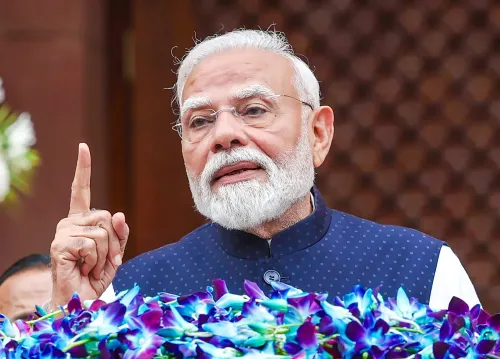
The National Democratic Alliance (NDA), led by the Bharatiya Janata Party (BJP), on Thursday, 23 July welcomed Prime Minister Narendra Modi's directive to establish fast-track courts for paper leak cases, calling the move a decisive step toward ensuring swift and stringent punishment for those found guilty. The announcement drew praise from senior NDA ministers and chief ministers across party-governed states.
Key Developments
Union Minister Piyush Goyal, in a post on X, described India's youth as the nation's 'biggest asset' and said fast-track courts would ensure accountability for those involved in examination fraud. 'Fast-track courts will now ensure that those involved in paper leaks are brought to justice,' Goyal wrote, adding that the government under PM Modi remains 'committed to ensuring that our youngsters inherit a promising future.'
Goyal further assured students and parents: 'We continue to take decisive steps against those playing with the future of our children and assure our youth and parents that we firmly stand with them.'
What the BJP Said
BJP President Nitin Nabin stated that under PM Modi's leadership, the government is 'fully committed to protecting the aspirations, hard work, and future of our youth.' In his post on X, Nabin said fast-track courts would be established to deliver 'prompt and stringent punishment' and warned that 'those who jeopardize the future of hardworking students will not be spared under any circumstances.'
Chief Ministers Respond
Uttarakhand Chief Minister Pushkar Singh Dhami called the directive a 'historic and visionary step towards safeguarding the future of millions of students.' Writing on X, Dhami said the decision would 'effectively curb organised crimes like paper leaks, ensure strict punishment for the guilty, enhance the transparency and credibility of examinations, and give students the confidence that no injustice will be tolerated with their hard work.'
Referencing PM Modi's warning that 'those who tamper with the future of the youth will not be spared,' Dhami extended gratitude on behalf of Uttarakhand residents for what he called a step taken 'with the utmost priority for student interests.'
Delhi Chief Minister Rekha Gupta echoed the sentiment, saying 'safeguarding the interests of students and securing a bright future for the youth is our utmost priority.' She described the fast-track court decision as 'a crucial step toward ensuring justice for every hardworking student,' adding that 'the law will carry out its work with full rigor against those who violate students' rights.'
Context and Background
The directive comes amid sustained public anger over a series of high-profile examination paper leak controversies in India, which have disrupted competitive exams and triggered student protests. This is not the first time the government has pledged action — critics argue that structural reforms in examination administration, beyond judicial speed, are equally necessary to prevent recurrence. Notably, the establishment of fast-track courts signals an intent to treat paper leaks as serious organised crime rather than administrative lapses.
What Happens Next
The government is yet to release a formal timeline for when the fast-track courts will become operational or which examinations will fall under their jurisdiction. Student groups and opposition parties are expected to scrutinise the implementation closely. How quickly the courts are constituted and whether they yield convictions will determine whether the directive translates into credible deterrence.
Point of View
And fast-track courts offer a visible, punitive response. But judicial speed addresses the aftermath, not the cause. India's examination integrity crisis is rooted in procurement opacity, digital infrastructure gaps, and weak pre-leak controls — none of which a fast-track court resolves. If the government's response ends at courts without structural reform of examination bodies, it risks repeating the cycle: outrage, announcement, and another leak.
NationPress
23 Jul 2026
Frequently Asked Questions
What is PM Modi's fast-track court directive for paper leaks?
Prime Minister Narendra Modi directed the establishment of fast-track courts to ensure swift and stringent punishment for those found guilty in examination paper leak cases. The directive was welcomed by NDA leaders across the country on 23 July.
Why are fast-track courts being set up for paper leak cases?
Fast-track courts are being established to speed up trials and deliver prompt punishment in paper leak cases, which have disrupted major competitive examinations and triggered widespread student protests in India. The government has framed paper leaks as organised crime requiring urgent judicial intervention.
What did Union Minister Piyush Goyal say about the fast-track courts?
Piyush Goyal said in a post on X that fast-track courts will ensure those involved in paper leaks are brought to justice. He described India's youth as the nation's biggest asset and reaffirmed the government's commitment to protecting their future.
Which NDA leaders have endorsed PM Modi's fast-track court directive?
Union Minister Piyush Goyal, BJP President Nitin Nabin, Uttarakhand Chief Minister Pushkar Singh Dhami, and Delhi Chief Minister Rekha Gupta have all publicly endorsed the directive, calling it a decisive and historic step for student welfare.
When will the fast-track courts for paper leaks become operational?
No formal timeline has been announced yet. The government has not specified which examinations will fall under the fast-track court jurisdiction or when the courts will be constituted and functional.