Tea portrait of PM Modi by Neemuch artist marks 12 years of governance
Synopsis
A rural artist from Neemuch, Madhya Pradesh has painted PM Modi's portrait using only tea — a deliberate nod to the Prime Minister's chai-seller roots — and embedded 12 government schemes within the composition, from Chandrayaan to Ayushman Bharat. It is one of the more inventive examples of politically themed folk art to emerge from central India this year.
Key Takeaways
Rahul Kumar Lohar from Kuchrod village , Neemuch , Madhya Pradesh created a portrait of PM Narendra Modi using tea as the sole medium.
The choice of tea is symbolic — PM Modi is known to have worked at a tea stall before entering politics.
The portrait depicts 12 key government initiatives , including Chandrayaan , Ram Mandir , G20 Summit , Ayushman Bharat , and Digital India .
Lohar said the work is intended as a tribute to the Prime Minister's journey from humble beginnings to the country's highest office.
The portrait has received appreciation from local residents and art enthusiasts in Neemuch .
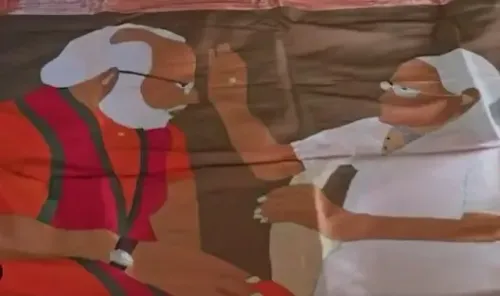
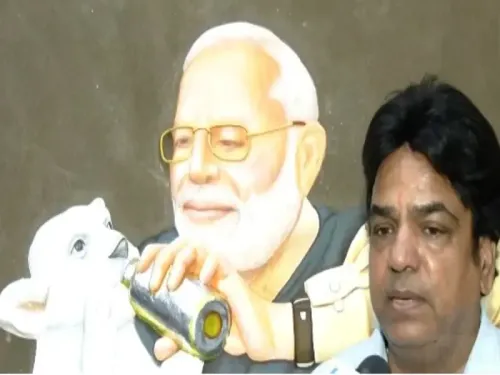
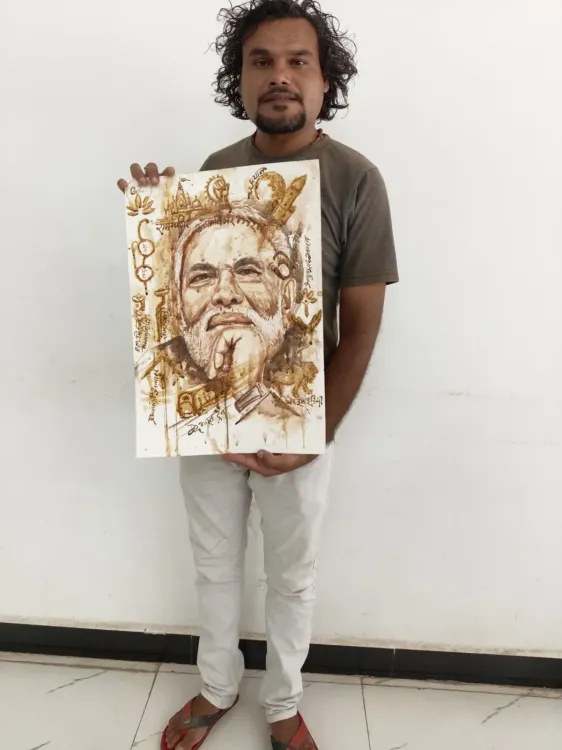
A young artist from Kuchrod village in Neemuch district, Madhya Pradesh, has drawn widespread attention with a portrait of Prime Minister Narendra Modi painted entirely using tea — a medium chosen deliberately to echo the Prime Minister's well-known origins as a chai seller. Rahul Kumar Lohar, the artist behind the work, unveiled the piece on 24 June as a tribute to 12 years of the Modi government's key programmes and milestones.
The Artwork and Its Medium
Unlike conventional portraits rendered in acrylic or watercolour, Lohar's creation uses brewed tea as its sole pigment. The choice of medium is layered with symbolism: Prime Minister Modi is widely known to have assisted at a tea stall in his youth before entering public life, and Lohar said he wanted the material itself to reflect that journey. 'The special aspect of this painting is that it has been made using the tea we drink every day. That is what makes it unique,' he said.
The finished portrait is not merely a likeness — it is also a visual map of governance. Lohar embedded references to 12 key initiatives within the composition, making the work as much a political chronicle as an artistic one.
Twelve Schemes Depicted in the Portrait
The initiatives represented in the tea portrait span infrastructure, space exploration, sanitation, agriculture, housing, and digital policy. They include the Ram Mandir consecration, the Chandrayaan lunar mission, India's hosting of the G20 Summit, Swachh Bharat Abhiyan, Pradhan Mantri Ujjwala Yojana, PM Kisan Samman Nidhi, Pradhan Mantri Awas Yojana, Vande Bharat trains, Make in India, Ayushman Bharat, Digital India, and Atmanirbhar Bharat.
Lohar noted that the selection was necessarily curated. 'Although there are many more initiatives, I selected these prominent ones for this tea-based artwork,' he said, adding that a close examination of the portrait reveals each scheme embedded within the composition.
Artist's Background and Inspiration
Lohar hails from a rural background in Neemuch and has previously attracted attention for unconventional artistic projects. He cited Prime Minister Modi's life trajectory — from humble beginnings to the country's highest executive office — as his primary motivation. 'Motivated by his life's journey and achievements, I decided to create his portrait using tea,' he said. He added that the work carries a broader message: 'One should never forget one's roots.'
Local residents and art enthusiasts have appreciated the piece, with many noting that Lohar's rural origins and self-driven creative practice make his work a compelling example of grassroots artistic ambition.
Significance and Wider Context
Unconventional portrait art — using materials such as coffee, sand, or recycled waste — has gained traction across India as artists seek distinctive ways to engage with public figures and national themes. Lohar's tea portrait fits within this tradition while adding a specific biographical resonance tied to the subject's own story. This is not the first time the Neemuch artist has attracted public notice for his work, suggesting a sustained creative practice rather than a one-off gesture.
Whether the portrait will travel beyond Kuchrod village for wider exhibition remains to be seen, but its reception so far points to the enduring public appetite for art that bridges personal narrative with national symbolism.
Point of View
But Lohar's work earns its attention through the specificity of its symbolism — the medium directly references the subject's biography in a way that most such pieces do not. What is worth noting is that this kind of grassroots cultural output from small-town and rural India rarely gets sustained coverage despite reflecting genuine artistic ambition. The portrait's real significance may be less about the Prime Minister it depicts and more about what it says about creative aspiration in districts like Neemuch, where formal art infrastructure is thin but talent is not.
NationPress
22 Sept 2026
Frequently Asked Questions
Who is Rahul Kumar Lohar and where is he from?
Rahul Kumar Lohar is a young artist from Kuchrod village in Neemuch district, Madhya Pradesh. He has previously attracted public attention for unconventional artistic projects and comes from a rural background.
Why did the artist use tea to paint PM Modi's portrait?
Lohar chose tea as his medium because PM Modi is widely known to have assisted at a tea stall in his youth before rising to become Prime Minister. The artist said he felt tea would be a meaningful tribute to Modi's early struggles and journey.
Which government schemes are depicted in the tea portrait?
The portrait includes 12 initiatives: Ram Mandir, Chandrayaan, G20 Summit, Swachh Bharat Abhiyan, Pradhan Mantri Ujjwala Yojana, PM Kisan Samman Nidhi, Pradhan Mantri Awas Yojana, Vande Bharat trains, Make in India, Ayushman Bharat, Digital India, and Atmanirbhar Bharat.
How has the portrait been received?
The artwork has received appreciation from local residents and art enthusiasts in Neemuch. Many have noted that Lohar's rural background and self-driven practice make his work a notable example of grassroots artistic creativity.
What message does the artist say the portrait conveys?
Lohar said the portrait carries the message that one should never forget one's roots, and that PM Modi's journey from humble beginnings continues to inspire citizens across the country.