NEET UG 2026 leak: JIH's Taleemi Board chief calls for systemic reforms, NTA accountability
Synopsis
With NEET UG 2026 cancelled over a suspected paper leak and the CBI now involved, JIH's Markazi Taleemi Board chief Professor Salim Engineer has called not just for a probe but for the resignations of NTA and Ministry of Education officials — and the urgent implementation of the Radhakrishnan Committee's long-pending reforms.
Key Takeaways
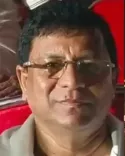
Professor Salim Engineer , Chairman of JIH's Markazi Taleemi Board , condemned the NEET UG 2026 irregularities on 12 May .
He held the NTA and the government directly responsible for jeopardising the futures of lakhs of medical aspirants.
A 'guess paper' allegedly matching actual exam questions reportedly circulated through informal networks and digital platforms, indicating organised malpractice.
The NTA has cancelled the examination and ordered a re-conduct; the government has referred the matter to the CBI .
Professor Salim Engineer demanded resignations of those at the helm of the NTA and the Ministry of Education , and urged implementation of the Dr K.
Radhakrishnan Committee's recommendations.
Professor Salim Engineer, Chairman of Jamaat-e-Islami Hind's (JIH) Markazi Taleemi Board (MTB), on Tuesday, 12 May strongly condemned the irregularities in the now-cancelled NEET UG 2026 examination, holding the government and the National Testing Agency (NTA) directly responsible for jeopardising the futures of lakhs of medical aspirants across India.
What the MTB Chairman Said
In a statement issued to reporters, Professor Salim Engineer said, "We strongly condemn the irregularities in the National Eligibility cum Entrance Test (NEET) UG 2026 examination that have resulted in its cancellation. The NEET exam is one of the country's most competitive entrance tests, taken by more than two million students annually."
He described the emergence of a so-called 'guess paper' — containing a significant number of questions allegedly matching the actual examination — as "a grave compromise in the impartiality of the process conducted by the NTA." The reported sale and widespread circulation of such papers through informal networks and digital platforms, he said, point towards organised malpractice.
"Such paper leaks undermine public confidence in the examination system and create a serious trust deficit among students and parents regarding merit and equal opportunity," Professor Salim Engineer said.
Demands for Accountability and Resignation
Professor Salim Engineer called upon the authorities to ensure complete transparency in the inquiry process and to take strict action against any individuals or networks found guilty of malpractice. He went further, stating that those at the helm of the NTA and the Ministry of Education must resign by accepting moral accountability for these failures.
"Those directly responsible for this breach must be identified and dealt with in the strictest possible manner to serve as a strong deterrent," he said. He also demanded a "thorough, independent, and time-bound probe" to fix accountability at all levels.
Key Reform Recommendations
The MTB chairman urged the government to urgently implement the recommendations of the High-Level Committee of Experts constituted by the Ministry of Education under the chairmanship of former ISRO Chairman Dr K. Radhakrishnan. That panel had previously flagged concerns about breaches in entrance examinations and emphasised the need for a system that is "secure, tamper-proof, and transparent."
Notably, the NTA's decision to cancel the NEET UG 2026 examination and order a re-conduct, alongside the government's move to refer the matter to the Central Bureau of Investigation (CBI), was acknowledged by Professor Salim Engineer as "a clear acknowledgment of the seriousness of the lapses involved." However, he stressed that this has caused "immense distress and uncertainty" to lakhs of students and their families.
Broader Context
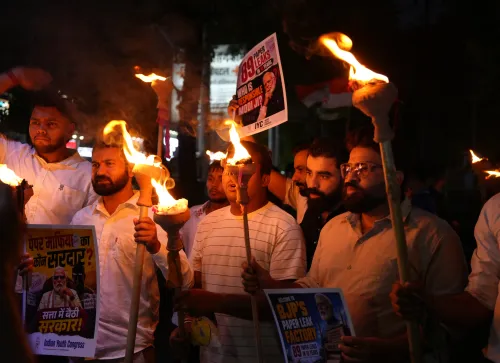
The NEET UG controversy is not without precedent. The 2024 edition of the same examination was marred by allegations of paper leaks and grace marks irregularities, triggering nationwide protests, Supreme Court hearings, and a political firestorm. The recurrence of similar concerns in 2026 raises pointed questions about whether systemic corrective measures were adequately implemented in the intervening period.
With the CBI probe now underway and a re-examination on the horizon, the pressure on the NTA and the Ministry of Education to deliver a credible, transparent process has never been greater — and the scrutiny from civil society groups, including the MTB, is set to intensify.
Point of View
At its core, a governance failure — not a one-off lapse. The Radhakrishnan Committee had already mapped the vulnerabilities; the question is why its recommendations were not fully operationalised before another high-stakes examination cycle. The JIH's Taleemi Board's call for ministerial resignations reflects a broader public exhaustion with accountability that stops at the institutional level and never reaches the individuals who sign off on security protocols. If the CBI probe follows the pattern of the 2024 investigation — arrests at the periphery, no systemic overhaul — the credibility of centralised entrance testing in India will face a structural, not merely reputational, crisis.
NationPress
22 Sept 2026
Frequently Asked Questions
Why was NEET UG 2026 cancelled?
The NEET UG 2026 examination was cancelled by the National Testing Agency (NTA) after a 'guess paper' allegedly containing questions matching the actual exam circulated through informal networks and digital platforms, indicating a serious breach of examination security. The government subsequently referred the matter to the CBI for investigation.
What has JIH's Markazi Taleemi Board demanded over the NEET 2026 leak?
MTB Chairman Professor Salim Engineer has demanded a thorough, independent, and time-bound CBI probe, strict action against those found guilty of malpractice, and the resignations of officials at the helm of the NTA and the Ministry of Education. He also called for urgent implementation of the Radhakrishnan Committee's recommendations on examination security.
Who is Dr K. Radhakrishnan and what did his committee recommend?
Dr K. Radhakrishnan is the former Chairman of ISRO who headed a High-Level Committee of Experts constituted by the Ministry of Education to review entrance examination security. The committee flagged concerns about breaches and recommended a system that is 'secure, tamper-proof, and transparent.'
How many students are affected by the NEET UG 2026 cancellation?
NEET UG is taken by more than two million students annually, according to Professor Salim Engineer's statement. The cancellation and re-conduct order has caused, in his words, 'immense distress and uncertainty' to lakhs of students and their families.
Has NEET faced similar controversies before?
Yes. The NEET UG 2024 edition was also marred by allegations of paper leaks and grace marks irregularities, triggering nationwide protests and Supreme Court hearings. The recurrence of similar issues in 2026 has raised questions about whether adequate systemic reforms were implemented after the 2024 controversy.