Did Nehru and Indira Gandhi Collaborate with Western Intelligence Agencies?
Synopsis
Explore the intriguing historical ties between India's leaders and Western intelligence agencies, revealing surprising collaborations and their implications for India's foreign policy. This deep dive into the Congress and Nehru-Gandhi legacy paints a complex picture of political maneuvering during a pivotal era.
Key Takeaways
Indira Gandhi was open to collaboration with Western intelligence agencies .
The CIA intervened in Indian politics to influence election outcomes.
Jawaharlal Nehru was skeptical yet occasionally cooperated with the CIA.
India maintained a nonaligned foreign policy despite substantial collaboration with the West.
Indian intelligence faced significant challenges in monitoring China .
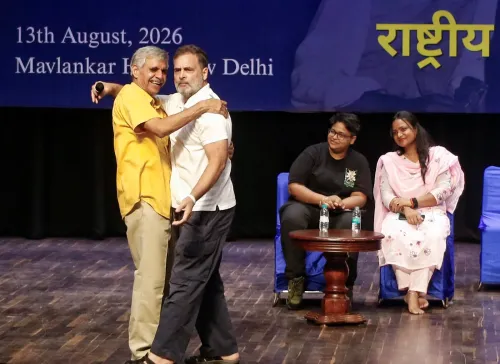
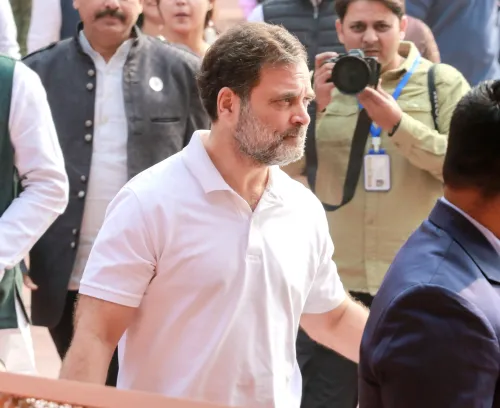
New Delhi, Feb 11 (NationPress) The Leader of Opposition in the Lok Sabha, Rahul Gandhi, might have perused historical accounts detailing the Congress and Nehru-Gandhi legacy of collaboration with Western intelligence agencies before criticizing the government for allegedly compromising the country through its trade and tariff agreement with the United States.
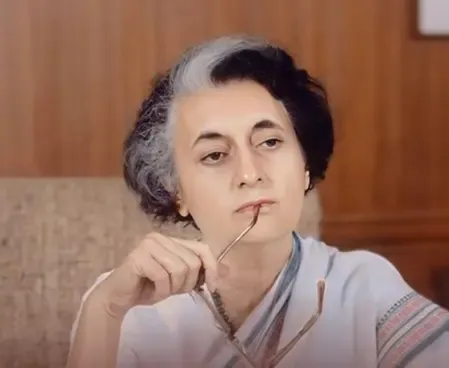
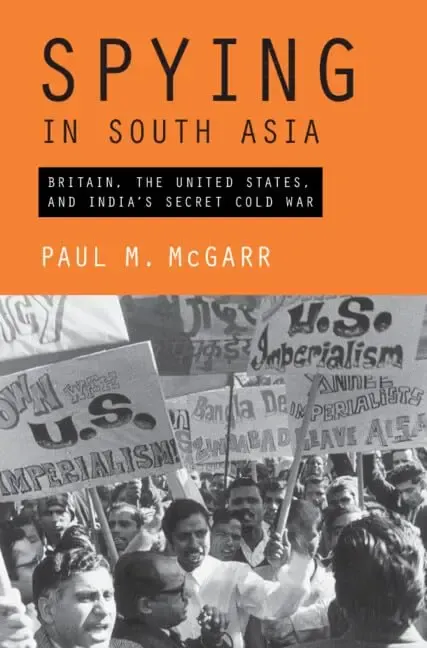
As noted by Daniel Patrick Moynihan, an ambassador to India during U.S. President Richard M. Nixon's administration, Indira Gandhi showed little hesitation in cooperating with foreign intelligence agencies, including those from the United States, when it aligned with her interests, as highlighted by Paul M. McGarr in his book, Spying in South Asia: Britain, the United States, and India’s Secret Cold War, published in 2024.
The book references Moynihan’s 1978 memoir, A Dangerous Place, which confirmed that the CIA intervened in Indian politics on two occasions, channeling funds to the ruling Congress party to thwart the election of communist governments in Kerala and West Bengal. In one instance, it is alleged that the funds were directly funneled to Gandhi, who held the position of Congress party President.
Despite Western intelligence agencies aiding the government in monitoring Leftist forces domestically, New Delhi maintained amicable relations with communist nations in its foreign policy.
McGarr's work offers an extensive history of 'India’s Secret Cold War,' examining the roles of politicians, activists, and journalists in their stances toward Western intelligence agencies.
The author, who teaches Intelligence Studies at King’s College London, led a British Academy-funded research project from 2017-2019 that evaluated the impact of psychological factors alongside material ones on British policymaking in post-colonial South Asia.
In Spying in South Asia, it is argued that while Jawaharlal Nehru harbored skepticism regarding the CIA's involvement in India, he occasionally opted to collaborate with the agency.
McGarr quoted Nehru as expressing doubts about India's need for a broadly dispersed intelligence framework, particularly concerning China, stating: 'I do not think that we should go in a big way to expand our intelligence services,' adding, 'That is beyond our capacity.'
The book illustrates how the Intelligence Bureau faced challenges in gathering reliable information about China, with structural and cultural barriers as significant obstacles, compounded by limited financial resources. The study of Chinese linguistics, culture, politics, and history was largely overlooked in the Indian academic system until the mid-1950s.
Regarding Indira Gandhi, the author emphasized that having been Nehru’s political confidante and later a cabinet minister post-1964, it is implausible that she was oblivious to, or not complicit in, CIA-sanctioned initiatives.
Spying in South Asia investigates the relationship between intelligence operations and statecraft in South Asia, revealing the ties between Western espionage agencies and the Indian government. Although India's leaders post-independence were anti-imperialist and wary of the West, they maintained a formally nonaligned foreign policy. Nevertheless, this stance did not hinder substantial cooperation between Indian intelligence bodies and their Western counterparts, as suggested by McGarr's findings.
Point of View
We recognize the importance of historical accuracy and the relevance of intelligence cooperation in shaping foreign policy. The complexities of Nehru and Indira Gandhi's relationships with Western agencies merit a nuanced exploration, ensuring that we remain committed to a well-informed public discourse.
NationPress
10 Oct 2026
Frequently Asked Questions
What was the nature of Nehru and Indira Gandhi's collaboration with Western intelligence?
Nehru and Indira Gandhi engaged with Western intelligence, notably the CIA, to counter communist influences in Indian politics, as detailed in Paul M. McGarr's book.
How did the CIA influence Indian politics?
The CIA allegedly funneled funds to the Congress party to prevent the rise of communist governments in states like Kerala and West Bengal during the 1970s.
What does McGarr's book reveal about India's foreign policy?
McGarr's book highlights the paradox of India maintaining a nonaligned stance while collaborating extensively with Western intelligence agencies.
What challenges did Indian intelligence face regarding China?
Indian intelligence struggled with structural, cultural, and financial challenges in gathering reliable information about China, particularly before the mid-1950s.
Why is this historical collaboration significant?
Understanding this collaboration sheds light on the dynamics of India's foreign policy and its historical context during the Cold War.