Nehru's 1948 letters on Suhrawardy's tax case reveal a troubling balancing act
Synopsis
Declassified Nehru letters from December 1948 show India's first Prime Minister personally pressing his Finance Minister and West Bengal's Chief Minister to probe a ₹50 lakh tax assessment against Suhrawardy — the same man widely blamed for the 1946 Calcutta killings. The correspondence suggests diplomatic optics around Pakistan weighed heavier than historical accountability.
Key Takeaways
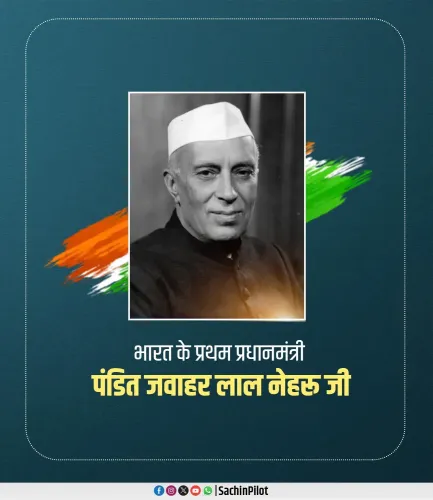
Prime Minister Jawaharlal Nehru wrote to Finance Minister John Mathai and West Bengal CM Bidhan Chandra Roy on 12 December 1948 about Huseyn Shaheed Suhrawardy's tax dispute.
Suhrawardy had complained of a nearly ₹50 lakh income-tax assessment for 1945-46 and 1946-47 , alleging harassment by the Income Tax Department.
Nehru personally forwarded the grievances and cautioned against 'high-handed' action, citing 'far-reaching' political consequences.
Suhrawardy was Premier of Bengal during the Direct Action Day riots of 1946 , accused of inciting communal violence; Nehru's own letter described his record as 'thoroughly bad.' Suhrawardy later moved to Pakistan and became its Prime Minister in 1956 .
The letters are now accessible through the digitised Nehru archives .
Declassified private letters written by Prime Minister Jawaharlal Nehru in December 1948 — now accessible through the digitised Nehru archives — show him personally intervening in the income-tax dispute of Huseyn Shaheed Suhrawardy, the last Premier of undivided Bengal and a figure widely held responsible for inciting the 1946 Direct Action Day violence in Calcutta. The correspondence, addressed to Finance Minister John Mathai and West Bengal Chief Minister Bidhan Chandra Roy, raises pointed questions about how post-Partition diplomatic calculations shaped the new government's approach to accountability.
The Letters and What They Reveal
On 12 December 1948, Nehru wrote to Mathai after Suhrawardy personally complained that the Income Tax Department had assessed him for nearly ₹50 lakh in taxes for the years 1945-46 and 1946-47, alleging harassment by tax authorities. Rather than directing the matter to the department, Nehru forwarded the grievances himself and cautioned that any 'high-handed' action could carry serious political repercussions.
'What Suhrawardy told me may or may not be true or it may be partly true, but I must confess that it has disturbed me greatly and I have the feeling that a full enquiry should be made to find out exactly what has happened and how,' Nehru wrote in his letter to Mathai.
On the same day, Nehru wrote to West Bengal Chief Minister Roy, describing the assessment as 'extraordinary' and seeking further details. 'Whatever our views about Shaheed might be, specially about his past conduct, we cannot afford to do anything in a high-handed manner. This has political consequences of a far-reaching character,' he stated.
Who Was Suhrawardy
Huseyn Shaheed Suhrawardy served as Premier of Bengal during the Direct Action Day riots of 16 August 1946 in Calcutta, when thousands were killed in some of the worst communal violence in pre-Partition India. He was widely accused of complicity in inciting the killings, earning the epithet 'Butcher of Bengal.' His record as Bengal's Premier was, in Nehru's own words in the letter, 'thoroughly bad.'
Notably, Nehru also acknowledged in the same correspondence that Suhrawardy had later associated himself with Mahatma Gandhi and 'undoubtedly helped greatly in preserving peace' — a framing critics argue amounted to a partial exoneration. Suhrawardy subsequently moved to Pakistan and went on to become its Prime Minister in 1956, despite his deeply contested past.
The Diplomatic Dimension
The letters suggest Nehru's concern extended well beyond tax procedure. With India-Pakistan relations still raw in the months after Partition, Suhrawardy's emerging profile in Pakistani politics added a diplomatic layer to what might otherwise have been a routine tax dispute. According to the correspondence, Nehru appeared more preoccupied with cross-border perceptions than with the historical weight of Suhrawardy's conduct during the Bengal riots.
The concern, as the letters make plain, was not the assessment itself but the 'far-reaching' political consequences of the government's treatment of a prominent Muslim leader at a sensitive geopolitical moment.
The Contradiction at the Core
The episode presents a striking irony: a Prime Minister who publicly championed secularism and due process appearing to extend special consideration to a figure accused of deepening communal fault lines. The letters' tone reflects a deliberate balancing act — acknowledging Suhrawardy's divisive record while insisting that even controversial figures deserved impartial treatment under Indian law.
Whether that insistence on impartiality was principled or pragmatic remains a matter of historical debate. What the digitised archives now make clear is that the intervention was direct, personal, and driven as much by political calculus as by procedural fairness.
Significance of the Digitised Archives
The availability of these letters through the digitised Nehru archives marks a broader effort to open early post-Independence governance records to public and academic scrutiny. Historians note that such correspondence offers rare insight into how India's founding leadership navigated the intersection of law, communal memory, and foreign policy in the country's earliest years. Further examination of the archive is expected to surface additional episodes from the Partition era that have not previously received sustained attention.
Point of View
Which sanitised official histories tend to smooth over. The deeper question the correspondence raises is structural: how often did early post-Independence governance subordinate domestic justice to foreign-policy calculation, and how many such episodes remain unexamined in the archives?
NationPress
20 Sept 2026
Frequently Asked Questions
What do Nehru's 1948 letters about Suhrawardy reveal?
The letters, written on 12 December 1948 and now accessible through the digitised Nehru archives, show Prime Minister Jawaharlal Nehru personally intervening in Huseyn Shaheed Suhrawardy's income-tax dispute, forwarding his complaints to Finance Minister John Mathai and West Bengal Chief Minister Bidhan Chandra Roy. Nehru cautioned against 'high-handed' action and called for a full inquiry, citing political consequences.
Who was Huseyn Shaheed Suhrawardy and why is he controversial?
Suhrawardy was the last Premier of undivided Bengal and served during the Direct Action Day riots of 16 August 1946 in Calcutta, when thousands were killed in communal violence. He was widely accused of inciting the killings and is often referred to as the 'Butcher of Bengal.' He later moved to Pakistan and became its Prime Minister in 1956.
How much tax was Suhrawardy assessed for?
According to Nehru's letter to Finance Minister John Mathai, Suhrawardy complained of being assessed for nearly ₹50 lakh in income taxes for the years 1945-46 and 1946-47, and alleged that the Income Tax Department was harassing him.
Why did Nehru intervene in a tax matter personally?
The letters suggest Nehru's concern was less about the tax procedure itself and more about the broader political consequences of the government's treatment of a prominent Muslim leader in the sensitive post-Partition context. Nehru noted that Suhrawardy's emerging presence in Pakistani politics added a diplomatic dimension to the dispute.
Where can these letters be accessed?
The correspondence is now accessible through the digitised Nehru archives, which form part of a broader effort to open early post-Independence governance records to public and academic scrutiny.