Could the New Seed Act 2026 Transform Farmer Protections?

Synopsis
Union Agriculture Minister Shivraj Singh Chouhan has proposed the Seed Act 2026, aiming to protect farmers from inferior seeds through mandatory registration and steep penalties. With features like seed traceability and QR codes, this legislation promises to enhance seed quality and transparency, ensuring farmers can trust what they buy.
Key Takeaways
Mandatory registration for seed companies to ensure accountability.
Penalties up to Rs 30 lakh for selling inferior seeds.
Introduction of a QR code system for seed traceability.
Strengthening of public and private sectors to enhance seed quality.
Traditional seed exchange practices will remain unaffected.
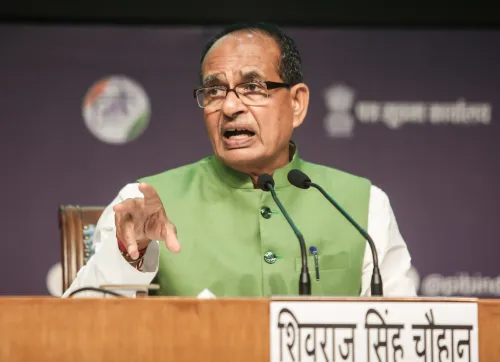
New Delhi, Jan 16 (NationPress) Union Agriculture and Farmers' Welfare Minister Shivraj Singh Chouhan introduced the new Seed Act 2026 proposals on Friday, which mandate the registration of seed companies and impose penalties reaching up to Rs 30 lakh for the sale of inferior seeds.
The minister emphasized that this proposed legislation represents a significant advancement toward safeguarding farmers, enhancing seed quality, and ensuring transparency throughout the industry.
Each seed packet will feature a QR code that farmers can scan to obtain comprehensive details regarding its origin. This initiative aims to thwart the distribution of fake or low-quality seeds and facilitate prompt action against offenders if such products infiltrate the market.
Chouhan stated that a national seed traceability system will be established. "We aim to develop a framework that enables the identification of where seeds are produced, the dealer who supplied them, and the seller involved," he noted.
Moreover, every seed company must register, clarifying which entities hold authorization to operate. "Information about registered companies will be made accessible, preventing unauthorized sellers from distributing seeds," he added. This measure is designed to eradicate fraudulent companies from the market, ensuring that farmers obtain seeds from reliable sources.
According to the Agriculture Minister, once the traceability system is in place, counterfeit or low-quality seeds will be promptly identified. "Inferior seeds will not infiltrate the system, and should they do so, they will be detected. Suppliers of such seeds will face penalties," he stated. This approach aims to eliminate the misleading practices employed by companies and dealers that deceive farmers.
Chouhan indicated a strict stance against negligence in seed quality. "Previously, the penalty was capped at Rs 500. Now, we propose a fine of up to Rs 30 lakh, and if someone intentionally commits an infraction, there will also be provisions for punishment," he explained.
The Seed Act encompasses provisions at three levels: public sector institutions (Indian Council of Agricultural Research, agricultural universities, and Krishi Vigyan Kendras), domestic companies producing high-quality seeds, and a thorough evaluation mechanism for imported seeds.
"Seeds brought in from abroad will only be approved after rigorous testing and assessment. Our public institutions and domestic private sector will be fortified to ensure that farmers receive high-quality seeds," he stated.
The minister also alleviated fears that the new legislation would restrict the use of traditional seeds by farmers.
"Farmers are still allowed to plant their own seeds and share them with others. The traditional seed exchange system at the local level will persist without any issues," he assured. He highlighted practices in rural areas where farmers exchange seeds during planting and return them later with an added quantity, asserting that such customs will remain intact.
Point of View
The introduction of the Seed Act 2026 appears to be a proactive measure aimed at ensuring the welfare of farmers across the nation. With increased accountability and traceability, the act holds the potential to revolutionize the seed market, enhancing the quality of agricultural inputs and providing farmers with the assurance they deserve. As this legislation unfolds, it will be crucial to monitor its implementation and effectiveness in curbing malpractices.
NationPress
24 Sept 2026
Frequently Asked Questions
What is the Seed Act 2026 ?
The Seed Act 2026 is a proposed legislation aimed at protecting farmers by mandating seed company registration and imposing penalties for selling substandard seeds.
How will the new law help farmers?
The law will ensure seed quality through traceability and penalties for fraudulent practices, protecting farmers from inferior seeds.
Will traditional seed exchange be affected?
No, farmers can continue to sow and share their traditional seeds as before.