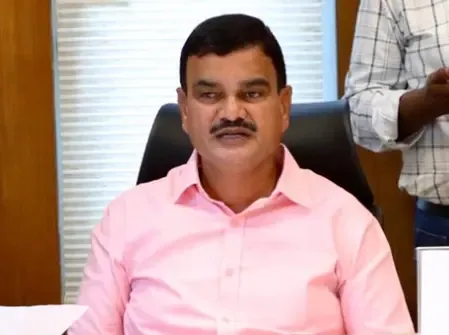
Maharashtra to enact independent Seed Act: Minister Dattatray Bharne
Synopsis
Maharashtra is set to get its own independent Seed Act — one that legally arms farmers to store, exchange, and sell self-produced seeds, mandates swift compensation for crop failures caused by defective seeds, and places quality accountability squarely on seed companies. With a traceability portal and district-level grievance cells in the works, this is one of the most comprehensive seed-sector reforms any Indian state has attempted.
Key Takeaways
Maharashtra Agriculture Minister Dattatray Bharne announced a new independent Seed Act on 28 April 2025 .
Farmers will be legally protected to store, use, exchange, and sell self-produced seeds without branded-name restrictions.
Immediate financial compensation will be mandated if crop failure occurs due to defective or sub-standard seeds .
Seed Grievance Redressal Cells will be established at the district level to support affected farmers.
A 'Centralised Seed Traceability Portal' and QR codes on seed packets will track seeds from production to sale.
The 'Sathi' portal has achieved 100% registration of seed-producing organisations; full implementation begins Kharif 2026 .
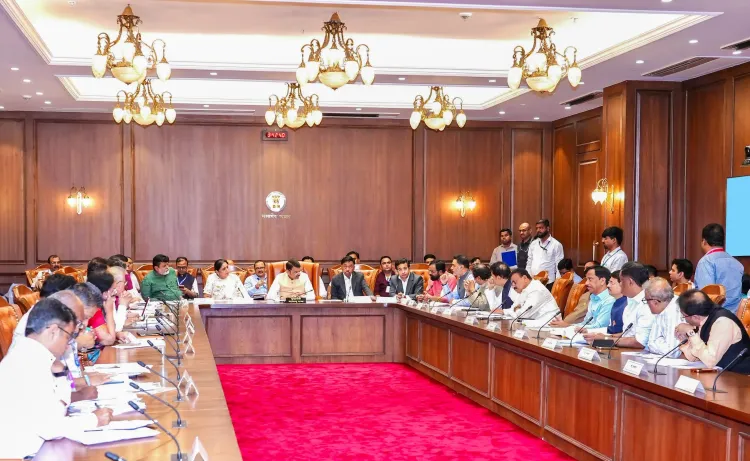
Maharashtra Agriculture Minister Dattatray Bharne on Tuesday, 28 April 2025, announced that the state will soon enact its own independent Seed Act, a move aimed at legally empowering farmers and ensuring the availability of high-quality seeds across Maharashtra. The proposed legislation will allow farmers to store, use, exchange, and sell self-produced seeds without restrictions tied to branded names.
What the Proposed Seed Act Covers
The new law will legally safeguard farmers' rights to trade seeds they produce themselves. It will include robust provisions for swift financial compensation in cases where seeds are found to be sub-standard or cause crop failure. Seed companies will bear direct responsibility for quality assurance, and the Act will impose strict penalties on violators.
Minister Bharne also announced the establishment of Seed Grievance Redressal Cells at the district level to provide immediate support to affected farmers. The legislation further aims to modernise the entire seed supply chain through mandatory registration, traceability systems, seed health standards, and nursery regulations.
Key Technical Interventions Planned
The proposed framework includes several technology-driven measures. QR codes on seed packets and a 'Centralised Seed Traceability Portal' will track seeds from production to the point of sale. Specific biological safety limits — covering viruses, bacteria, and fungi — will be defined for seeds. All seed producers, processing centres, distributors, sellers, and nurseries will be required to register mandatorily. Nurseries will additionally be required to maintain a 'source register' for all saplings.
Mahabeej and the 'Sathi' Portal
The Act also emphasises strengthening the Maharashtra State Seeds Corporation (Mahabeej), referred to during the meeting as Mahaveer, to improve its operational efficiency. Officials from the agriculture department confirmed that technical groundwork is already underway. The 'Sathi' portal has achieved 100 per cent registration of all seed-producing organisations in the state. Starting from the Kharif 2026 season, the entire cycle of production, distribution, and sale of all seed types will be managed through this portal, ensuring complete transparency and accountability.
Background and Legislative Commitment
The decision fulfils an assurance given during the second monsoon session of the Maharashtra Legislature in 2025. During a high-level meeting, Minister Bharne issued several directives to refine the bill, with a focus on farmer empowerment, immediate compensation, strict accountability, and institutional strengthening. He emphasised that while drafting this independent law, seed companies must bear full responsibility for product quality.
With the Kharif 2026 season set as a key implementation milestone, all eyes will be on how swiftly the Maharashtra government tables and passes the bill in the legislature.
Point of View
The state is attempting to close a gap that has contributed to agrarian distress for decades. The traceability portal is a credible structural addition, but the real test will be enforcement: past state-level agri reforms in India have often been strong on paper and weak in implementation. Whether Mahabeej itself can be reformed — rather than just reinforced — will determine if this law changes ground realities or remains a legislative headline.
NationPress
19 Sept 2026
Frequently Asked Questions
What is the Maharashtra independent Seed Act announced by Minister Dattatray Bharne?
It is a proposed state-level legislation announced on 28 April 2025 that will legally protect farmers' rights to store, use, exchange, and sell self-produced seeds. The Act will also mandate immediate compensation for crop failures caused by defective seeds and impose strict penalties on seed companies that supply sub-standard products.
How will farmers be compensated under the new Seed Act?
The Act will include solid provisions requiring swift financial redressal for farmers if seeds are found to be sub-standard or cause crop failure. Seed Grievance Redressal Cells will be set up at the district level to handle complaints and facilitate compensation.
What is the 'Centralised Seed Traceability Portal' in Maharashtra?
It is a proposed digital platform that, along with QR codes on seed packets, will track seeds from the point of production to the point of sale. All seed producers, distributors, sellers, and nurseries will be required to register on this portal, ensuring transparency across the supply chain.
When will the new seed regulations come into effect in Maharashtra?
The 'Sathi' portal has already achieved 100 per cent registration of seed-producing organisations. Starting from the Kharif 2026 season, the entire production, distribution, and sale cycle for all seed types will be managed through this portal, pending enactment of the full Seed Act.
What is Mahabeej and what role does it play in the new Seed Act?
Mahabeej, formally the Maharashtra State Seeds Corporation, is the state's primary seed supply body. The proposed Seed Act emphasises strengthening Mahabeej's operational efficiency as part of a broader effort to ensure reliable access to quality seeds for farmers across Maharashtra.