CM Fadnavis Cracks Down on Spurious Seeds in Maharashtra
Synopsis
Chief Minister Devendra Fadnavis disclosed in the Maharashtra Assembly on 10 July 2026 that 1,141 seed sales licences have been suspended and 242 cancelled this year as part of a large-scale crackdown on spurious seeds, aiming to protect farmers during the kharif sowing season.
Key Takeaways
1,141 seed sales licences have been suspended in Maharashtra so far in 2026.
242 seed sales licences have been permanently cancelled in the same period.
The announcement was made by CM Devendra Fadnavis at the Maharashtra Legislative Assembly, Mumbai on 10 July 2026 during the Monsoon Session.
Action targets dealers of spurious or counterfeit seeds that harm farmer productivity during the kharif sowing season.
Enforcement is conducted under the Seeds Act framework, which empowers state authorities to suspend or cancel dealer licences.
The crackdown affects seed traders across Maharashtra, with farmers and rural communities as the primary intended beneficiaries.
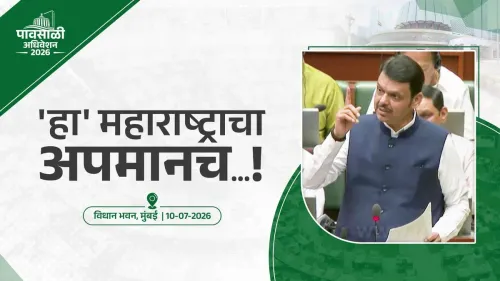
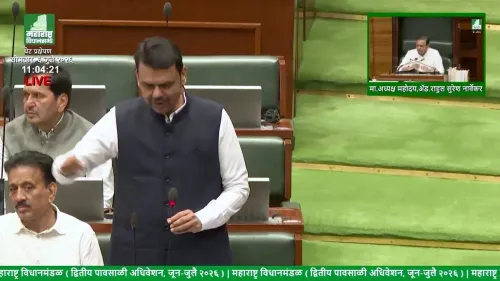
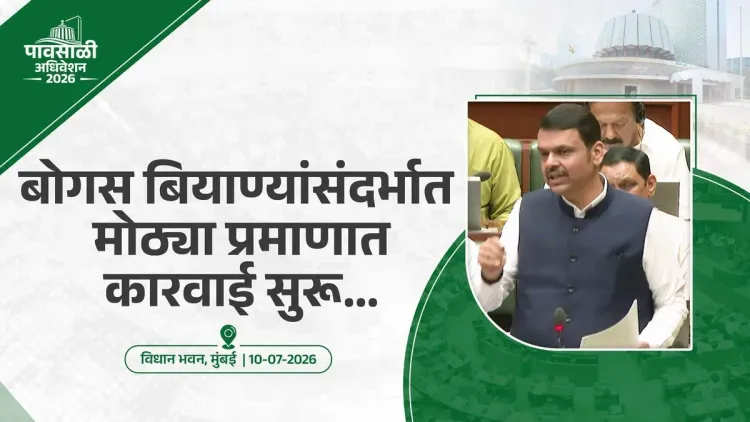
Maharashtra Chief Minister Devendra Fadnavis announced sweeping enforcement action against spurious seeds on the floor of the Maharashtra Legislative Assembly in Mumbai on 10 July 2026, disclosing that 1,141 sales licences have been suspended and 242 sales licences cancelled this year alone.
Addressing the assembly during the Monsoon Session 2026, Fadnavis stated in both English and Marathi: 'बोगस बियाण्यांसंदर्भात मोठ्या प्रमाणात कारवाई सुरू केली असून' — 'Large-scale action has been initiated against spurious seeds.' The announcement signals a significant escalation in the state's effort to protect farmers from counterfeit agricultural inputs during the critical kharif sowing season.
Context
Spurious or substandard seeds have long plagued Maharashtra's farming communities, with complaints historically centred on fake Bt cotton and hybrid seed varieties that fail to deliver promised yields. Farmers who unknowingly sow counterfeit seeds face crop losses with little recourse, compounding agrarian distress in an already vulnerable sector. The state's enforcement machinery has periodically mounted crackdowns, but the scale of action disclosed on 10 July 2026 — over 1,383 licences either suspended or cancelled — represents a notably large-scale regulatory intervention.
Policy Backdrop
Licence action of this nature is conducted under the Seeds Act framework, which empowers state governments to inspect, sample, and penalise dealers found selling substandard or mislabelled seed stock. Maharashtra, as one of India's largest agricultural states, has tightened its licensing and inspection regime in response to recurring quality violations reported by farmers and field inspectors. Enforcement drives are typically intensified ahead of and during the kharif window — roughly June through September — when seed demand peaks and the risk of fraudulent products entering the market is highest.
The twin levers of suspension and cancellation serve distinct purposes: suspension allows authorities to halt sales pending further inquiry, while outright cancellation permanently revokes a dealer's right to operate. The combination of both actions against more than a thousand entities in a single year suggests a sustained, structured campaign rather than a one-off raid.
Stakeholders and Impact
Farmers — particularly smallholders dependent on kharif crops such as cotton, soybean, and pulses — stand to benefit most directly if enforcement reduces the circulation of fake seeds in rural markets. Seed traders operating without adequate quality controls face the immediate commercial consequence of licence action, while legitimate dealers may see reduced competition from non-compliant operators.
Consumer and farmer advocacy groups have for years demanded stricter penalties for spurious seed suppliers, arguing that existing fines were insufficient deterrents. The scale of the current action, if sustained through the sowing season, could meaningfully shift compliance behaviour across the seed retail supply chain in Maharashtra.
What's Next
The Monsoon Session 2026 is expected to continue, with further legislative questions and ministerial replies likely to surface additional enforcement statistics or policy commitments on agricultural input regulation. Observers will watch whether the licence suspensions translate into prosecutions and whether the state government moves to strengthen the Seeds Act's penal provisions at the legislative level. For Maharashtra's farmers, the real test will come at harvest — when the quality of this season's seed stock determines whether the crackdown delivered results on the ground.
Point of View
383 suspensions and cancellations in a single year — signals that the Fadnavis government is treating spurious seed enforcement as a political as well as administrative priority, likely aware that farmer distress over input quality has electoral salience in rural Maharashtra. By making the announcement from the assembly floor during the Monsoon Session, the Chief Minister frames the crackdown as a legislative accountability moment rather than a routine departmental exercise, giving it greater visibility. The move fits a broader pattern of state governments using the kharif season to demonstrate agrarian responsiveness, particularly in a state with a large and politically consequential farming population. Whether the action translates into lasting market reform will depend on sustained inspection capacity and whether cancelled licences deter new entrants from filling the gap with similarly substandard products.
NationPress
10 Oct 2026
Frequently Asked Questions
What action did CM Fadnavis announce against spurious seeds in Maharashtra?
CM Devendra Fadnavis announced on 10 July 2026 that 1,141 seed sales licences have been suspended and 242 permanently cancelled as part of a large-scale crackdown on spurious seeds in Maharashtra.
What is a spurious seed and why is it a problem for farmers?
A spurious seed is a counterfeit or substandard seed sold under a false label or brand. Farmers who sow such seeds risk crop failure or significantly reduced yields, leading to financial losses with little legal recourse.
Under which law can Maharashtra suspend or cancel seed dealer licences?
Licence suspension and cancellation actions are carried out under the Seeds Act framework, which empowers state governments to regulate seed quality, inspect dealers, and penalise those found selling substandard or mislabelled products.
When did Fadnavis make this announcement about seed licences?
The announcement was made on 10 July 2026 during the Maharashtra Legislative Assembly's Monsoon Session 2026 in Mumbai.
How does the spurious seed crackdown affect kharif farming in Maharashtra?
The kharif season — roughly June to September — is when seed demand peaks. Removing non-compliant dealers from the market during this window is intended to ensure that farmers sow genuine, quality-certified seeds, protecting crop yields for the current agricultural year.