NHRC issues notice over Faridabad woman, daughter carried to mortuary in garbage truck
Synopsis
The NHRC has stepped in after reports that hospital staff in Faridabad allegedly refused to provide a hearse, forcing a grieving family to transport the bodies of their wife and daughter to a mortuary in a garbage vehicle. The commission's suo motu action and two-week notice to Haryana officials signals that institutional accountability — not just individual negligence — is now under scrutiny.
Key Takeaways
The NHRC took suo motu cognisance of reports that bodies of a woman and her daughter were carried in a garbage vehicle to Civil Hospital, Ballabhgarh , for post-mortem.
The woman and her daughter died in a road accident on the Delhi-Mumbai Expressway in Ballabhgarh, Faridabad , on 14 November 2026 .
Hospital staff allegedly failed to provide a hearse, reportedly compelling the family to use a municipal garbage vehicle.
The NHRC has issued notices to the Secretary, Haryana Health Department , and the Faridabad District Magistrate , seeking a report within two weeks .
The commission reiterated that Article 21 of the Constitution — the right to life and dignity — extends to deceased persons.
The NHRC had earlier issued a 14 May 2021 advisory to all states and UTs on the respectful treatment of dead bodies.
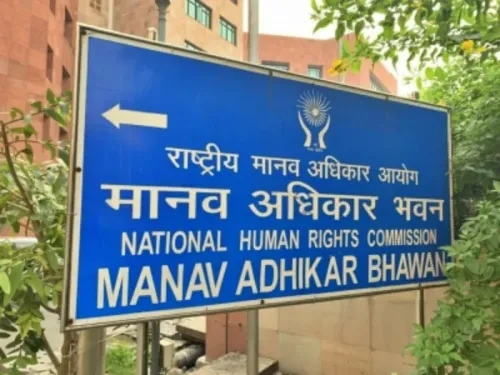
The National Human Rights Commission (NHRC) has taken suo motu cognisance of a media report describing how the bodies of a woman and her daughter were transported in a garbage vehicle to a mortuary for post-mortem examination in Faridabad, Haryana, after hospital staff allegedly failed to arrange a hearse. The commission has issued notices to two senior officials and demanded a detailed response within two weeks.
What the NHRC Observed
The apex human rights body stated that the contents of the media report, if true, raise serious concerns about the violation of human rights. It reiterated that the right to life and human dignity under Article 21 of the Constitution extends to the deceased, requiring authorities and institutions to treat dead bodies with due respect. The NHRC also recalled its advisory of 14 May 2021, issued to all states and Union Territories, on the respectful handling of mortal remains.
Notices to Haryana Officials
The commission has directed notices to the Secretary, Department of Health and Family Welfare, Haryana, and the Faridabad District Magistrate, seeking a detailed report on the incident. The notices reflect the NHRC's statutory authority to act on media reports and other public sources without awaiting a formal complaint under the Protection of Human Rights Act, 1993.
What Happened in Faridabad
According to reports, the woman and her daughter sustained fatal injuries in a road accident in the Ballabhgarh area of Faridabad on 14 November 2026. The woman, who was employed at the Nawada garbage dumping yard of the Municipal Corporation, was riding a motorcycle with her husband and daughter when their vehicle met with an accident on the Delhi-Mumbai Expressway. Following their deaths at the hospital, the family was allegedly unable to secure a hearse from hospital staff, after which the bodies were reportedly transported to the mortuary of Civil Hospital, Ballabhgarh, in a garbage vehicle. The incident came to public attention through a media report published on 17 November 2026.
NHRC's Mandate and Powers
Established under the Protection of Human Rights Act, 1993, the NHRC is an autonomous statutory body whose primary mandate is to protect and promote rights relating to the life, liberty, equality, and dignity of individuals — rights guaranteed by the Constitution or embodied in enforceable international covenants. The commission is empowered to take suo motu cognisance based on media coverage and other sources, allowing it to intervene swiftly in cases involving alleged institutional neglect or rights violations.
What Happens Next
Both the Haryana Health Department and the Faridabad District Magistrate are now required to submit detailed factual reports to the NHRC within two weeks. Depending on those responses, the commission may direct further remedial action or recommend accountability measures against the officials concerned. The case is likely to renew scrutiny of protocols governing mortuary transport across public hospitals in Haryana and beyond.
Point of View
But past suo motu actions have rarely translated into binding accountability. What is missing from most coverage is the socio-economic dimension: the victim worked at a garbage dumping yard, and her family's inability to independently arrange transport likely reflects the same marginalisation that defined her life. Whether the two-week notice produces structural reform or a routine compliance reply will determine if this case becomes a precedent or a footnote.
NationPress
20 Nov 2026
Frequently Asked Questions
Why did the NHRC intervene in the Faridabad garbage vehicle case?
The NHRC took suo motu cognisance after a media report described how the bodies of a woman and her daughter were allegedly transported to a mortuary in a garbage vehicle in Faridabad because hospital staff failed to provide a hearse. The commission found that such conduct, if confirmed, amounts to a serious violation of the right to dignity guaranteed under Article 21 of the Constitution, which it has clarified extends to deceased persons.
What happened to the woman and her daughter in Faridabad?
The woman and her daughter died from injuries sustained in a road accident on the Delhi-Mumbai Expressway in the Ballabhgarh area of Faridabad on 14 November 2026. The woman was employed at the Nawada garbage dumping yard of the Municipal Corporation and was travelling on a motorcycle with her husband and daughter when the accident occurred.
Who has the NHRC issued notices to, and what has it asked for?
The NHRC has issued notices to the Secretary of the Department of Health and Family Welfare, Haryana, and the Faridabad District Magistrate. Both officials have been asked to submit a detailed factual report within two weeks.
What is the NHRC and can it act without a formal complaint?
The National Human Rights Commission is an autonomous statutory body established under the Protection of Human Rights Act, 1993, mandated to protect rights relating to life, liberty, equality, and dignity. Yes, it can act suo motu — on the basis of media reports or public knowledge — without waiting for a formal complaint of human rights violation.
Has the NHRC previously addressed the treatment of dead bodies by authorities?
Yes. The NHRC had issued an advisory on 14 May 2021 to all states and Union Territories specifically on the respectful treatment of mortal remains. The commission referenced this advisory while issuing its latest notice in the Faridabad case.