NIA files chargesheets against nine ISIS suspects in Vijayawada radicalisation case
Synopsis
The NIA has charged nine alleged ISIS supporters in Vijayawada who reportedly used Instagram to radicalise youth, planned explosives and weapons training, and even built a secret encrypted communication app to evade detection — a level of operational planning that signals an unusually organised domestic terror cell.
Key Takeaways
The NIA filed a chargesheet against nine accused before the Special NIA Court, Vijayawada , on 18 September 2026 .
All nine are alleged members or supporters of the proscribed terrorist organisation ISIS , charged under the Bharatiya Nyaya Sanhita, 2023 and the UAPA .
The accused allegedly used Instagram to radicalise youth and planned explosives-making and weapons training .
The group reportedly developed a custom secure communication app to coordinate activities covertly.
A total of 11 persons and one minor have been arrested; investigation against remaining suspects is ongoing.
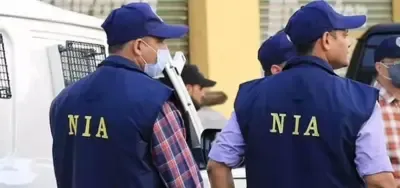
The National Investigation Agency (NIA) has filed a chargesheet against nine accused before the Special NIA Court, Vijayawada, in a case involving online radicalisation and alleged support for the proscribed terrorist organisation ISIS. The filing, announced by the NIA on Friday, 18 September 2026, marks a significant step in a case that has so far seen 11 accused persons and a child in conflict with the law placed under arrest.
The Accused and Charges
The nine individuals named in the chargesheet are Mohammad Rehmatullah Shariff, Mohammed Danish, Mirza Sohail Baig, Lucky Ahmad, Jishan Abdul Majid, Mir Ashif Ali, Abdul Salaam, Sharuk Khan, and Shaikh Faiz ur Rehman. All nine are alleged members and supporters of ISIS.
They have been charged under Sections 61(2) read with 3(5) and 152 of the Bharatiya Nyaya Sanhita, 2023, and Sections 13(1), 38 and 39 of the Unlawful Activities (Prevention) Act (UAPA), according to the NIA's official statement.
How the Case Began
The case was initially registered on 23 March 2026 at the Vijayawada II Town Police Station, NTR Commissionerate, Vijayawada, under multiple provisions including sections of the Bharatiya Nyaya Sanhita, 2023, Section 66F of the Information Technology Act, 2000, and several sections of the Unlawful Activities (Prevention) Act, 1967. The NIA subsequently took over the investigation given the national security dimensions of the conspiracy.
What Investigators Found
According to the NIA, investigation has established that the accused allegedly entered into a broader conspiracy to advance ISIS's activities, primarily using social media platforms such as Instagram, with the stated aim of establishing a caliphate in India through violent jihad — thereby threatening the sovereignty and territorial integrity of the country.
Investigators further established that the accused allegedly motivated and radicalised vulnerable youth to participate in violent terrorist activities. They also reportedly planned and prepared for making explosives and undertaking weapons training. Notably, the group is said to have developed and tested a secure communication application to coordinate secretly among themselves — a level of operational sophistication that sets this case apart from routine radicalisation cases.
Scale of the Arrests
So far, 11 accused persons and one child in conflict with the law have been arrested in the case. The chargesheet covers nine of those arrested adults. The NIA has confirmed that investigation against the remaining accused and other suspects is ongoing, indicating that further charges and arrests cannot be ruled out.
Broader Context
This case is part of a wider national pattern of ISIS-linked online radicalisation networks that Indian agencies have been tracking over the past several years. The use of encrypted apps and mainstream social media for recruitment mirrors tactics documented in earlier NIA cases across Kerala, Karnataka, and Telangana. The involvement of a minor further underscores concerns about the lowering age of radicalisation targets. As the investigation progresses, the focus is expected to expand to the network's funding channels and any cross-border links.
Point of View
A step beyond the off-the-shelf apps typically cited in such cases. That kind of operational investment suggests a cell with longer time horizons and possibly external guidance. The involvement of a minor also points to a deliberate targeting of younger, more impressionable individuals, a trend that Indian agencies have flagged but not yet reversed. What this case will ultimately reveal — and what mainstream coverage may underweight — is whether local radicalisation networks are becoming more self-sufficient, reducing their dependence on overseas ISIS handlers and making them harder to detect through conventional intelligence.
NationPress
18 Sept 2026
Frequently Asked Questions
What is the NIA's Vijayawada online radicalisation case?
It is a case involving nine alleged members and supporters of ISIS who were accused of using social media — primarily Instagram — to radicalise youth, plan explosives training, and build a covert communication app in pursuit of establishing a caliphate in India. The case was first registered on 23 March 2026 at the Vijayawada II Town Police Station before the NIA took it over.
Who are the nine accused named in the NIA chargesheet?
The nine are Mohammad Rehmatullah Shariff, Mohammed Danish, Mirza Sohail Baig, Lucky Ahmad, Jishan Abdul Majid, Mir Ashif Ali, Abdul Salaam, Sharuk Khan, and Shaikh Faiz ur Rehman — all described as alleged ISIS members or supporters.
Under which laws have the accused been charged?
They have been charged under Sections 61(2) read with 3(5) and 152 of the Bharatiya Nyaya Sanhita, 2023, and Sections 13(1), 38 and 39 of the Unlawful Activities (Prevention) Act. The original FIR also included Section 66F of the Information Technology Act, 2000.
How many people have been arrested in this case so far?
As of 18 September 2026, a total of 11 accused persons and one child in conflict with the law have been arrested. The NIA has confirmed that investigation into remaining accused and other suspects is still in progress.
What makes this case different from other online radicalisation cases?
Beyond social media recruitment, the accused in this case allegedly planned explosives-making and weapons training, and developed a custom encrypted communication application for covert coordination — suggesting a level of technical and operational sophistication not commonly seen in routine radicalisation cases tracked in India.