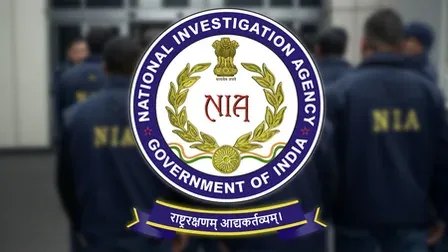
NIA arrests 4 in West Bengal over JMB sleeper cell links in Bengal

Synopsis
The NIA swept across five locations in West Bengal on 29 September, arresting four men — including a mosque Imam and an alleged member of the 'Purba Akash' satellite terror group — in a single day. The raids trace back to documents seized from a JMB militant arrested in Assam last week, suggesting a cross-border sleeper network is more entrenched than previously known.
Key Takeaways
The NIA arrested four persons from West Bengal on 29 September 2026 for suspected links to Jamaat-ul-Mujahideen Bangladesh (JMB) .
Those arrested: Piar Mohammad Sheikh (Imam, East Burdwan), Jumman Sheikh (tailor, Mithapukur), Shahrul Purrkait (Balarampur), and Abdul Rafiq (South 24 Parganas).
Abdul Rafiq is reportedly an active member of the Bangladesh-based satellite group 'Purba Akash' (Eastern Sky) , originally from Barpeta, Assam .
Raids at five locations in West Bengal were based on intelligence obtained from a JMB militant arrested in Assam last week.
JMB was allegedly working to establish sleeper cells in West Bengal by radicalising youths from a particular community.
The National Investigation Agency (NIA) on Tuesday, 29 September 2026, arrested four persons from West Bengal in connection with its ongoing probe into suspected terror links tied to the banned Bangladesh-based militant outfit Jamaat-ul-Mujahideen Bangladesh (JMB). The arrests followed coordinated raids and search operations launched simultaneously at multiple locations across the state since early morning.
Who Was Arrested
The first arrest of the day was Piar Mohammad Sheikh, an Imam attached to a mosque in Palishgram village under Mangalkot Police Station in East Burdwan district, suspected of having terror links. Three more individuals were subsequently detained: Jumman Sheikh, a tailor, arrested from Mithapukur; Shahrul Purrkait, arrested from Balarampur; and Abdul Rafiq, arrested from Narendrapur in South 24 Parganas district.
According to the NIA, Abdul Rafiq, originally from Barpeta, Assam, is reportedly an active member of a Bangladesh-based satellite terror group identified as 'Purba Akash' (Eastern Sky).
What Triggered the Raids
Tuesday's operations were linked to a case registered in neighbouring Assam. Last week, NIA sleuths had arrested a youth in Assam on suspicion of militant activity. Investigators determined he was an active JMB member. During interrogation, according to the NIA, the youth admitted that a module of the Bangladesh-based outfit was operational in West Bengal and that the organisation was actively working to establish sleeper cells there.
Documents seized from the Assam arrestee reportedly provided specific intelligence about the active JMB module, which the agency used as the basis for Tuesday's multi-location raids in West Bengal. The NIA deployed different teams at five locations in the state.
The JMB Threat in West Bengal
According to the NIA's findings, JMB had been targeting youths from a particular community in West Bengal, allegedly brainwashing them to join the banned outfit. This comes amid growing concern among central security agencies about the cross-border spread of Bangladeshi fundamentalist networks into Indian border states.
Notably, West Bengal and Assam share a long porous border with Bangladesh, making them especially vulnerable to infiltration by such groups. This is not the first time the NIA has acted on JMB-linked intelligence in eastern India — the agency has periodically dismantled suspected JMB modules in the region over the past several years.
What Happens Next
The four arrested individuals are expected to be produced before a competent court for remand as the investigation deepens. Security analysts say the NIA will likely pursue leads from the interrogation of all four to map the full extent of the alleged sleeper network. Further arrests cannot be ruled out as the agency continues to piece together the JMB module's structure across both West Bengal and Assam.
Point of View
Stemming from one interrogation in Assam, is a significant operational result — but it raises as many questions as it answers. The JMB has been periodically disrupted in eastern India for years, yet the network keeps regenerating, suggesting that interdiction alone is not a durable solution. The reference to youths being 'brainwashed' into joining the outfit points to a radicalisation pipeline that is social and ideological, not merely logistical. Until the NIA — and state agencies in West Bengal — tackle the upstream recruitment ecosystem, dismantling individual modules will remain a game of whack-a-mole along one of India's most porous borders.
NationPress
29 Sept 2026
Frequently Asked Questions
Who did the NIA arrest in West Bengal on 29 September 2026?
The NIA arrested four persons: Piar Mohammad Sheikh, an Imam from Palishgram village in East Burdwan; Jumman Sheikh, a tailor from Mithapukur; Shahrul Purrkait from Balarampur; and Abdul Rafiq from Narendrapur in South 24 Parganas. All four are suspected of having links to the banned Bangladesh-based militant outfit JMB.
What is Jamaat-ul-Mujahideen Bangladesh (JMB)?
Jamaat-ul-Mujahideen Bangladesh (JMB) is a banned Bangladesh-based Islamist militant organisation. It has been designated a terror outfit and has been linked to multiple attacks and radicalisation efforts in both Bangladesh and parts of eastern India, including West Bengal and Assam.
What triggered the NIA raids in West Bengal?
The raids were triggered by the arrest of a youth in Assam last week, who was identified as an active JMB member. His interrogation and seized documents revealed that a JMB module was operational in West Bengal, prompting simultaneous raids at five locations on Tuesday.
What is 'Purba Akash' and how is it connected to these arrests?
'Purba Akash' (Eastern Sky) is described by the NIA as a Bangladesh-based satellite terror group. Arrested suspect Abdul Rafiq, originally from Barpeta in Assam, is reportedly an active member of this outfit, suggesting JMB operates through multiple affiliated networks inside India.
What happens to the four arrested persons now?
The four arrested individuals are expected to be produced before a court for custodial remand, allowing the NIA to interrogate them further. The agency is likely to pursue leads from their questioning to map the full extent of the alleged JMB sleeper network across West Bengal and Assam.