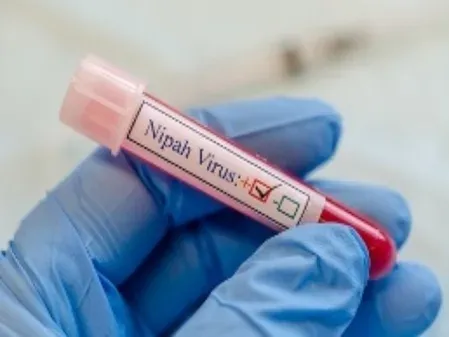
Nipah virus detected in Kozhikode: Kerala on alert, patient in isolation
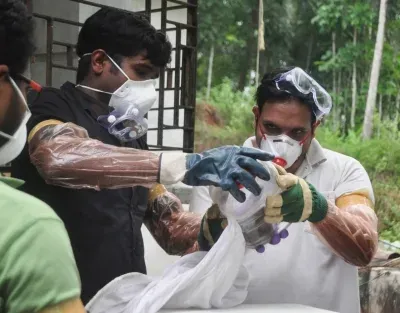
Synopsis
A 43-year-old man from Farook, Kozhikode, has tested positive for Nipah virus after days of misdiagnosis — initially mistaken for alcohol withdrawal — during which he interacted with multiple people at a de-addiction centre. With confirmatory tests still awaited from NIV Pune, Kerala's recurring Nipah vulnerability and its lack of an in-state advanced virology facility are once again in the spotlight.
Key Takeaways
A 43-year-old man from Farook, Kozhikode tested positive for Nipah virus on 11 June , with samples sent to NIV Pune for final confirmation.
The patient is admitted to the isolation ward at Kozhikode Medical College Hospital ; entry to the SDS block has been barricaded.
He is suspected to have contracted the virus through exposure to bat droppings while cleaning an old building in Farook.
A diagnostic delay — symptoms initially mistaken for alcohol withdrawal — led to his stay at a de-addiction centre , expanding the potential contact list.
Health authorities have launched a contact-tracing exercise ; all identified contacts will be placed under strict observation.
The case has renewed questions about Kerala's dependence on external labs for advanced virus diagnosis, with no dedicated virology research facility in the state.
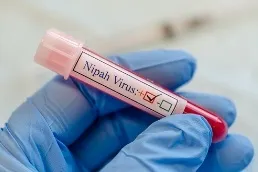
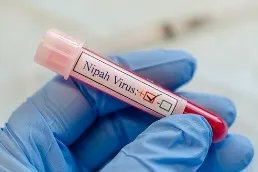
A 43-year-old man from Farook in Kozhikode, Kerala, has tested positive for the Nipah virus following laboratory tests at Kozhikode Medical College, prompting health authorities to launch emergency containment and contact-tracing operations on 11 June. The patient has been shifted to a dedicated isolation ward, while confirmatory samples have been dispatched to the National Institute of Virology (NIV), Pune.
How the Infection Was Detected
The patient first presented with high fever before developing more serious symptoms, including confusion and behavioural changes. Relatives reportedly attributed these signs to alcohol withdrawal, as he was a regular drinker, leading to his admission at a de-addiction centre for several days. His condition deteriorated, and he was subsequently transferred to a major private hospital before the Nipah infection was identified through tests at the Medical College laboratory.
The delay in diagnosis has raised concerns among health officials, as the patient is believed to have interacted with inmates and staff at the de-addiction centre during this period, significantly expanding the potential contact list.
Suspected Source of Exposure
According to health experts, the patient worked in cleaning old buildings and is suspected to have contracted the virus while working on a structure with a heavy bat presence in Farook. Exposure to bat droppings or contaminated material is considered the likely route of transmission. Nipah is a zoonotic infection — transmitted from animals, particularly bats, to humans — and can cause severe fever, breathing difficulty, vomiting, neurological complications, and brain inflammation. The incubation period ranges from four to 14 days after exposure.
Containment Measures at Kozhikode Medical College
Kozhikode Medical College Hospital has imposed strict restrictions around its isolation ward. Entry to the SDS block has been completely stopped, barricades have been installed, and parking facilities near the area have been suspended as part of infection control protocols. Health officials have begun preparing a detailed movement chart of the patient to identify all individuals who came into close contact with him. Those identified will be placed under strict observation.
Kerala's Preparedness Under Scrutiny
The latest case has reignited debate over Kerala's readiness to manage recurring Nipah outbreaks. Despite the state being widely cited as a model in Nipah response following earlier episodes, critics argue that the absence of a dedicated advanced virus research facility within Kerala remains a critical gap. The need to send samples to Pune for final confirmation underlines the state's continued dependence on external diagnostic infrastructure for high-risk pathogens.
This is not Kerala's first encounter with the virus — earlier outbreaks in Kozhikode and Ernakulam districts drew international attention and prompted significant public health reforms. With the confirmatory report from NIV Pune still awaited, the coming days will be closely watched across Kozhikode and surrounding districts.
Point of View
During which the patient circulated through a de-addiction facility. Kerala's Nipah response protocols are internationally recognised, yet they clearly did not activate fast enough in this instance. More structurally, the fact that Kerala still cannot confirm a Nipah case within its own borders — samples must travel to Pune — is an institutional failure that successive state governments have not addressed despite repeated outbreaks. A state that has become the global case study for Nipah management should, by now, have the diagnostic infrastructure to match that reputation.
NationPress
25 Oct 2026
Frequently Asked Questions
Who tested positive for Nipah virus in Kerala on 11 June 2025?
A 43-year-old man from Farook in Kozhikode district tested positive for Nipah virus following tests at Kozhikode Medical College laboratory. He has been shifted to the isolation ward at the Medical College Hospital, and confirmatory samples have been sent to the National Institute of Virology in Pune.
How did the Kozhikode man contract the Nipah virus?
Health experts believe he was exposed to bat droppings or contaminated material while cleaning an old building with a heavy bat presence in Farook. Nipah is a zoonotic virus, commonly transmitted from bats to humans through direct contact or contaminated surfaces.
Why was there a delay in diagnosing this Nipah case?
The patient's early symptoms — high fever followed by confusion and behavioural changes — were reportedly mistaken by relatives for alcohol withdrawal, leading to his admission at a de-addiction centre for several days before his condition worsened and the correct diagnosis was made.
What containment steps have Kerala health authorities taken?
Kozhikode Medical College has barricaded the SDS block, suspended nearby parking, and restricted access to the isolation ward. Authorities are preparing a detailed movement chart of the patient and placing all identified close contacts under strict observation.
What does the Nipah case reveal about Kerala's health infrastructure?
The case has highlighted Kerala's continued dependence on the National Institute of Virology in Pune for final Nipah confirmation, as the state lacks a dedicated advanced virus research facility of its own. Critics argue this gap persists despite Kerala experiencing multiple Nipah outbreaks over the past several years.