NEET paper leak: CJP demands Dharmendra Pradhan's resignation before 3rd round of talks
Synopsis
The NEET paper leak standoff sharpened on Saturday as the CJP declared third-round talks pointless unless Education Minister Dharmendra Pradhan resigns — even as the Cabinet approved a sweeping anti-paper-leak law with up to 10-year jail terms and ₹10 crore fines. The government's legislative pivot has not bridged the accountability gap that the opposition is pressing.
Key Takeaways
CJP declared on 25 July that no further talks with the Centre are meaningful unless Education Minister Dharmendra Pradhan resigns.
CJP spokesperson Ashutosh Ranka said the party received an in-principle agreement on compensation and legal cases in the second round of talks, but no commitment on the ministerial resignation.
The government has replaced the Education Secretary and sacked 47 NTA officials amid the paper leak controversy.
The Union Cabinet approved Draft Bill amendments to The Public Examinations (Prevention of Unfair Means) Act, 2024 , proposing up to 10 years in jail and a ₹10 crore fine for organised paper leaks.
The third round of talks between the CJP and the Centre was scheduled for Saturday, 25 July .
The Cockroach Janata Party (CJP) on Saturday, 25 July made clear that no further dialogue with the Centre would be meaningful unless Union Education Minister Dharmendra Pradhan resigns — a stance the party hardened just hours before the third round of government-opposition talks on the NEET paper leak crisis. The party said it welcomed the government's proposed legislative reforms but insisted that ministerial accountability was non-negotiable.
CJP's Core Demand
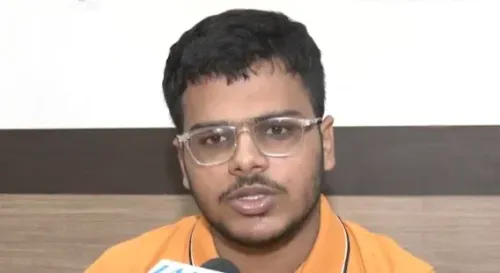
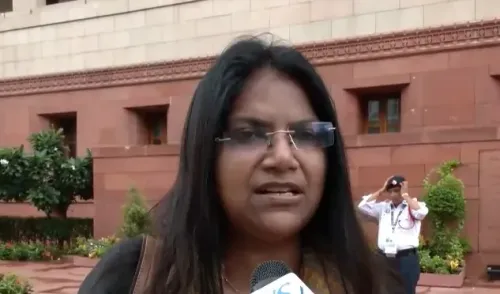
CJP spokesperson Ashutosh Ranka told reporters on Saturday morning that the resignation of Dharmendra Pradhan remained the party's primary condition. 'In yesterday's meeting, we received a positive response regarding compensation and legal cases. We got an in-principle agreement, and we hope to receive the written agreement today as well. However, there has still been no concrete decision on our main demand — the resignation of Dharmendra Pradhan,' Ranka said.
He went further, responding directly to media reports suggesting Pradhan would not step down. 'If Dharmendra Pradhan is not going to resign, then please tell us what the point of holding such meetings is? In that case, we will move ahead with whatever strategy we decide on next,' Ranka added.
Previous Rounds of Talks
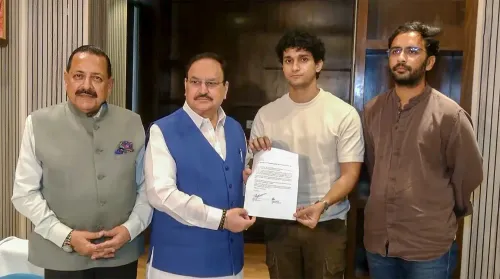
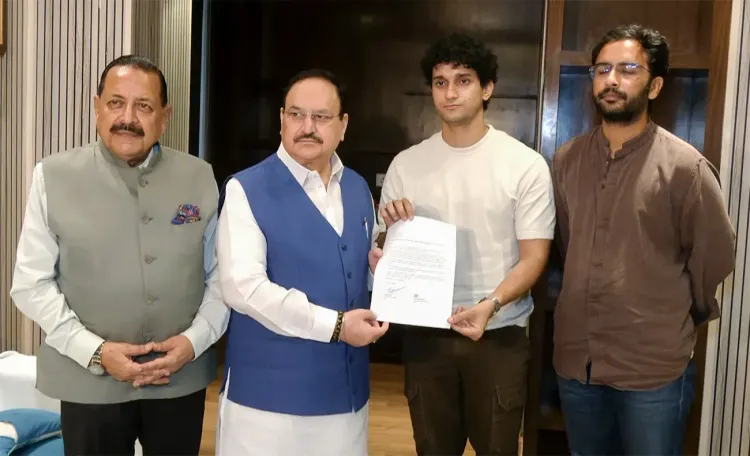
The second round of talks was held on Friday at the Constitution Club, where Union Ministers J.P. Nadda and Jitendra Singh met the CJP delegation. The government had indicated it would revert on the party's demands — an assurance the CJP said yielded only partial progress. Compensation and legal case redressal received an in-principle nod, but the ministerial resignation question remained unresolved.
NTA Overhaul and Government Response
Amid mounting pressure over the paper leak row, the government has replaced the Education Secretary and sacked 47 officials of the National Testing Agency (NTA). The CJP, however, dismissed these steps as insufficient. Ranka said the party would scrutinise which officials were suspended and the intent behind the action, but reiterated that 'ultimate accountability lies with the Education Minister of this country because he is directly responsible for all the paper leaks and for all the students who died by suicide after the NEET paper leak.'
Cabinet Approves Stricter Anti-Paper-Leak Law
The Union Cabinet, chaired by Prime Minister Narendra Modi at the Parliament House complex, on Friday approved a Draft Bill proposing significantly tougher penalties under The Public Examinations (Prevention of Unfair Means) Act, 2024. For organised paper leaks, the proposed amendments prescribe a jail term of up to 10 years and a maximum fine of ₹10 crore — a sharp escalation from the existing provisions of three to five years' imprisonment for individuals and five to ten years with a minimum fine of ₹1 crore for organised offences.
This legislative move followed PM Modi's public commitment to fast-track courts and enhanced penalties to protect students' futures. The CJP acknowledged these reforms as a step forward, but maintained they do not substitute for direct ministerial accountability.
What Comes Next
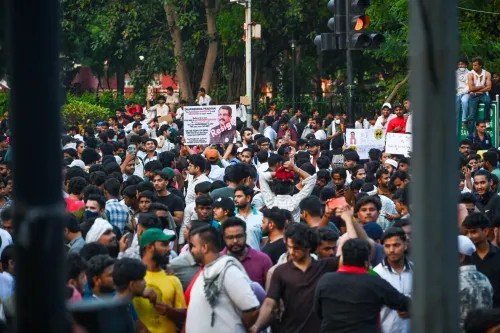
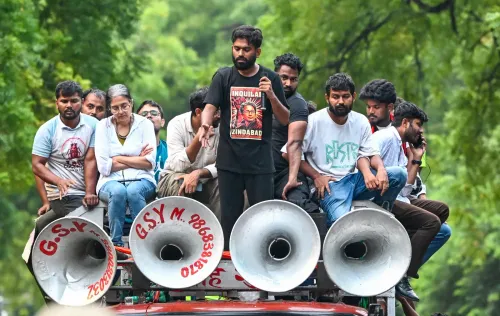
With the third round of talks scheduled for Saturday, the CJP has signalled it will reassess its protest strategy if no firm commitment on Pradhan's resignation emerges. The standoff reflects a broader national reckoning with examination integrity, student welfare, and institutional accountability — issues that have drawn sustained public attention since the NEET paper leak triggered student suicides and nationwide protests.
Point of View
But it sidesteps the CJP's central argument: that systemic failure of this magnitude requires someone at the top to own it. The NEET crisis has already claimed student lives and shaken public trust in competitive examinations that determine futures for millions. If the third round of talks collapses over the resignation demand, the government risks appearing more invested in protecting ministerial continuity than in restoring credibility to a broken examination system.
NationPress
25 Jul 2026
Frequently Asked Questions
What is the CJP's main demand in the NEET paper leak talks?
The CJP's primary demand is the resignation of Union Education Minister Dharmendra Pradhan, whom the party holds directly accountable for the NEET paper leak and the student suicides that followed. The party has said further talks are pointless if this demand is not met.
What happened in the second round of talks between the CJP and the Centre?
The second round of talks was held on Friday at the Constitution Club, where Union Ministers J.P. Nadda and Jitendra Singh met the CJP delegation. The government gave an in-principle agreement on compensation and legal cases but did not commit to Dharmendra Pradhan's resignation.
What changes has the Cabinet approved to address paper leaks?
The Union Cabinet approved amendments to The Public Examinations (Prevention of Unfair Means) Act, 2024, proposing up to 10 years in jail and a maximum fine of ₹10 crore for organised paper leaks — a significant increase over existing penalties of three to five years and a minimum ₹1 crore fine.
What action has the government taken against NTA officials?
The government has replaced the Education Secretary and sacked 47 officials of the National Testing Agency (NTA). The CJP has said it will scrutinise which officials were removed and with what intent, but maintains these steps do not substitute for ministerial accountability.
What will the CJP do if Dharmendra Pradhan does not resign?
CJP spokesperson Ashutosh Ranka said the party will move ahead with an alternative strategy if the government does not commit to the resignation. The third round of talks on Saturday was seen as a critical juncture for the negotiations.