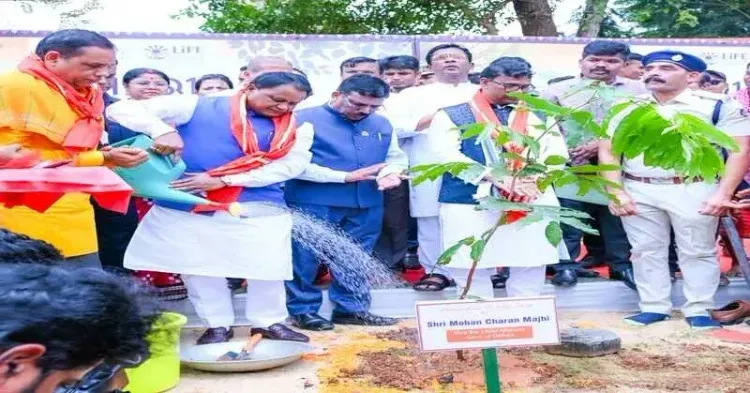
Odisha CM Majhi: 558 sq km green cover added, river corridors restored
Synopsis
The Chief Minister's Office of Odisha announced on 8 July 2026 that the state has added 558 sq km of green cover in two years and is leading river corridor restoration, citing localised climate action under CM Mohan Majhi's administration.
Key Takeaways
558 square kilometres of green cover have been added in Odisha over the past two years, according to the Chief Minister's Office.
Odisha is undertaking large-scale river corridor restoration alongside afforestation, targeting both biodiversity and water security.
The state already records over 30 percent of its land under forest cover, one of the higher ratios among Indian states.
CM Mohan Majhi , Odisha's first BJP chief minister since June 2024, has framed environmental conservation as a core governance priority.
The gains align with India's Paris Agreement commitment to add 2.5–3 billion tonnes of CO2-equivalent carbon sinks through forest cover by 2030.
Tribal and forest-dependent communities are the primary stakeholders, with river restoration also benefiting agriculture-dependent districts.
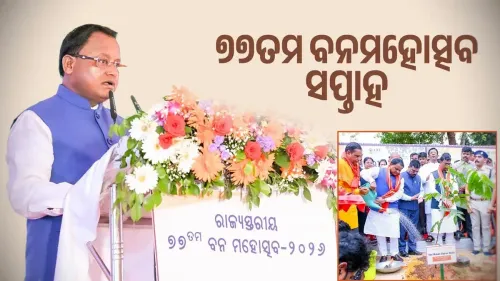
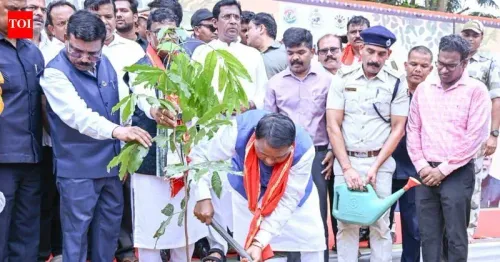
The Chief Minister's Office of Odisha announced on Wednesday, 8 July 2026 that the state has added 558 square kilometres of green cover over the past two years and is pioneering large-scale river corridor restoration, positioning Odisha as a national leader in localised climate action.
Context
The CMO's post described Odisha as championing 'localized climate action' through two distinct interventions: expanding green cover and restoring river corridors. The announcement comes amid heightened national focus on states meeting their share of India's climate commitments under the Paris Agreement, to which the country pledged in 2015 to create an additional carbon sink of 2.5 to 3 billion tonnes of CO2 equivalent through forest and tree cover by 2030.
Chief Minister Mohan Charan Majhi, who took office in June 2024 as Odisha's first BJP chief minister, has positioned environmental stewardship alongside industrial development as twin pillars of his administration's agenda. The green-cover addition of 558 sq km in two years represents a significant incremental gain for a state that already records over 30 percent of its land under forest cover — one of the higher ratios among Indian states.
Policy Backdrop
India's National Forest Policy of 1988 set a long-standing target of bringing 33 percent of the country's geographical area under forest and tree cover. Odisha's existing cover places it close to or at that threshold, making additional gains progressively harder to achieve and therefore more notable when reported.
The river corridor restoration component mirrors ecological initiatives undertaken in several peninsular states aimed at strengthening biodiversity corridors and improving water security in rain-fed river basins. Such projects also intersect with the Forest Rights Act, 2006, which recognises community and tribal stewardship over forest land — a dimension particularly relevant in Odisha, where tribal and forest-dependent communities form a substantial share of the population.
Centrally sponsored afforestation schemes, including the Compensatory Afforestation Fund Management and Planning Authority (CAMPA) framework, have provided states with ring-fenced resources for exactly this kind of green-cover expansion, and Odisha has historically been an active participant in such programmes.
Stakeholders and Impact
Tribal communities and forest-dependent households stand as the most direct beneficiaries of sustained green cover and restored river corridors, which support livelihoods, water availability, and biodiversity. River corridor restoration in particular has downstream benefits for agriculture-dependent communities in flood-prone districts of the state.
The announcement also carries significance for Odisha's urban and peri-urban populations, as tree cover expansion in and around settlements contributes to urban heat-island mitigation — a growing concern across Indian cities. At the national level, gains reported by Odisha feed into India's periodic submissions to the Forest Survey of India (FSI), the central body that compiles the India State of Forest Report and benchmarks state-wise progress.
What's Next
The next edition of the India State of Forest Report, released periodically by the Forest Survey of India, will be the authoritative measure of whether Odisha's claimed 558 sq km gain is independently corroborated. Analysts will also watch Odisha's upcoming state budget for specific line-item allocations toward river-corridor restoration projects, which would signal the administration's intent to scale these initiatives beyond the current phase.
As Indian states compete to demonstrate climate leadership ahead of national net-zero 2070 commitments, Odisha's dual focus on afforestation and river-ecosystem restoration offers a model that combines carbon sequestration with biodiversity and water-security goals — a template other states with similar ecological profiles may look to replicate.
Point of View
The Majhi government is signalling a broader ecological governance narrative ahead of the next Forest Survey of India report, which will either validate or complicate these claims. The river-corridor focus is particularly strategic — it links climate action to water security and tribal livelihoods, constituencies that matter electorally in Odisha. If independently verified, the 558 sq km figure would represent one of the more notable state-level green-cover gains in recent cycles, giving Odisha a strong case in national climate-policy conversations.
NationPress
8 Jul 2026
Frequently Asked Questions
How much green cover has Odisha added recently?
The Chief Minister's Office of Odisha stated on 8 July 2026 that the state has added 558 square kilometres of green cover over the past two years.
What is Odisha's river corridor restoration project?
Odisha is undertaking large-scale restoration of river corridors as part of its localised climate action strategy, aimed at strengthening biodiversity corridors and improving water security, though full project details are yet to be officially published.
Who is the Chief Minister of Odisha in 2026?
Mohan Charan Majhi is the Chief Minister of Odisha, having taken office in June 2024 as the state's first BJP chief minister.
How does Odisha's forest cover compare to other Indian states?
Odisha records over 30 percent of its land under recorded forest cover, placing it among the better-performing states against the national target of 33 percent set by the National Forest Policy, 1988 .
How does Odisha's green cover gain relate to India's climate commitments?
India committed under the 2015 Paris Agreement to create an additional carbon sink of 2.5 to 3 billion tonnes of CO2 equivalent through forest and tree cover by 2030; state-level gains like Odisha's contribute directly to this national target.