CM Majhi champions afforestation to fight urban pollution
Synopsis
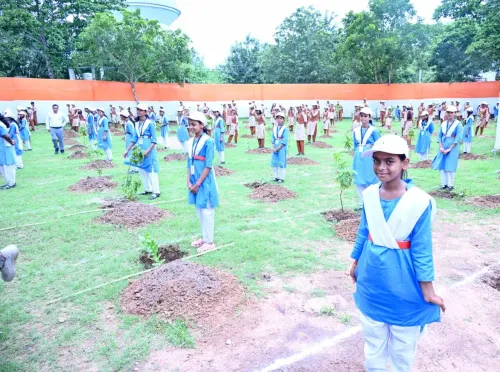
Chief Minister Mohan Charan Majhi of Odisha on 8 July 2026 declared that development and environmental conservation go hand in hand, highlighting the state's afforestation drives as a key response to urban pollution and climate change, in line with India's Paris Agreement carbon-sink targets.
Key Takeaways
CM Mohan Charan Majhi stated on 8 July 2026 that development and environmental conservation are complementary, not competing, priorities.
The Chief Minister's Office of Odisha highlighted 'massive afforestation drives' as the state's primary tool against urban pollution and climate change.
Odisha is an industrially and mining-active state, making its green commitments significant for eastern India's environmental trajectory.
India's National Mission for a Green India and Paris Agreement pledges require states to expand forest and tree cover substantially by 2030 .
Urban residents of Bhubaneswar and other Odisha cities stand to benefit from improved air quality through canopy expansion.
Specific scale, timelines, and statistics of the afforestation drives referenced by the CM have not yet been officially published.
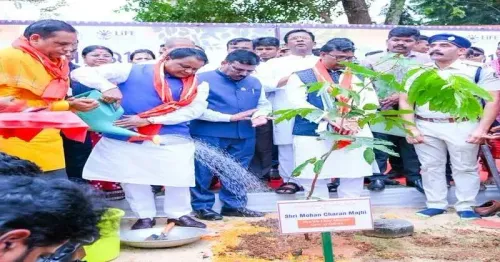
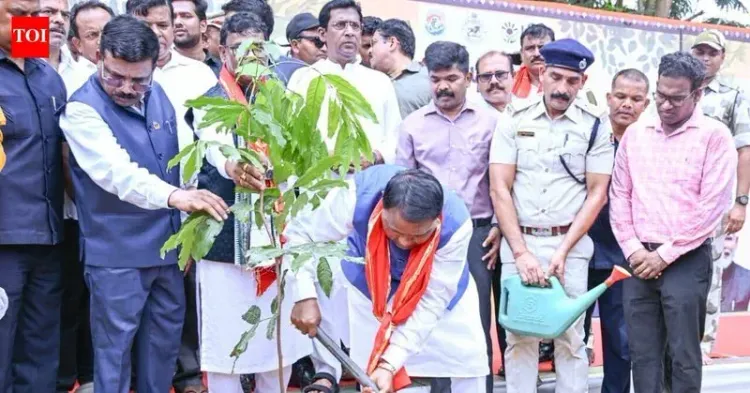
The Chief Minister's Office of Odisha on Wednesday, 8 July 2026 shared remarks by Chief Minister Mohan Charan Majhi underlining that development and environmental conservation are complementary goals, citing large-scale afforestation drives as the state's primary tool to combat urban pollution and climate change.
Context
Speaking on the subject, CM Majhi stated, 'Development and environmental conservation go hand in hand,' framing tree-plantation campaigns as central to Odisha's urban air-quality strategy. The remarks were amplified by the Chief Minister's Office on X (formerly Twitter), signalling the state government's intent to position green initiatives as a policy priority alongside industrial and infrastructure growth.
Odisha, which hosts significant mining and industrial activity, has in recent years pursued a dual track of economic expansion and compensatory plantation — a pattern seen across eastern Indian states since the early 2010s.
Policy Backdrop
India's National Mission for a Green India, one of eight missions under the National Action Plan on Climate Change (NAPCC) launched in 2008, set binding targets for expanding forest and tree cover as a climate-mitigation instrument. State governments are expected to align their plantation programmes with these national targets, which also feed into India's commitments under the Paris Agreement on carbon sinks.
India has pledged to create an additional carbon sink of 2.5 to 3 billion tonnes of CO₂ equivalent through forest and tree cover by 2030. State-level afforestation drives, particularly in high-emission corridors, are critical to meeting that goal. Odisha's urban centres, including Bhubaneswar and Cuttack, have faced periodic air-quality concerns linked to construction, industrial output, and vehicular traffic.
Stakeholders and Impact
Urban residents of Odisha stand to benefit most directly from large-scale tree-planting in city corridors, where canopy cover can reduce ambient temperatures and particulate matter. Forest-dependent communities in the state's interior districts also have a stake in how plantation targets are designed — whether through monoculture drives or biodiversity-sensitive mixed forests.
Civil-society groups and environmental researchers have long argued that afforestation programmes in mining-heavy states must go beyond compensatory numbers and focus on ecological quality. CM Majhi's framing of conservation as co-equal to development suggests the state is aware of this tension, though the operational details of the drives referenced have not been independently confirmed.
What's Next
Attention will now turn to Odisha's upcoming budget allocations for plantation programmes and the next cycle of the India State of Forest Report, which tracks tree-cover changes at the state level. Analysts will watch whether the state translates the CM's public statements into measurable targets, dedicated funding lines, and community-participation frameworks that go beyond seasonal plantation campaigns.
If the afforestation push is backed by verifiable data and sustained budgetary support, Odisha could emerge as a benchmark for other industrially active states seeking to balance growth with green commitments under India's climate obligations.
Point of View
Where mining royalties and industrial corridors are economic lifelines, this rhetorical balance carries real political weight. The statement aligns the state with India's national climate commitments at a time when sub-national climate action is under increasing international scrutiny. Whether the signal translates into auditable plantation targets and budget commitments will determine if this is policy or positioning.
NationPress
7 Oct 2026
Frequently Asked Questions
What did Odisha CM Mohan Majhi say about climate change?
CM Mohan Majhi stated that 'development and environmental conservation go hand in hand' and highlighted large-scale afforestation drives as the best way to combat climate change and urban pollution in Odisha.
What is Odisha doing to tackle urban pollution?
The Odisha government, under CM Majhi, is pursuing massive afforestation drives aimed at increasing tree cover in urban areas to reduce air pollution and address climate change impacts.
How does Odisha's afforestation plan relate to India's climate targets?
India has committed under the Paris Agreement to create an additional carbon sink of 2.5 to 3 billion tonnes of CO₂ equivalent through forest and tree cover by 2030. State-level drives like Odisha's contribute directly to this national target.
What is the National Mission for a Green India?
The National Mission for a Green India is one of eight missions under India's National Action Plan on Climate Change (2008), designed to expand and improve the quality of forest and tree cover as a climate-mitigation strategy.
Who is Mohan Charan Majhi?
Mohan Charan Majhi is the Chief Minister of Odisha, in office since June 2024, representing the BJP. He has focused on state development alongside sustainability and environmental initiatives.