Odisha CM Office: ₹175 Cr CBG Plant at Bhubaneswar
Synopsis
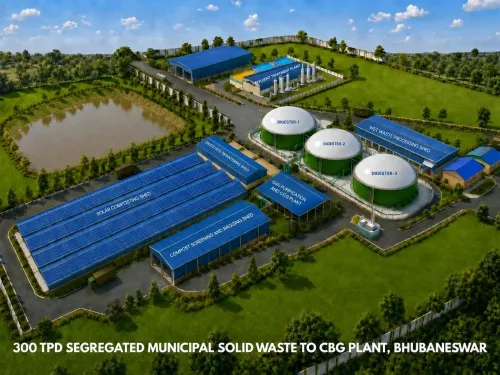
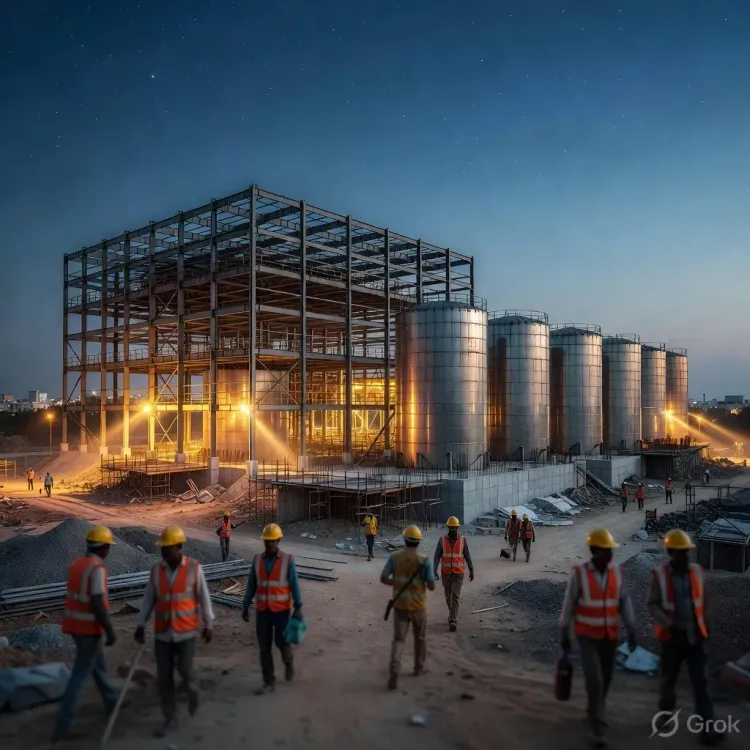
The Chief Minister's Office of Odisha has announced a ₹175 crore, 300 TPD Compressed Bio-Gas plant at Meherpalli, Bhubaneswar, developed jointly by BMC and Oil India Limited. The facility will convert segregated wet waste into CBG, organic manure and bio-fertiliser, with commercial production targeted by April 2027.
Key Takeaways
A 300 TPD Compressed Bio-Gas plant is being developed at Meherpalli, Bhubaneswar at a cost of ₹175 crore .
The project is a joint venture between Bhubaneswar Municipal Corporation (BMC) and Oil India Limited , a Maharatna PSU.
The facility will convert segregated wet waste into CBG, organic manure, and bio-fertiliser , following a circular-economy model.
Commercial production is targeted by April 2027 .
The project aligns with the central government's SATAT scheme (2018) and Swachh Bharat Mission (Urban) 2.0 (2021) .
The CMO tagged @PMOIndia , positioning the project within the national clean-energy agenda.
Odisha's capital is set to turn its daily mountain of wet garbage into clean fuel. The Chief Minister's Office of Odisha announced on Tuesday, 11 August 2026 that a 300 TPD Compressed Bio-Gas plant is coming up at Meherpalli, Bhubaneswar — a ₹175 crore facility built to convert segregated wet waste into renewable energy, with commercial production targeted by April 2027.
BMC and Oil India: an unlikely alliance with a clear logic
The project is a joint venture between the Bhubaneswar Municipal Corporation (BMC) and Oil India Limited, a Maharatna public sector undertaking traditionally associated with crude oil exploration. Oil India's pivot into biofuel infrastructure is part of a wider pattern: oil PSUs are increasingly deploying capital into renewable and waste-to-energy projects as India pushes hard on its biofuel blending targets. For BMC, the partnership offloads the technology and capital burden while keeping the civic body in the driver's seat on waste logistics.
The plant at Meherpalli will process wet waste at a rated capacity of 300 tonnes per day, producing Compressed Bio-Gas (CBG) alongside organic manure and bio-fertiliser — meaning almost nothing entering the facility leaves as landfill. That circular-economy design is exactly what Swachh Bharat Mission (Urban) 2.0, rolled out in 2021, mandates for scientifically processing wet waste in Indian cities.
Meherpalli inside a national policy frame
The project slots neatly into the SATAT scheme — Sustainable Alternative Towards Affordable Transportation — launched by the Ministry of Petroleum and Natural Gas in 2018 to seed CBG plants using agricultural and municipal waste across India. Bhubaneswar, already designated a Smart City, has been a test bed for integrated urban infrastructure, and a plant of this scale would be among the more ambitious waste-to-energy installations in an Odisha urban centre.
The CMO's post also tagged @PMOIndia, signalling that the project is being positioned within the national clean-energy and urban-sustainability conversation — not merely as a local civic upgrade.
What the April 2027 deadline means in practice
Commercial production by April 2027 gives the project roughly 20 months from the announcement date to go live — a timeline that will hinge on land-readiness at Meherpalli, equipment procurement, and the ramp-up of source-segregated wet waste supply chains from Bhubaneswar's wards. Those logistics, not the technology, are typically where urban bio-gas projects stall in India. Milestones in construction and waste-collection integration will be the real indicators of whether the deadline holds.
If it does, Bhubaneswar will have a live demonstration of a fully circular municipal waste loop — garbage collected, gas produced, fertiliser returned to farms — that other Odisha cities and Smart City peers across India will be watching closely.
Point of View
Measurable infrastructure rather than aspirational targets. By looping in Oil India Limited, the state government accesses both PSU capital and the credibility of the SATAT framework, reducing fiscal risk on the state exchequer. The @PMOIndia tag is a calculated signal — it ties a state project to a central policy narrative, useful for both funding optics and political positioning ahead of any central review of Smart City outcomes. The April 2027 commercial production deadline will be the real test: urban bio-gas projects in India have a mixed delivery record, and Bhubaneswar's waste-segregation infrastructure at the ward level will determine whether the plant runs at rated capacity or underperforms.
NationPress
11 Aug 2026
Frequently Asked Questions
What is the CBG plant being built in Bhubaneswar?
A 300 TPD Compressed Bio-Gas plant is being developed at Meherpalli, Bhubaneswar at a cost of ₹175 crore by the Bhubaneswar Municipal Corporation in partnership with Oil India Limited. It will convert segregated wet waste into CBG, organic manure, and bio-fertiliser.
When will the Bhubaneswar CBG plant start commercial production?
Commercial production at the Meherpalli CBG plant is targeted by April 2027 , giving the project approximately 20 months from the August 2026 announcement to become operational.
What is Oil India Limited's role in the Bhubaneswar bio-gas project?
Oil India Limited , a Maharatna public sector undertaking, is a co-developer and partner in the ₹175 crore project alongside the Bhubaneswar Municipal Corporation, reflecting the PSU's growing diversification into biofuel and renewable energy infrastructure.
How does this plant connect to the SATAT scheme?
The SATAT (Sustainable Alternative Towards Affordable Transportation) scheme , launched in 2018 by the Ministry of Petroleum and Natural Gas, promotes CBG plants using municipal and agricultural waste. The Meherpalli plant aligns directly with SATAT's objectives of scaling compressed bio-gas production across India.
What will the Bhubaneswar CBG plant produce besides gas?
Besides Compressed Bio-Gas, the plant will produce organic manure and bio-fertiliser from the processed wet waste, making it a near-zero-waste circular facility.