Odisha CM Office Upgrades ITIs with AI Labs, Centres of Excellence
Synopsis
The Chief Minister's Office of Odisha has announced a next-generation upgrade of its ITI network, introducing AI Labs, Centres of Excellence, and industry-linked training to prepare youth for emerging technology careers, marking two years of the state's BJP-led government.
Key Takeaways
The Chief Minister's Office of Odisha announced on 8 July 2026 a comprehensive upgrade of the state's ITI network.
Upgrades include Centres of Excellence , AI Labs , and industry-linked training programmes.
The initiative aims to equip Odisha's youth with skills in emerging technologies and future-ready careers.
The announcement coincides with the second anniversary of the BJP-led government under Chief Minister Mohan Charan Majhi .
Odisha's approach mirrors ITI modernisation efforts already under way in Maharashtra and Tamil Nadu .
Next steps include phased AI Lab rollouts and potential MoUs with technology firms for curriculum and placement.
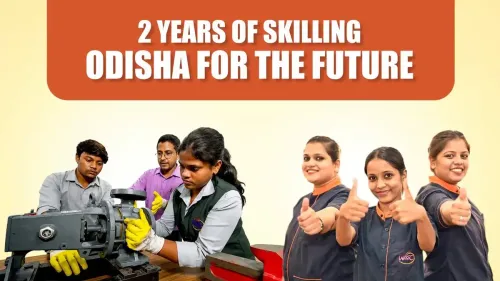
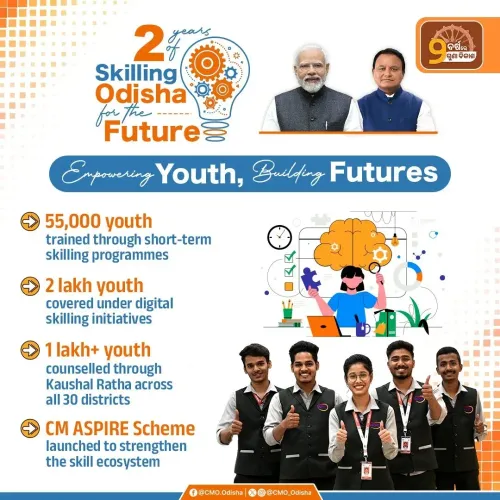
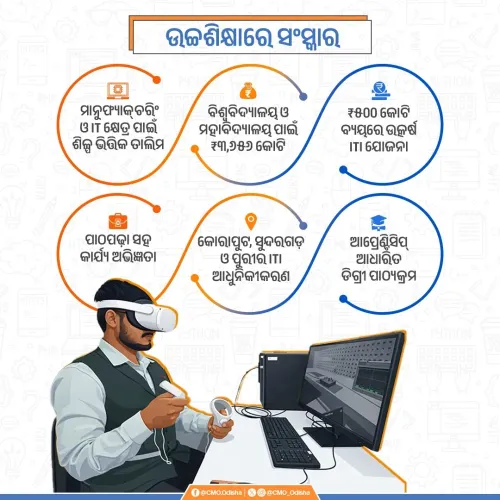
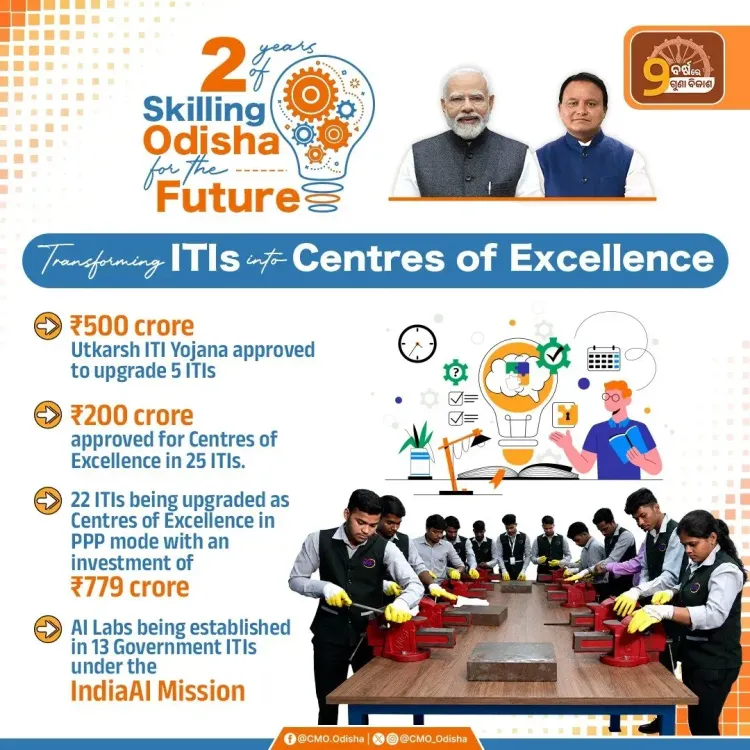
The Chief Minister's Office of Odisha announced on Wednesday, 8 July 2026 that the state is undertaking a comprehensive next-generation upgrade of its skilling ecosystem, transforming Industrial Training Institutes (ITIs) with Centres of Excellence, AI Labs, and industry-linked training programmes to equip youth with emerging technology skills.
Context
The announcement, made in reply to Chief Minister Mohan Charan Majhi's post on X, underlines the state government's commitment to vocational modernisation under the hashtags #2YearsofLokankaSarakar and #2YearsOfSkillingOdisha, marking two years of the current BJP-led administration in Odisha. The post states that Odisha is 'giving its skilling ecosystem a next-gen upgrade' to 'lead in emerging technologies and thrive in the careers of tomorrow.'
The initiative signals a deliberate pivot from conventional trade-based ITI curricula toward technology-intensive, industry-aligned programmes, positioning Odisha's youth for roles in artificial intelligence, automation, and allied sectors.
Policy Backdrop
India's vocational training architecture has evolved significantly since the National Policy on Skill Development, 2009, which created a coordinated framework across states. The Pradhan Mantri Kaushal Vikas Yojana, launched in 2015 under the Skill India Mission, further accelerated short-term, industry-linked courses delivered through ITIs and private partners, with an ambition to train over 400 million people.
The Centres of Excellence model for ITI upgradation was first piloted at the national level between 2014 and 2018, with states progressively adopting it. Odisha's current push mirrors parallel efforts in states such as Maharashtra and Tamil Nadu, which have linked public institutes with private-sector curricula to align with Industry 4.0 requirements including AI and advanced manufacturing.
Stakeholders and Impact
The primary beneficiaries of this upgrade are Odisha's ITI trainees and youth seeking vocational qualifications. By embedding AI Labs and industry partnerships directly into the ITI framework, the state aims to reduce the skills gap between formal certification and employer expectations in technology-driven sectors.
Industry partners stand to gain a pipeline of locally trained talent, potentially reducing recruitment and reskilling costs. The initiative also carries implications for Odisha's broader economic development, as a technically skilled workforce is a key draw for investment in manufacturing, technology services, and emerging industries.
What's Next
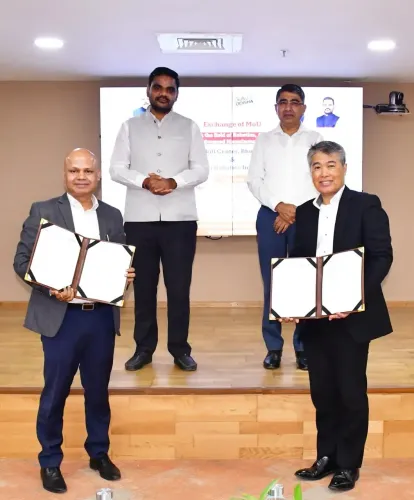
Attention will now turn to the phased rollout of AI Labs across Odisha's ITI network and the formalisation of any Memoranda of Understanding with technology firms for curriculum design and placement linkages. The government's ability to sustain momentum beyond the two-year milestone — scaling infrastructure, securing qualified faculty, and ensuring industry absorption of graduates — will determine whether this upgrade translates into measurable employment outcomes for the state's youth.
Point of View
It frames skilling as a flagship achievement. Embedding AI Labs in public vocational institutes is a credible Industry 4.0 response, but the real test lies in execution: faculty quality, private-sector buy-in, and graduate placement rates. Odisha joins a growing cohort of states competing to position themselves as skilling hubs, and the Centre of Excellence model, though proven elsewhere, demands sustained funding beyond electoral cycles. If the state follows through with verifiable MoUs and measurable outcomes, this could meaningfully differentiate Odisha's workforce development from routine infrastructure announcements.
NationPress
8 Jul 2026
Frequently Asked Questions
What is Odisha doing to upgrade its ITIs in 2026?
Odisha is transforming its Industrial Training Institutes with Centres of Excellence, AI Labs, and industry-linked training programmes to equip youth with next-generation and emerging technology skills, as announced by the Chief Minister's Office on 8 July 2026.
What are Centres of Excellence in ITIs?
Centres of Excellence are specialised units within ITIs that offer advanced, industry-aligned training in specific technology or trade domains, going beyond conventional vocational curricula to match current employer requirements.
Who is the Chief Minister of Odisha overseeing these skilling programmes?
Mohan Charan Majhi is the Chief Minister of Odisha, leading the BJP-led government that came to power in 2024 and is now marking two years with this skilling initiative.
How does Odisha's ITI upgrade connect to the national Skill India Mission?
Odisha's upgrade builds on the national Skill India Mission launched in 2015 and the Pradhan Mantri Kaushal Vikas Yojana, which promote industry-linked vocational training through ITIs; the state is now adding AI Labs and Centres of Excellence as a next-generation layer.
Which other Indian states are upgrading ITIs with similar models?
Maharashtra and Tamil Nadu have undertaken comparable ITI modernisation efforts, linking public institutes with private-sector curricula to align with Industry 4.0 needs including AI and automation.