Odisha CMO: 5 Lakh PMAY-G Houses Sanctioned for State
Synopsis
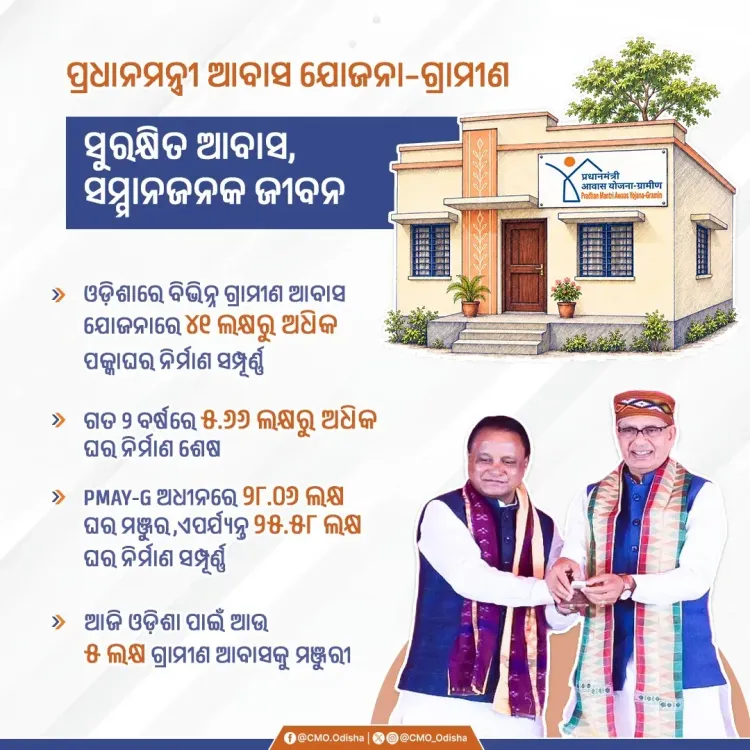
The Chief Minister's Office of Odisha announced on 14 November 2026 that 5 lakh pucca houses have been sanctioned for the state under Pradhan Mantri Awas Yojana Gramin, advancing the goal of shelter for every eligible rural family.
Key Takeaways
5 lakh pucca houses have been sanctioned for Odisha under Pradhan Mantri Awas Yojana Gramin (PMAY-G) .
The announcement was made by the Chief Minister's Office of Odisha on 14 November 2026 .
PMAY-G was launched in 2016 by the Ministry of Rural Development , replacing the Indira Awas Yojana.
The scheme targets economically weaker and below-poverty-line rural households, providing central financial assistance in tranches.
Odisha has been a participant in every successive phase of PMAY-G, with allocations linked to implementation performance.
Construction timelines of 12–18 months from sanction to completion are typical, subject to fund release and local execution.
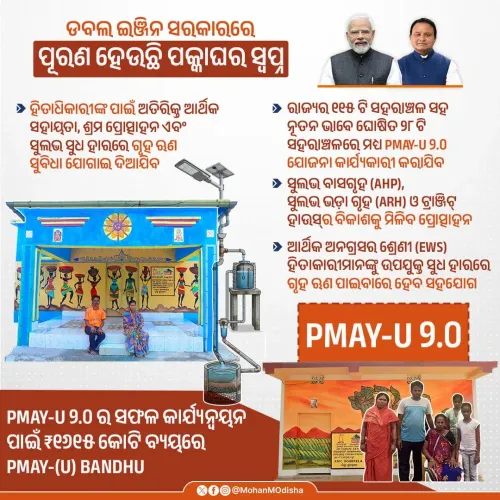
Five lakh families in rural Odisha are a step closer to a roof of their own. The Chief Minister's Office of Odisha announced on Saturday, 14 November 2026, that the Central government has sanctioned 5 lakh pucca houses for the state under the Pradhan Mantri Awas Yojana Gramin (PMAY-G) — a fresh milestone in the state's drive to put a permanent home within reach of every eligible rural household.
What the sanction means for rural Odisha
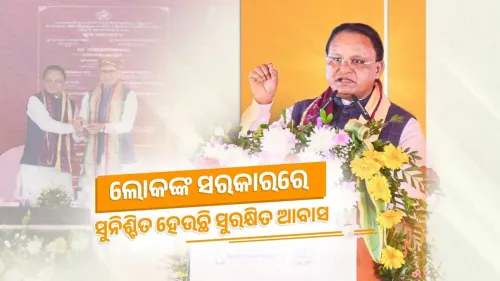
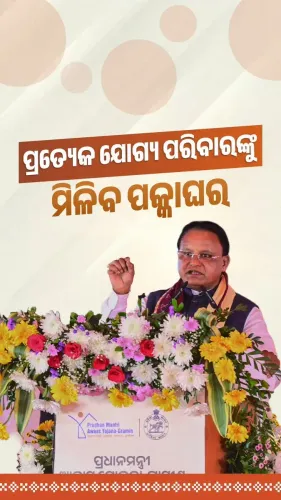
The CMO's post, written in both Odia and English, frames the sanction in terms that go beyond bricks and mortar: 'ପ୍ରତ୍ୟେକ ପରିବାରକୁ ସୁରକ୍ଷିତ ଆଶ୍ରୟ' — 'a safe shelter for every family' — alongside dignity and self-respect for economically backward households. The language signals that the state government is positioning this allocation as part of a wider social-uplift agenda, not merely a construction target.
Odisha has a large rural population with pockets of deep poverty, and the demand for permanent housing consistently outpaces supply in several districts. Each new sanction under PMAY-G translates into a central financial assistance package per unit, disbursed in tranches as construction progresses, with states co-funding and overseeing delivery.
PMAY-G's roots and Odisha's place in the programme
Pradhan Mantri Awas Yojana Gramin was launched in 2016 by the Ministry of Rural Development, replacing the decades-old Indira Awas Yojana. Its stated goal was 'Housing for All' in rural India, originally targeted at 2022 and subsequently extended through additional phases as the scale of unmet demand became clearer. Odisha has participated in every successive phase of the scheme, with allocations driven by socio-economic caste census data, demand surveys, and state-level implementation records.
The pattern is one of periodic central-state coordination: states that demonstrate strong completion rates and timely fund utilisation tend to unlock fresh tranches and larger sanctions. This latest 5 lakh sanction suggests Odisha's implementation track record has held up under central scrutiny.
What comes next — construction, funds, and the finish line
A sanction is a promise, not a completed house. The critical phase now is ground-level execution — beneficiary verification, fund release in tranches, procurement of materials, and third-party monitoring of construction quality. Analysts tracking rural housing programmes consistently flag fund utilisation rates and geo-tagged photo verification as the two metrics that separate paper allocations from real outcomes.
For the 5 lakh families now on the list, the journey from approval to a completed pucca home typically spans 12 to 18 months, contingent on weather, local supply chains, and administrative efficiency at the district level.
Odisha's rural development machinery now has a fresh mandate — and a very specific number to deliver against.
Point of View
Politically visible deliverable in states with large rural poor populations. For the Mohan Majhi-led BJP government in Odisha, which came to power in 2024, fresh central housing sanctions reinforce its positioning as a pro-poor administration aligned with New Delhi's flagship welfare agenda. The framing of the announcement — invoking dignity and self-respect alongside shelter — suggests a deliberate effort to lift the narrative above routine scheme management into the register of social transformation. Watch fund utilisation and completion rates: they will determine whether this sanction becomes a governance credential or a cautionary tale about the gap between allocations and outcomes.
NationPress
14 Nov 2026
Frequently Asked Questions
How many houses have been sanctioned for Odisha under PMAY-G?
5 lakh (500,000) pucca houses have been sanctioned for Odisha under Pradhan Mantri Awas Yojana Gramin , as announced by the Chief Minister's Office on 14 November 2026.
What is Pradhan Mantri Awas Yojana Gramin (PMAY-G)?
PMAY-G is a Central government rural housing scheme launched in 2016 under the Ministry of Rural Development . It replaced the Indira Awas Yojana and aims to provide pucca houses to eligible below-poverty-line and rural households across India.
Who is eligible for PMAY-G houses in Odisha?
Eligibility is determined by socio-economic and caste census data. Economically weaker sections and below-poverty-line rural households are the primary beneficiaries. Final beneficiary lists are prepared by state and district authorities.
When will the 5 lakh sanctioned houses be built?
Construction under PMAY-G typically takes 12 to 18 months from sanction, depending on fund disbursement in tranches, materials availability, and district-level administrative efficiency.
How does Odisha receive PMAY-G allocations from the Centre?
Allocations are made through central-state coordination based on demand surveys, socio-economic data, and each state's track record on completing previously sanctioned houses and utilising funds.