Odisha CMO Pitches Lift Irrigation to Unlock Dryland Farming

Synopsis
The Chief Minister's Office of Odisha says lift irrigation projects will open new agricultural opportunities in hilly and plateau regions, delivering assured water to dryland farmers who have long relied solely on monsoon rainfall.
Key Takeaways
The Chief Minister's Office of Odisha announced on 7 November 2026 that irrigation facilities will be expanded into hilly and plateau regions of the state.
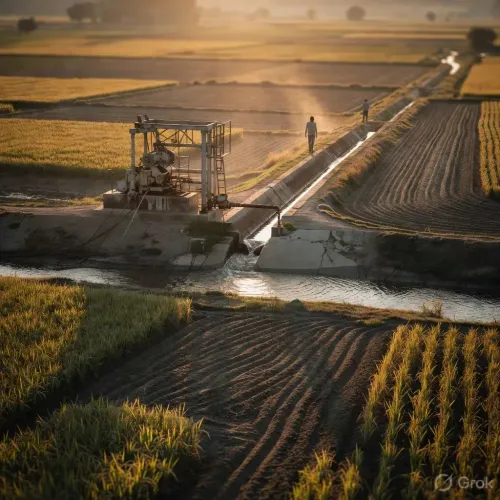
Lift irrigation projects will pump water from rivers or reservoirs uphill to reach dryland farms that conventional gravity-fed canals cannot serve.
The initiative targets upland and tribal farming communities in Odisha's western and southern districts where rainfed agriculture predominates.
The push aligns with the national Pradhan Mantri Krishi Sinchayee Yojana (PMKSY, 2015) , which includes lift and micro-irrigation components for underserved rainfed areas.
Key metrics to watch include project completion rates and the number of additional hectares brought under assured irrigation in the targeted zones.
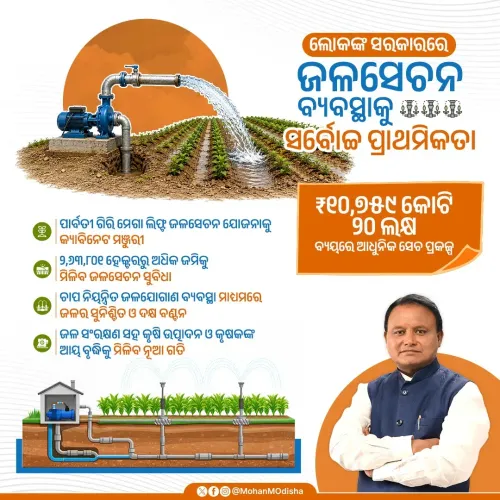
Dry, uneven terrain has long locked Odisha's upland and plateau farmers out of assured irrigation — and the state government is now framing lift irrigation projects as the key to change that. The Chief Minister's Office of Odisha posted on X on 7 November 2026, announcing that expanding irrigation infrastructure into hilly and plateau regions will create fresh agricultural opportunities for farmland that currently depends almost entirely on the monsoon.
The post, written in Odia, states: 'Expansion of irrigation facilities in hilly and plateau areas will create new opportunities for agricultural fields. Through lift irrigation projects, dry land will get the benefit of irrigation.' The message is pointed — gravity-fed canals have never been able to reach these undulating zones, and pumped, or 'lifted', water infrastructure is the structural fix the state is backing.
Why Lift Irrigation Where Canals Cannot Reach
Large dams and canal networks are designed for relatively flat terrain. Odisha's western and southern districts — with their ridges, plateaus, and tribal hinterlands — have historically been bypassed by such systems. Lift irrigation schemes solve this by using pump sets to draw water from rivers or reservoirs and push it uphill to fields that would otherwise remain rainfed. The technology is not new, but systematic state investment in it is the difference between scattered pilots and genuine coverage.
Upland and tribal farming communities are the direct stakeholders. For them, a reliable second source of water beyond the monsoon can mean the difference between one crop cycle a year and two — a transformative shift in household income and food security.
Where the Odisha Push Fits a National Frame
Odisha's drive dovetails with the Pradhan Mantri Krishi Sinchayee Yojana (PMKSY), launched nationally in 2015, which includes dedicated components for lift irrigation and micro-irrigation precisely to bring rainfed areas under assured water supply. The state has consistently treated irrigation expansion as a productivity lever, and the emphasis on hilly and plateau zones reflects a deliberate pivot toward the most underserved agricultural pockets.
What to watch now: official data on project completion rates, the number of additional hectares brought under irrigation, and whether the coverage translates into measurable crop-yield gains in the targeted districts.
Water lifted to the hills is more than an engineering feat — it is a promise that Odisha's most marginalised farmers will no longer farm entirely at the sky's discretion.
Point of View
Terrain-adaptive solutions that reach tribal and upland communities. The state's repeated emphasis on this segment signals an attempt to close a structural productivity gap that has persisted for decades, and to align state spending with the equity goals embedded in PMKSY. If project completion and farmer uptake keep pace with the announcements, this could serve as a replicable model for other peninsular and northeastern states with similar topographic constraints. The real test, however, will be whether assured irrigation translates into documented gains in cropping intensity and income for the communities the scheme is designed to serve.
NationPress
7 Nov 2026
Frequently Asked Questions
What is a lift irrigation project and how does it work in Odisha?
A lift irrigation project uses electric or diesel pump sets to draw water from a river, reservoir, or canal and 'lift' it uphill to farmland that cannot be reached by gravity-fed canals. In Odisha, these projects are specifically designed for hilly and plateau terrains in the western and southern districts.
Which areas of Odisha will benefit from lift irrigation expansion?
The expansion targets hilly and plateau regions, primarily in Odisha's western and southern districts, where undulating terrain has historically prevented coverage by conventional major canal systems.
Who are the main beneficiaries of this irrigation initiative?
Upland farmers and tribal communities in Odisha's rainfed districts are the primary beneficiaries, as reliable irrigation can enable them to cultivate a second crop cycle and reduce dependence on monsoon rainfall.
How does this relate to the Pradhan Mantri Krishi Sinchayee Yojana?
The Pradhan Mantri Krishi Sinchayee Yojana, launched in 2015, includes dedicated components for lift irrigation and micro-irrigation to bring rainfed areas under assured water supply. Odisha's state-level lift irrigation push aligns directly with these national scheme objectives.
What is the current status of lift irrigation coverage in Odisha?
Odisha has pursued lift irrigation as part of ongoing efforts to raise agricultural productivity in rainfed districts, but specific completion rates and total hectares covered under the latest round of projects are subject to official state updates.