Odisha CMO Shares Live Launch of High-Seas Fishing LoA
Synopsis
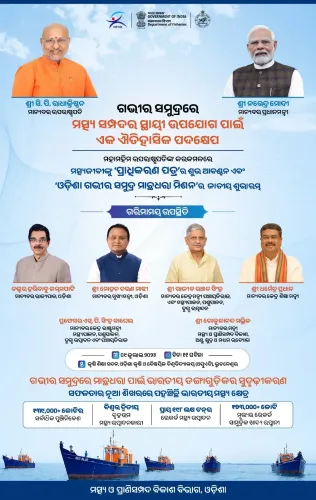
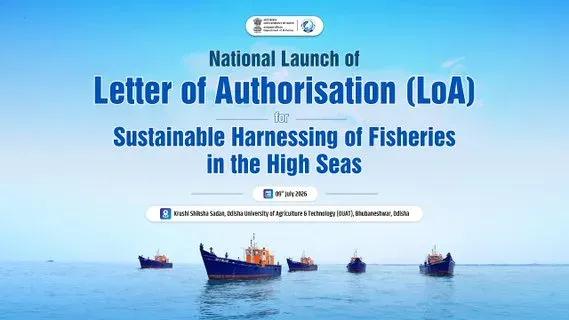
The Chief Minister's Office of Odisha shared the live national launch of the Letter of Authorisation (LoA) for Sustainable Harnessing of Fisheries in the High Seas on 9 July 2026, marking a formal step to regulate Indian fishing vessels in international waters under India's blue economy agenda.
Key Takeaways
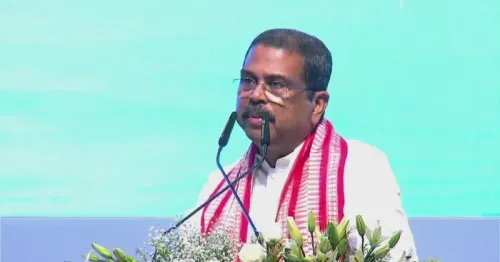
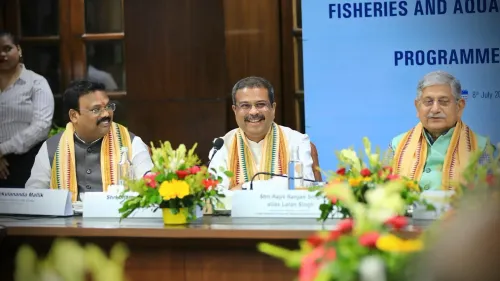
The Chief Minister's Office of Odisha shared the live-stream of the National Launch of the LoA for Sustainable Harnessing of Fisheries in the High Seas on 9 July 2026 .
The LoA framework will formally authorise Indian fishing vessels to operate in international waters beyond the 200-nautical-mile Exclusive Economic Zone .
The launch aligns with India's commitment under the BBNJ Agreement (2023) on marine biodiversity beyond national jurisdiction.
The Pradhan Mantri Matsya Sampada Yojana , launched in May 2020 , provided the domestic policy foundation for this regulatory framework.
Coastal states including Odisha are expected to roll out state-level LoA guidelines and vessel authorisation processes following the national launch.
The framework aims to curb IUU (Illegal, Unreported and Unregulated) fishing and strengthen India's standing in global seafood markets.
The Chief Minister's Office of Odisha on Thursday, 9 July 2026, shared a live-stream link for the National Launch of the Letter of Authorisation (LoA) for Sustainable Harnessing of Fisheries in the High Seas, marking a significant step in India's effort to regulate and formalise deep-sea fishing operations beyond national jurisdiction.
Context
The event, broadcast live on YouTube, signals the formal rollout of a national authorisation framework that will govern how Indian fishing vessels operate in international waters — areas beyond the 200-nautical-mile Exclusive Economic Zone. The Chief Minister's Office of Odisha amplified the launch, reflecting the coastal state's direct stake in high-seas fisheries governance.
India's coastline spans over 8,000 kilometres, and states like Odisha are home to large communities of marine fishermen whose livelihoods increasingly depend on deep-sea and distant-water fishing. Formalising a Letter of Authorisation regime is a prerequisite for ensuring that Indian vessels comply with international norms and avoid being flagged for Illegal, Unreported and Unregulated (IUU) fishing.
Policy Backdrop
The LoA launch sits at the intersection of two major policy pillars. Domestically, the Pradhan Mantri Matsya Sampada Yojana (PMMSY), launched in May 2020, has been the central government's flagship scheme to sustainably boost fish production, modernise infrastructure, and strengthen the fisheries value chain across India. The scheme laid the groundwork for integrating Indian fisheries into global regulatory standards.
On the international front, India signed the BBNJ Agreement — the UN treaty on marine biodiversity beyond national jurisdiction — in 2023, committing to conservation and sustainable use of resources in the high seas. The LoA framework is a concrete domestic instrument that operationalises India's obligations under such international commitments, enabling regulated access to high-seas fishing grounds while protecting marine biodiversity.
The Ministry of Fisheries, Animal Husbandry and Dairying has been the nodal body driving national fisheries policy and coordinating India's engagements with global ocean governance frameworks, including efforts to curb IUU fishing.
Stakeholders and Impact
Marine fishermen and fishing vessel operators stand to be the most directly affected. The LoA regime will establish a formal authorisation process for vessels wishing to operate in international waters, bringing clarity on compliance requirements, catch documentation, and vessel monitoring obligations. For coastal states like Odisha, this translates into administrative processes at the state level to issue and verify authorisations.
The broader fishing community — including fish workers, processors, and exporters — also has a stake, as international buyers increasingly demand proof that seafood is sourced from legally authorised, sustainably managed fisheries. A robust LoA system strengthens India's position in global seafood markets and reduces the risk of trade restrictions tied to IUU fishing concerns.
What's Next
The national launch is expected to be followed by state-level rollout of LoA operational guidelines, with coastal states including Odisha tasked with implementing vessel authorisation processes at the ground level. The first batch of high-seas fishing authorisations issued under the new framework will be a key milestone to watch.
As India deepens its blue economy ambitions, the integration of domestic fisheries development with emerging global high-seas governance frameworks will remain a defining policy challenge — and the LoA launch marks an important step in that direction.
Point of View
Amplifying this launch is politically and economically significant: its fishing communities are directly exposed to the risks of IUU designations and the opportunities of regulated high-seas access. The timing, coming years after India signed the BBNJ Agreement, suggests the government is now moving from treaty commitments to operational instruments — a transition that will test both central-state coordination and the administrative capacity of coastal fisheries departments.
NationPress
9 Jul 2026
Frequently Asked Questions
What is the Letter of Authorisation (LoA) for high-seas fisheries in India?
The Letter of Authorisation (LoA) is a formal permit framework that authorises Indian fishing vessels to legally operate in international waters beyond India's Exclusive Economic Zone, ensuring compliance with global fisheries regulations and anti-IUU fishing norms.
Why did the Odisha CMO share the high-seas fisheries LoA launch?
Odisha is a major coastal state with a large marine fishing community, giving it a direct stake in national high-seas fisheries policy. The Chief Minister's Office shared the live-stream to highlight the state's engagement with the national launch on 9 July 2026.
What is the BBNJ Agreement and how does it relate to Indian fisheries?
The BBNJ Agreement is a UN treaty adopted in 2023 on marine biodiversity beyond national jurisdiction. India signed it, committing to sustainable use and conservation of high-seas resources — the LoA framework is a domestic instrument that helps fulfil those international obligations.
What is Pradhan Mantri Matsya Sampada Yojana?
Pradhan Mantri Matsya Sampada Yojana (PMMSY) is a central government scheme launched in May 2020 to sustainably boost fish production, modernise fisheries infrastructure, and strengthen the value chain across India, forming the policy backbone for initiatives like the LoA framework.
What happens after the national LoA launch for high-seas fishing?
Following the national launch, coastal states including Odisha are expected to roll out state-level operational guidelines and begin issuing the first batch of high-seas fishing authorisations to eligible vessel operators.