Odisha CMO: Skills to Enterprise via Swakalpa, Nano Unicorn
Synopsis
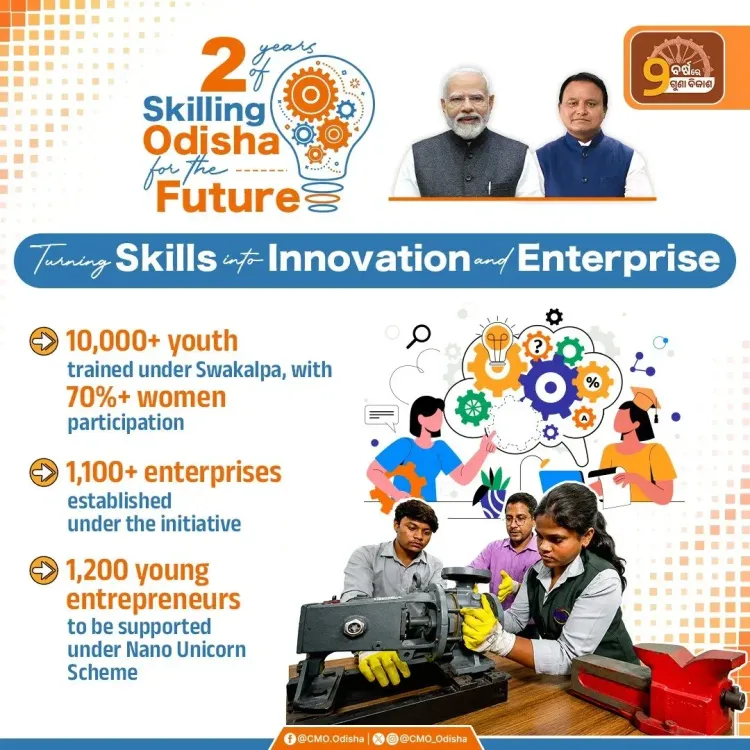
The Chief Minister's Office of Odisha marked two years of its skilling agenda on 8 July 2026, highlighting Swakalpa and Nano Unicorn as programmes that move youth from skill acquisition to enterprise creation, aligning with national self-employment priorities under CM Mohan Charan Majhi.
Key Takeaways
The Chief Minister's Office of Odisha posted on 8 July 2026 marking two years of the state's skilling and enterprise agenda.
Swakalpa supports skilled individuals in building micro-enterprises; Nano Unicorn helps early-stage innovators scale ideas into businesses.
The state's stated policy direction has shifted from skill training alone to integrated entrepreneurship pathways.
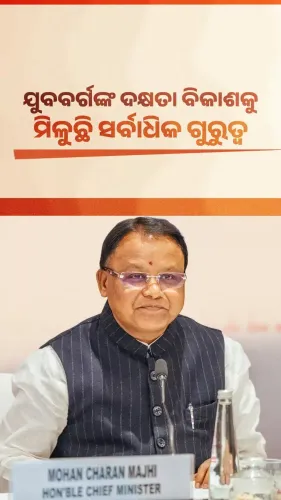
CM Mohan Charan Majhi has led Odisha since June 2024 , with youth enterprise as a central economic priority.
The messaging aligns with national frameworks including Startup India and Atmanirbhar Bharat .
Budget allocations and beneficiary metrics for both schemes are expected to be tested at the next state budget session.
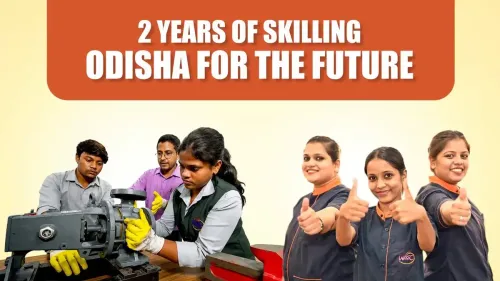
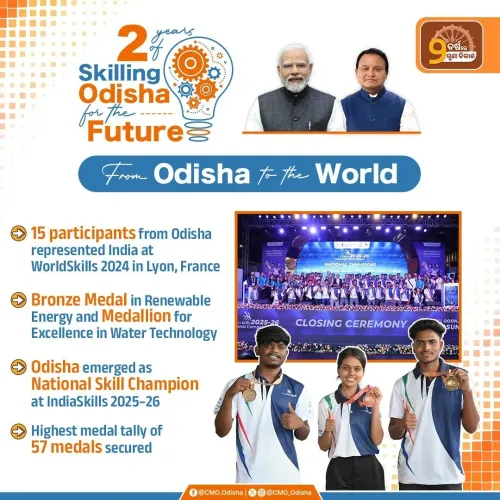
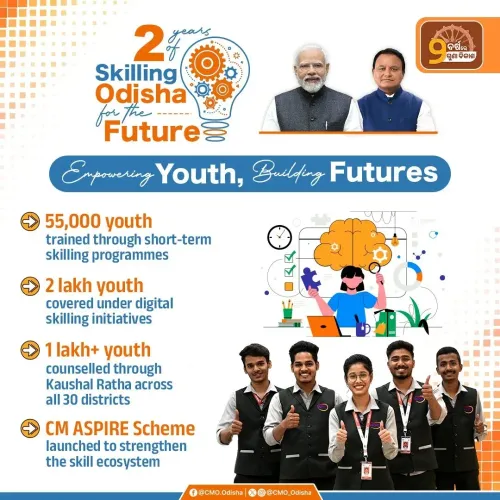
The Chief Minister's Office of Odisha on Wednesday, 8 July 2026, highlighted the state government's push to move its youth beyond skill acquisition into active entrepreneurship, spotlighting two flagship initiatives — Swakalpa and Nano Unicorn — as vehicles for that transition.
Responding to Chief Minister Mohan Charan Majhi, the CMO posted: 'The journey is moving from skills to enterprise. Initiatives like Swakalpa and Nano Unicorn are empowering young people to turn skills into businesses, bold ideas into impact and ambition into opportunity. Odisha's youth are not just getting future-ready. They are getting ready to shape the future.'
Context
The post was shared under the hashtags #2YearsofLokankaSarakar, #BikasharaDharaOdishaSara, and #2YearsOfSkillingOdisha, marking two years of the current state government's skilling agenda. CM Majhi has led Odisha since June 2024, with youth employment and enterprise creation forming a central plank of the administration's economic messaging.
The framing — 'from skills to enterprise' — signals a deliberate policy evolution: training alone is no longer the end goal; business creation is.
Policy Backdrop
Swakalpa is an Odisha government programme that supports skilled individuals in building self-sustaining micro-enterprises, bridging the gap between a vocational certificate and a functioning livelihood. Nano Unicorn targets early-stage innovators, providing a pathway to scale fledgling ideas into viable businesses.
Both schemes sit within a broader national policy lineage. The National Skill Development Mission, launched in 2015, created state-level frameworks for vocational training that Odisha subsequently adopted. The current entrepreneurship push mirrors the emphasis of central programmes such as Startup India and Atmanirbhar Bharat on self-employment over wage dependency.
Across India, state governments have progressively moved from stand-alone skilling programmes to integrated entrepreneurship pathways — a trend Odisha is now explicitly anchoring in its public communications.
Stakeholders and Impact
The primary beneficiaries are Odisha's skilled youth — those who have completed vocational or technical training and are now being encouraged to channel those competencies into business ownership rather than job-seeking alone. The state's messaging positions young people not merely as participants in the economy but as architects of it.
Micro-entrepreneurs, early-stage innovators, and communities in semi-urban and rural Odisha stand to gain if the schemes deliver on their stated ambition. The shift also carries fiscal implications: successful enterprise creation reduces pressure on government employment rolls and broadens the state's tax base over time.
What's Next
Attention will now turn to the next Odisha state budget session, where performance metrics and allocation figures for Swakalpa and Nano Unicorn are expected to provide a clearer picture of reach and impact. Any formal convergence with central schemes such as PMEGP (Prime Minister's Employment Generation Programme) or Startup India would significantly amplify the programmes' scale.
The two-year milestone framing also suggests the government is preparing a broader narrative of governance achievement ahead of future electoral cycles, with youth entrepreneurship as a headline deliverable.
Point of View
Timed to consolidate the Majhi administration's identity as a youth-first government. By anchoring the narrative around 'skills to enterprise,' Odisha is positioning itself within the national self-reliance discourse without being seen as merely echoing Delhi. The Swakalpa and Nano Unicorn branding also reflects a broader state-level trend of creating scheme identities that are locally resonant yet aspirationally aligned with startup culture. The real test will come when verifiable beneficiary data and economic outcomes are placed before the legislature.
NationPress
8 Jul 2026
Frequently Asked Questions
What is the Swakalpa scheme in Odisha?
Swakalpa is an Odisha government programme that helps individuals who have acquired vocational or technical skills to establish self-sustaining micro-enterprises, bridging the gap between training and entrepreneurship.
What is the Nano Unicorn initiative in Odisha?
Nano Unicorn is a state initiative aimed at helping young innovators in Odisha scale their early-stage business ideas into viable enterprises, targeting the gap between ideation and market-ready ventures.
What is the significance of the hashtag 2YearsOfSkillingOdisha?
The hashtag marks two years of the Mohan Charan Majhi government's skilling and enterprise agenda since it took office in June 2024, serving as a milestone communications effort around youth policy.
How does Odisha's enterprise push relate to central government schemes?
Odisha's Swakalpa and Nano Unicorn programmes align thematically with central initiatives such as Startup India, Atmanirbhar Bharat, and PMEGP, all of which emphasise self-employment and enterprise creation over wage employment.
Who is the Chief Minister of Odisha in 2026?
Mohan Charan Majhi is the Chief Minister of Odisha, having assumed office in June 2024 after the BJP's victory in the state assembly elections.