Odisha cracks down on illegal ganja cultivation across 6 hotspot districts
Synopsis
Over 36,500 acres of illegal cannabis were destroyed on Odisha government land in a single crop season — and the state fears cultivators will return to the same plots. The R&DM Department has now put revenue officials on notice, with a stark warning: any functionary found aiding the ganja mafia faces immediate action.
Key Takeaways
The Odisha R&DM Department on 10 August directed revenue officials in 6 districts to intensify anti-cannabis surveillance on government land.
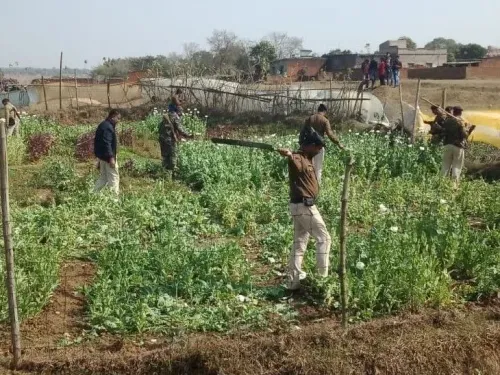
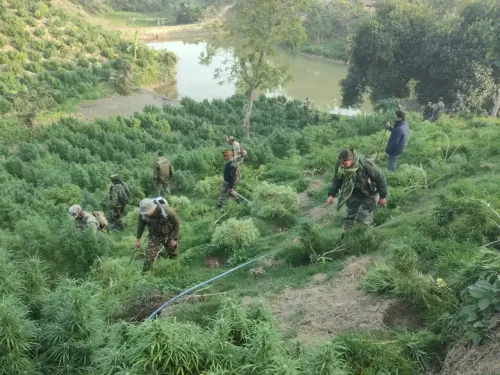
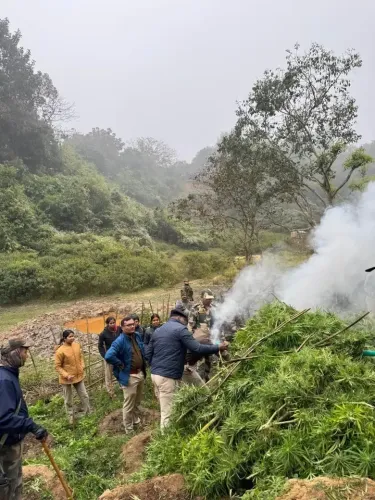
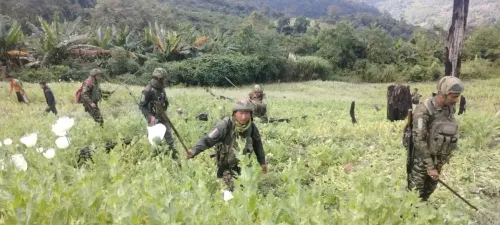
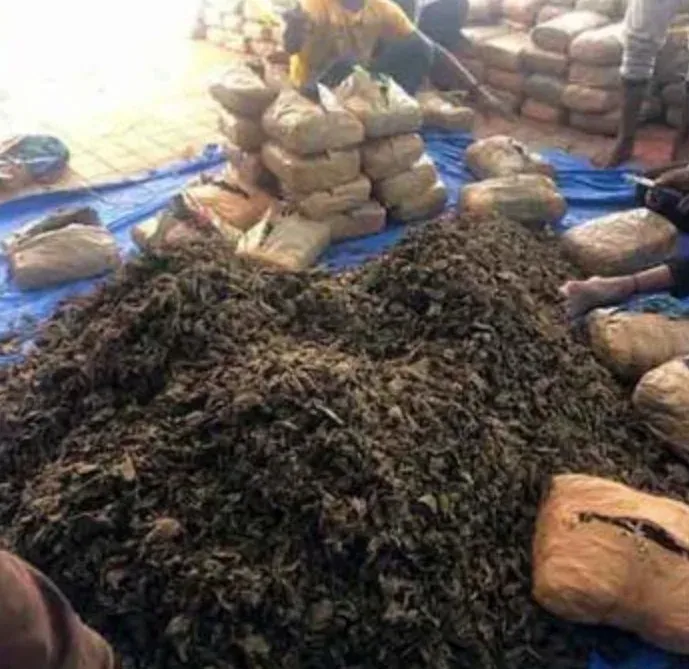
During 2025-26 , Odisha Police destroyed cannabis across 36,508.792 acres in 1,631 GPS-mapped plots under 41 police stations .
Of the total area, 6,632.197 acres were confirmed government or revenue land.
The six targeted districts are Malkangiri , Koraput , Rayagada , Kandhamal , Boudh , and Gajapati .
Officials must alert the STF or ANTF immediately upon detecting fresh cultivation, as mandated under Section 47 of the NDPS Act, 1985 .
Revenue officials found assisting cannabis cultivators or networks face immediate strict action .
The Odisha Revenue and Disaster Management (R&DM) Department has directed field-level revenue officials across six districts to intensify surveillance against illegal cannabis cultivation on government land, targeting areas repeatedly used as ganja cultivation hotspots. The directive, issued on 10 August, comes as the 2026-27 crop season gets underway — raising fears of fresh illicit cultivation on plots where crops were destroyed just months ago.
The Scale of the Problem
During the 2025-26 crop season, the Odisha Police destroyed illegal cannabis cultivation spread across 36,508.792 acres spanning 1,631 GPS-mapped plots under 41 police stations in the six identified districts. Of this, 6,632.197 acres were confirmed to be government or revenue land — underscoring the extent to which state-owned property has been exploited for illicit cultivation.
Districts Under the Scanner
Additional Chief Secretary of the R&DM Department, Dr Arabinda Kumar Padhee, has written to the Collectors of Malkangiri, Koraput, Rayagada, Kandhamal, Boudh, and Gajapati — all identified as ganja cultivation hotspots. The letter directs them to sensitise field revenue functionaries including Tehsildars, Additional Tehsildars, Revenue Supervisors, and Revenue Inspectors.
What Officials Have Been Directed to Do
Revenue officials have been instructed to maintain continuous surveillance of all government land where illegal cannabis was previously detected, and to keep village- and plot-wise records along with GPS coordinates ready in advance. The Odisha Police has already shared GPS data from the previous crop season (November 2025 to March 2026) to enable systematic monitoring of the same parcels.
If fresh cultivation is detected, officials must immediately alert the concerned police station, the Special Task Force (STF), or the Anti-Narcotics Task Force (ANTF), as required under Section 47 of the Narcotic Drugs and Psychotropic Substances Act, 1985. District-level internal reporting mechanisms are also to be established for prompt transmission of intelligence to law enforcement.
Zero Tolerance for Official Complicity
Dr Padhee has issued a stern warning that any revenue official found assisting individuals or criminal networks involved in illegal cannabis cultivation will face immediate strict action. This comes amid longstanding concerns that remote and inaccessible terrain in these tribal-belt districts has historically enabled cultivators to reuse the same plots season after season, often with limited official intervention.
What Comes Next
With the new crop season already under way, the window for pre-emptive action is narrow. Officials have been told to coordinate closely with local police to prevent cultivation from taking root before it can be detected. The effectiveness of this directive will hinge on how consistently field-level functionaries — historically under-resourced in these remote districts — can execute continuous ground surveillance.
Point of View
600 acres of state-owned land were actively used for illegal cannabis farming in a single season, and that officials needed to be formally warned against aiding the ganja mafia. The reliance on GPS coordinates from police destruction drives to guide revenue surveillance is a pragmatic workaround, but it also signals a reactive posture — the state is tracking where cultivation happened, not necessarily where it will happen next. In tribal-belt districts like Malkangiri and Koraput, where alternative livelihoods remain scarce, enforcement without economic substitution has historically produced limited long-term results. The real test of this crackdown will be whether the 2026-27 season sees a measurable reduction in the 36,500-acre baseline — or whether the same plots simply change hands.
NationPress
28 Sept 2026
Frequently Asked Questions
Which districts in Odisha are targeted in the illegal cannabis crackdown?
The six districts identified as ganja cultivation hotspots are Malkangiri, Koraput, Rayagada, Kandhamal, Boudh, and Gajapati. Revenue officials in these districts have been directed to maintain continuous surveillance of government land where cannabis was previously detected and destroyed.
How much illegal cannabis was destroyed in Odisha during the 2025-26 crop season?
Odisha Police destroyed illegal cannabis cultivation spread across 36,508.792 acres in 1,631 GPS-mapped plots under 41 police stations during the 2025-26 season. Of this, 6,632.197 acres were found to be government or revenue land.
What action must revenue officials take if fresh cannabis cultivation is detected?
Officials are required to immediately inform the concerned police station, the Special Task Force (STF), or the Anti-Narcotics Task Force (ANTF) as mandated under Section 47 of the Narcotic Drugs and Psychotropic Substances Act, 1985. District-level internal reporting mechanisms are also being established to ensure prompt transmission of intelligence.
What happens to revenue officials who assist illegal cannabis cultivators?
Additional Chief Secretary Dr Arabinda Kumar Padhee has warned that strict action will be taken immediately against any revenue official found assisting individuals or criminal networks involved in illegal cannabis cultivation.
Why are the same plots being monitored again this season?
Authorities note that persons involved in illegal cannabis cultivation — particularly in remote and inaccessible areas — tend to reuse the same government revenue land each season. GPS coordinates from the 2025-26 destruction drive are being used to enable targeted surveillance of those specific plots in the 2026-27 season.