Odisha to launch social media policy for govt communication with fact-checking system
Synopsis
Odisha is set to become one of few Indian states with a formal social media policy for government communication, complete with a fact-checking system. CM Mohan Charan Majhi's directive to Information Service Officers signals a shift from press-release culture to real-time digital engagement — and a direct acknowledgement that misinformation is outrunning official response machinery.
Key Takeaways
Odisha CM Mohan Charan Majhi announced a dedicated social media policy for government communication on 9 October 2026 .
A stringent fact-checking system will be established to counter misinformation on digital platforms.
A digital communication mechanism will link the Information and Public Relations Department from district to state level.
Officials are directed to follow three principles: accuracy , promptness , and simplicity .
The CM highlighted deepfakes , cloned voices , and AI-generated videos as emerging threats requiring urgent attention.
Information Service Officers were urged to develop skills in digital media , fact-checking , and video content creation .
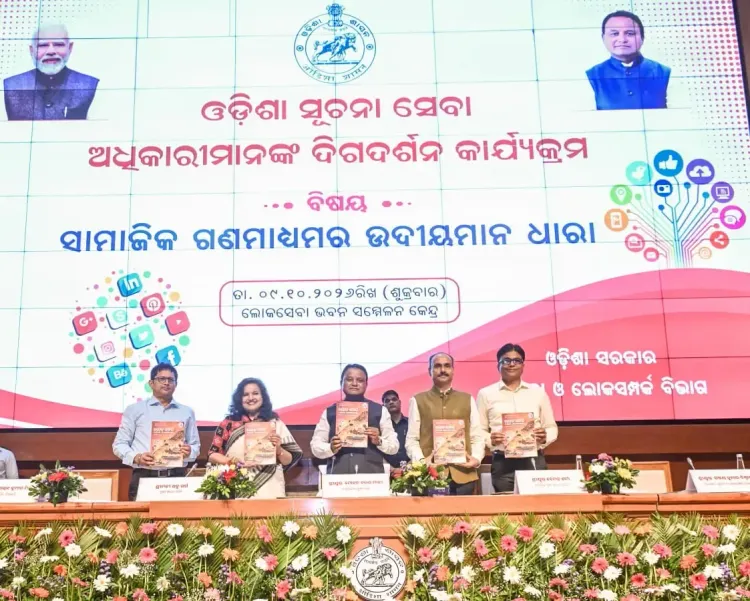
Odisha Chief Minister Mohan Charan Majhi on Friday, 9 October 2026, announced that the state government will soon formulate a dedicated social media policy governing official information and communication, in line with the demands of today's digital landscape. The announcement came at a seminar on 'Emerging Trends in Social Media' organised for Information Service Officers at Lok Seva Bhawan in Bhubaneswar.
Key Announcements
Chief Minister Majhi outlined plans to establish a seamless digital information and communication mechanism within the Information and Public Relations Department, spanning from the district level to the state headquarters. Crucially, he confirmed that a stringent fact-checking system will be put in place to counter misinformation and rumours circulating on digital platforms.
'A seamless digital information and communication mechanism will be established in the Information and Public Relations Department, extending from the district level to the state headquarters. A stringent fact-checking system will also be implemented to counter misinformation and rumours spread through digital platforms,' Majhi said.
The Case for Modernising Government Communication
Majhi noted that today's youth are significantly ahead of government agencies in their use of social media and artificial intelligence platforms, outpacing the reach of traditional media. He urged Information Service Officers to move beyond issuing press releases and instead function as skilled communication professionals capable of engaging with citizens across digital channels.
The Chief Minister emphasised that the current era is no longer defined solely by print and electronic media — it is equally shaped by social media and the creator economy. He observed that the mobile phone in every citizen's hand has effectively become a newspaper, television, radio, and a multi-purpose communication tool combined.
Three Principles for Government Messaging
Majhi stressed that all government communication must adhere to three core values: accuracy, promptness, and simplicity. He warned that errors in official data or statistics are unacceptable, and that delays in sharing information create a vacuum that bad actors can exploit to spread false narratives.
'Errors in government information or statistics are unacceptable,' Majhi said, adding that accurate information must reach the public quickly and in language that ordinary citizens can readily comprehend. He also advocated for storytelling over dry statistics, encouraging officers to highlight human stories and beneficiary testimonials as evidence of effective service delivery.
Deepfakes and AI-Driven Misinformation
The Chief Minister flagged deepfakes, cloned voices, and artificially generated videos as major challenges in the age of artificial intelligence. He warned that fake news typically spreads far faster than verified information, making it essential to authenticate any content before sharing it through official channels.
'Government officials must remain lifelong learners and develop expertise in digital media, fact-checking and video content creation,' Majhi said, calling on Information Service Officers to continuously upskill to stay ahead of emerging threats.
What Comes Next
The Odisha government is expected to release a draft of the social media policy in the coming weeks, with implementation beginning at both district and state levels. The initiative positions Odisha among a small group of Indian states actively codifying digital communication standards for their public information machinery. How quickly the fact-checking infrastructure can be operationalised — and whether it will be staffed independently or embedded within existing departments — will determine its effectiveness.
Point of View
It risks being perceived as a tool to manage narratives rather than verify them. The CM's framing is forward-looking, but the absence of a timeline, a nodal authority, or a funding commitment leaves the initiative short of a concrete plan. More broadly, the gap between government communication departments and citizen-led digital discourse is a national problem; Odisha's move, if followed through, could serve as a useful template — or a cautionary tale.
NationPress
10 Oct 2026
Frequently Asked Questions
What is Odisha's new social media policy about?
The Odisha government plans to formulate a social media policy that governs how official information is communicated through digital platforms. It will include a fact-checking system to counter misinformation and a digital communication network linking the Information and Public Relations Department from district to state headquarters.
Why is Odisha introducing a fact-checking system?
CM Mohan Charan Majhi cited the rapid spread of deepfakes, cloned voices, and AI-generated misinformation as key threats, noting that fake news typically outpaces verified information. The system is intended to authenticate content before it is shared through official channels.
Who will be responsible for implementing the policy?
Information Service Officers under the Information and Public Relations Department are expected to lead implementation. CM Majhi urged them to function as skilled communication professionals rather than limiting their role to issuing press releases.
What are the three principles CM Majhi prescribed for government communication?
Chief Minister Majhi outlined accuracy, promptness, and simplicity as the three non-negotiable pillars of official communication, warning that delays create information vacuums that can be exploited to spread false narratives.
When will the social media policy be finalised?
No specific date has been announced, but CM Majhi indicated the policy will be ready 'soon'. A draft is expected to be released in the coming weeks, with rollout covering both district and state levels of government.