Trump Claims Hormuz Control, Vows Record Diesel Price Drop
Synopsis
President Trump declared US 'total control' of the Strait of Hormuz and cited a Russian energy development, promising diesel prices will fall in 'record numbers' — with American farmers, ranchers, and truckers named as the primary beneficiaries.
Key Takeaways
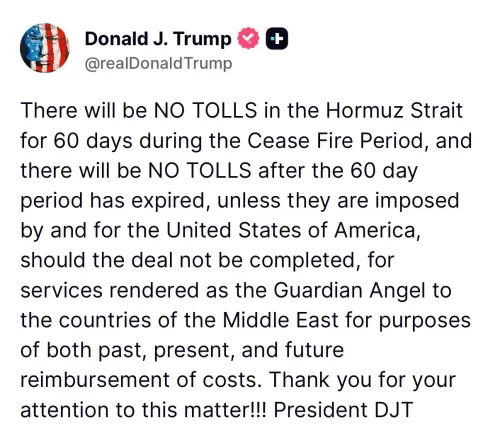
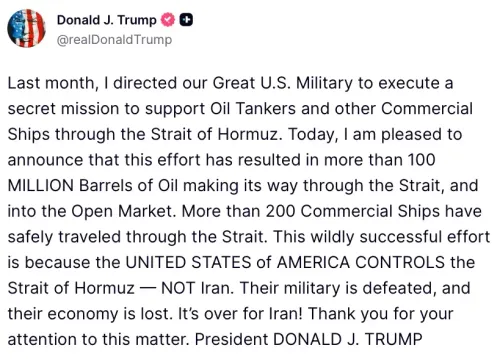
President Trump claimed the US holds 'TOTAL CONTROL' of the Strait of Hormuz , the world's most critical oil transit chokepoint.
Trump cited an unspecified 'great announcement on Russian Energy' as a second driver of the projected price decline.
The post promises diesel prices will fall 'IN RECORD NUMBERS, AND FAST' — setting a high public benchmark for the administration.
American farmers, ranchers, and truckers were specifically named as the primary intended beneficiaries, signalling a populist-economic framing.
Trump noted the price relief would extend beyond the US to 'the World', with implications for crude-import-dependent economies like India .
The statement was published through the official White House X account on 10 October 2026 .
A presidential declaration with global oil-market consequences landed on Friday night: President Donald J. Trump, through the White House's official X account, claimed the United States holds 'TOTAL CONTROL' of the Strait of Hormuz — the world's most critical oil chokepoint — and paired that assertion with a promise of record-fast diesel price declines for American farmers, ranchers, and truckers.
The Hormuz claim and what it signals
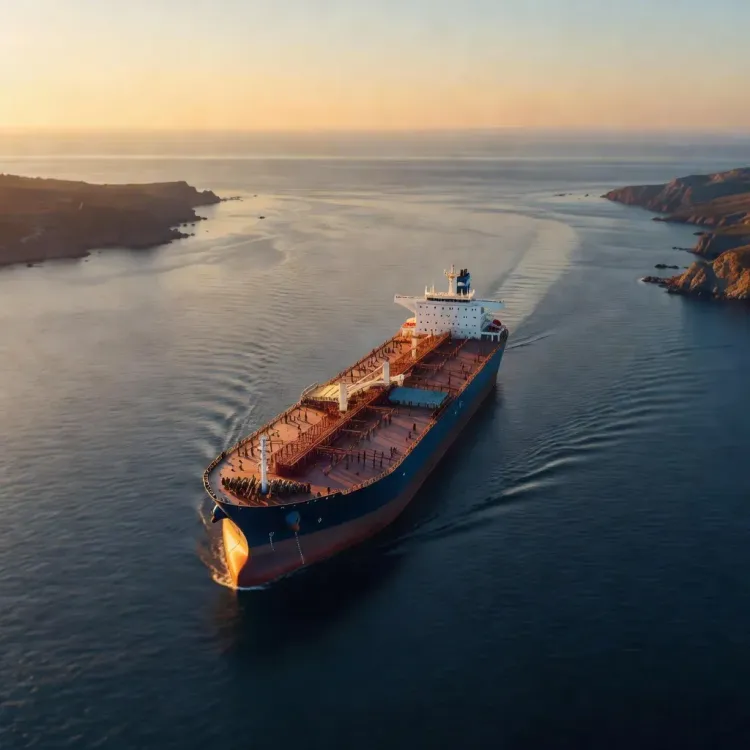
The Strait of Hormuz, the narrow waterway between Iran and Oman, handles roughly one-fifth of the world's traded oil. Any assertion of American dominance over it is not a routine boast — it is a geopolitical declaration with immediate implications for crude-oil futures, Iranian leverage, and Gulf shipping insurance rates. Trump's post stopped short of detailing how that 'total control' is being exercised, but the framing suggests a significant military or diplomatic posture shift in the region.
The timing matters. The post was published at 12:35 AM IST on 10 October 2026, and references a separate, unspecified 'great announcement on Russian Energy' — language pointing to a possible deal or policy move involving Russian energy exports, sanctions architecture, or both. No details of that announcement were included in the post itself.
Diesel prices and the domestic political calculus
Trump's explicit call-out of 'Great Farmers, Ranchers, and Truckers' is a precise political signal. These three constituencies are among the most diesel-dependent in the United States economy, and fuel costs cut directly into their margins. By naming them first, the White House is framing a complex geopolitical manoeuvre in kitchen-table terms: lower pump prices, faster, for the backbone of rural America.
The promise of prices falling 'IN RECORD NUMBERS, AND FAST' sets an unusually aggressive public benchmark — one the administration will be held to by markets, by voters, and by the farm-belt states that remain central to Republican electoral math.
Why the world is watching too
Trump explicitly noted the price relief would reach 'Americans and, indeed, the World' — a recognition that diesel benchmarks are global. For India, which imports over 85% of its crude and runs a diesel-heavy freight and agriculture economy, any sustained downward shift in global energy prices would have direct downstream effects on inflation, transport costs, and farm-input prices. A Hormuz-anchored supply signal, if credible, could move Brent crude within hours of markets opening.
The Russian energy dimension adds another layer of complexity. Any realignment of US policy on Russian energy — whether a sanctions relaxation, a coordinated output deal, or a new diplomatic channel — would reshape the global supply picture that has kept energy markets volatile since 2022.
Point of View
Ranchers, and truckers signals the administration is running an energy-as-populism playbook ahead of the midterm cycle. For global markets, however, the unspecified 'Russian energy announcement' is the more consequential variable: any shift in US posture on Russian supply — even rhetorical — can reprice Brent within a session. India and other major crude importers will be watching the fine print closely.
NationPress
10 Oct 2026
Frequently Asked Questions
What did Trump say about the Strait of Hormuz?
President Trump claimed the United States has 'TOTAL CONTROL' of the Strait of Hormuz, the critical Persian Gulf waterway through which roughly one-fifth of global oil trade passes, and linked that control to an expected fall in diesel prices worldwide.
Why does the Strait of Hormuz matter for oil prices?
The Strait of Hormuz is the world's most important oil transit chokepoint, connecting Gulf producers to global markets. Any disruption or change in control over it directly affects crude supply, shipping costs, and international oil benchmarks like Brent.
What is the Russian energy announcement Trump mentioned?
Trump referenced a 'great announcement on Russian Energy' without specifying details in the post. The statement implies a policy development — possibly involving sanctions, supply agreements, or diplomatic engagement — that the White House believes will drive diesel prices lower.
How will lower US diesel prices affect India?
India imports over 85% of its crude oil, and diesel underpins its freight and agricultural economy. A sustained global diesel price decline — especially one tied to Hormuz stability and Russian supply — would ease inflation, reduce transport costs, and lower farm-input prices in India.
Why did Trump specifically mention farmers, ranchers, and truckers?
Farmers, ranchers, and truckers are among the most diesel-dependent groups in the US economy. Naming them frames a geopolitical energy move in direct economic terms for rural, Republican-leaning constituencies ahead of the midterm political cycle.