Odisha CM Office: Gramodaya to pull Maoist zones into mainstream

Synopsis
The Chief Minister's Office of Odisha has highlighted the Gramodaya scheme, designed to integrate Maoist-affected and underserved tribal districts into mainstream development by delivering infrastructure and government welfare benefits directly to every village and family.
Key Takeaways
Gramodaya is an Odisha government scheme focused on bringing historically underserved and Maoist-affected regions into the mainstream of development.
The scheme targets infrastructure, social, and economic progress alongside last-mile welfare delivery in LWE-affected districts.
Key districts in focus include Malkangiri, Koraput, and Rayagada in southern and western Odisha, historically marked by tribal marginalisation and LWE activity.
Gramodaya aligns with India's broader development-as-counter-insurgency model pursued since the mid-2000s across Odisha, Chhattisgarh, and Jharkhand.
NITI Aayog's Aspirational Districts Programme (2018) had already flagged multiple Odisha LWE districts for accelerated governance attention, providing a national policy foundation for state-level schemes like Gramodaya.
Deep in Odisha's southern and western districts — where Maoist influence has long kept government welfare at arm's length — the state's Chief Minister's Office is spotlighting 'Gramodaya', a scheme designed to push development into the very villages that development forgot. The announcement, made on Friday, 30 October 2026, frames Gramodaya as the instrument of a 'people's government' determined to close the gap between policy and doorstep.
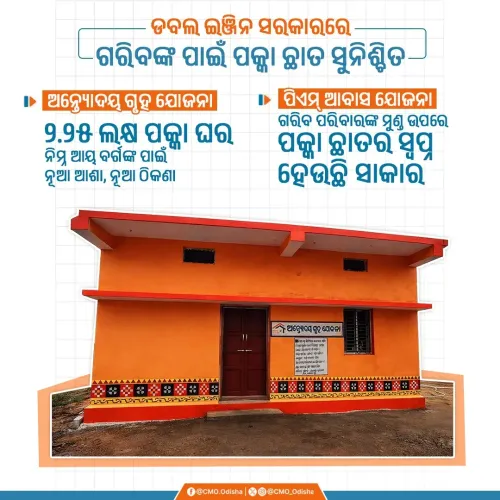
The CMO's post, published in both Odia and English, states plainly: 'ଲୋକଙ୍କ ସରକାରରେ ବିକାଶରୁ ବଞ୍ଚିତ ଅଞ୍ଚଳକୁ ବିକାଶର ମୁଖ୍ୟସ୍ରୋତରେ ଯୋଡ଼ିବା' — 'bringing underserved regions into the mainstream of development' — and commits to ensuring 'government welfare benefits reach every village and family' in Left-Wing Extremism-affected areas alongside infrastructure, social, and economic progress.What Gramodaya is targeting in LWE districts
The scheme is specifically anchored in the Maoist-affected districts of southern and western Odisha — a belt that includes historically underserved tribal regions such as Malkangiri, Koraput, and Rayagada. These are places where difficult terrain, decades of LWE activity, and thin administrative reach meant that government welfare programmes existed on paper far more reliably than they existed on the ground.
Gramodaya's stated logic is twofold: push hard infrastructure — roads, connectivity, basic services — into these zones, and simultaneously ensure that welfare entitlements actually land with families rather than stalling at a district headquarters. The phrase used in the official communication, 'ଜନକଲ୍ୟାଣମୂଳକ ସେବା' ('public welfare services'), signals a deliberate emphasis on last-mile delivery, not just construction.
Odisha's place in India's development-as-stability playbook
Odisha's Gramodaya approach sits inside a much older national strategy. Since the mid-2000s, successive central and state governments have pursued a twin-track model in LWE zones: security operations on one track, accelerated development on the other. The logic is straightforward — where people have roads, health centres, schools, and real access to welfare schemes, the conditions that allow extremist influence to flourish weaken.
NITI Aayog's Aspirational Districts Programme, launched in 2018, included multiple LWE-affected districts in Odisha precisely to fast-track socio-economic indicators through concentrated governance attention. Gramodaya can be read as Odisha's state-level instrument layered on top of that central framework — a bet that dedicated, locally-administered delivery can move faster than generic national rollouts.
The states that share this challenge — Chhattisgarh and Jharkhand run parallel programmes — make Odisha's experience a reference point watched closely at the national level. Whether Gramodaya produces measurable movement in welfare uptake and stability in districts like Malkangiri will answer a question that has dogged Indian policymakers for two decades: can development reliably follow the flag into terrain where the flag was previously unwelcome?
The answer, district by district, is still being written.
Point of View
The CMO is also making a political claim: that the current administration can reach where previous governments did not. The real test will be whether welfare uptake metrics in districts like Malkangiri move noticeably — because in LWE policy, the gap between announcement and doorstep delivery has historically been the entire problem. If Gramodaya demonstrates measurable last-mile success, it becomes a replicable template for the other LWE-affected states watching closely.
NationPress
30 Oct 2026
Frequently Asked Questions
What is the Gramodaya scheme in Odisha?
Gramodaya is an Odisha government scheme aimed at delivering infrastructure, social development, and welfare benefits directly to underserved villages, with a particular focus on Maoist-affected districts in southern and western Odisha.
Which districts in Odisha are Maoist-affected?
The primary LWE-affected districts in Odisha include Malkangiri, Koraput, and Rayagada, among others in the state's southern and western tribal belt.
How does the Gramodaya scheme relate to Left-Wing Extremism in Odisha?
Gramodaya targets areas where LWE activity historically limited government reach, aiming to deliver development and welfare benefits as a parallel track to security measures — consistent with India's broader anti-LWE strategy.
What is India's Aspirational Districts Programme and how does it relate to Odisha?
The Aspirational Districts Programme, launched by NITI Aayog in 2018, identified multiple LWE-affected Odisha districts for fast-tracked socio-economic development. Gramodaya functions as a state-level complement to this national framework.
What is the 'development as counter-insurgency' model used in India?
Since the mid-2000s, Indian states with LWE presence — including Odisha, Chhattisgarh, and Jharkhand — have paired security operations with accelerated welfare and infrastructure delivery, arguing that development reduces the conditions that allow extremist influence to grow.