Om Birla: Agriculture and innovation key to Viksit Bharat@2047 goal
Synopsis
Lok Sabha Speaker Om Birla used a national agriculture conference to make the case that India cannot reach its Viksit Bharat@2047 goal without placing farming — powered by AI, drones, and climate-resilient science — at the centre of its development strategy. The message: tradition and technology must merge, not compete.
Key Takeaways
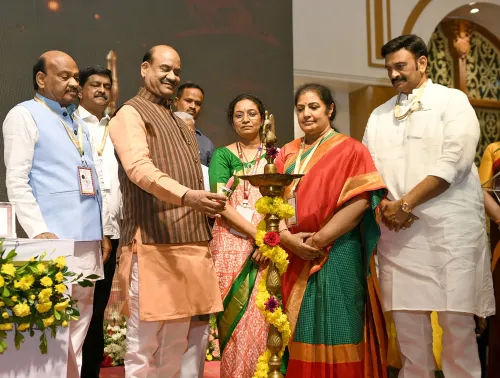
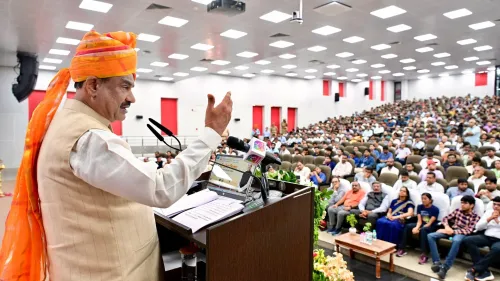
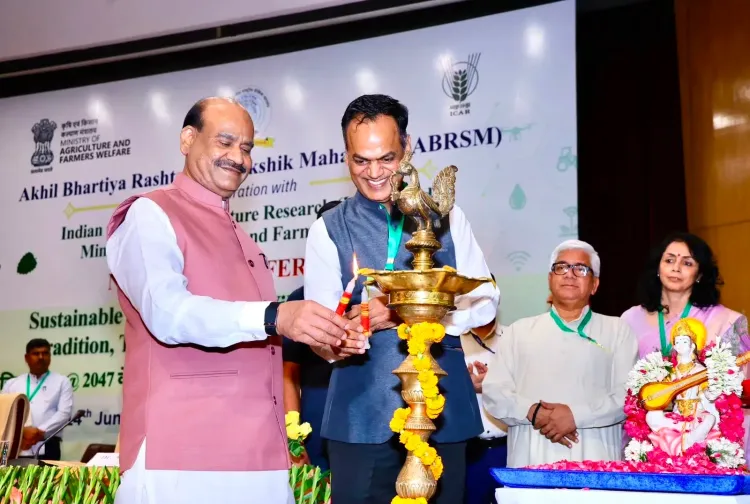
Lok Sabha Speaker Om Birla addressed the inaugural session of the 'Sustainable Agriculture for Viksit Bharat@2047' conference in New Delhi on 13 June .
Birla said agriculture is the 'cornerstone of India's cultural consciousness, food security, rural prosperity, and social stability.' He called for integrating AI, drones, data analytics, and digital farming with traditional agricultural knowledge.
Expansion of agro-based industries, food processing units, and agri-startups was flagged as essential for rural uplift.
The conference was jointly organised by ABRSM , ICAR , and the Ministry of Agriculture and Farmers Welfare .
Birla stressed the roles of youth, women, and grassroots innovators in driving the rural economy forward.
Lok Sabha Speaker Om Birla on Saturday, 13 June said that India's path to becoming a developed nation by 2047 hinges on the deep integration of agriculture, knowledge, research, and innovation. Speaking at the inaugural session of a two-day national conference in New Delhi, Birla framed farming not merely as an economic activity but as a civilisational anchor for the country's future.
What Birla Said
Addressing the conference titled 'Sustainable Agriculture for Viksit Bharat@2047: Tradition, Technology and Tangible Outcomes', Birla declared, 'India's agriculture is not merely the backbone of the economy but also the cornerstone of our cultural consciousness, food security, rural prosperity, and social stability.'
He stressed that amid global pressures — including climate change, food security challenges, and the Sustainable Development Goals — India must harmonise traditional agricultural knowledge with modern science, technology, Artificial Intelligence, climate-resilient innovations, and research-based solutions.
Technology as the New Farming Frontier
Birla identified next-generation tools — including drones, artificial intelligence, data analytics, and digital farming — as forces making agriculture increasingly precise and productive. He called on agricultural universities, research institutions, scientists, and innovators to serve as the primary pillars of India's agricultural future.
He also underscored the urgent need to expand agro-based industries, food processing units, and agri-startups to accelerate rural development and improve farmers' livelihoods.
Environment, Water, and Soil Health
On environmental concerns, the Speaker highlighted the importance of water conservation, micro-irrigation, soil health management, high-quality seeds, optimised fertiliser use, and climate-resilient crop varieties. He commended the Indian Council of Agricultural Research (ICAR) and the broader scientific community for their sustained efforts in engineering productivity-enhancing solutions.
Role of Youth, Women, and Grassroots Innovation
Birla observed that youth energy, women's leadership, and grassroots innovation would provide vital momentum to the rural economy. He called upon teachers, scientists, researchers, policymakers, and farmers to collectively develop self-reliant agricultural models capable of sustaining long-term prosperity.
'India's villages are the country's true strength, and our farmers continue to be the backbone of both our economy and social fabric,' he stated.
About the Conference
The event was jointly organised by the Akhil Bharatiya Rashtriya Shaikshik Mahasangh (ABRSM), ICAR, and the Ministry of Agriculture and Farmers Welfare. It brought together educators, scientists, and policymakers to chart a roadmap for sustainable agriculture ahead of India's centenary of independence. The conference's emphasis on blending tradition with technology signals a broader policy push to make the farm sector a central pillar of the Viksit Bharat agenda.
Point of View
And agri-startup ecosystems remain concentrated in a handful of states. Until the conference's 'tangible outcomes' subtitle is matched by verifiable metrics — adoption rates, income data, irrigation coverage — the Viksit Bharat agriculture narrative risks remaining aspirational rather than operational.
NationPress
19 Sept 2026
Frequently Asked Questions
What is the Viksit Bharat@2047 agriculture conference about?
It is a two-day national conference titled 'Sustainable Agriculture for Viksit Bharat@2047: Tradition, Technology and Tangible Outcomes,' organised jointly by ABRSM, ICAR, and the Ministry of Agriculture and Farmers Welfare. The event focuses on charting a roadmap for sustainable farming ahead of India's centenary of independence in 2047.
What did Lok Sabha Speaker Om Birla say at the conference?
Birla said India's Viksit Bharat@2047 goal rests on integrating agriculture, knowledge, research, and innovation. He called for harmonising traditional farming wisdom with modern technologies such as AI, drones, and data analytics, and stressed the need to expand agro-based industries and agri-startups.
Which organisations organised the agriculture conference?
The conference was jointly organised by the Akhil Bharatiya Rashtriya Shaikshik Mahasangh (ABRSM), the Indian Council of Agricultural Research (ICAR), and the Ministry of Agriculture and Farmers Welfare.
Why does Birla consider agriculture central to Viksit Bharat?
Birla argued that farming underpins India's food security, rural prosperity, social harmony, and inclusive growth — making it indispensable to the vision of a developed India by 2047. He also noted that India's villages and farmers remain the backbone of both the economy and the social fabric.
What technologies did Om Birla highlight for transforming Indian agriculture?
Birla highlighted drones, artificial intelligence, data analytics, and digital farming as tools making agriculture more precise and productive. He also emphasised water conservation, micro-irrigation, soil health management, and climate-resilient crop varieties as critical enablers.