Omar Abdullah questions Centre's action against Rohingyas in J&K, slams UCC push
Synopsis
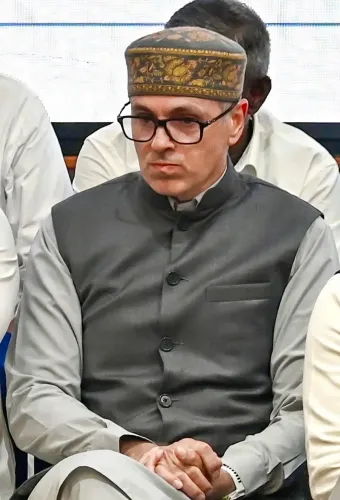
J&K Chief Minister Omar Abdullah has broken with the Centre’s enforcement line, publicly defending Rohingya refugees and questioning why stateless people sheltered after fleeing Myanmar are being targeted alongside undocumented Bangladeshi migrants. On the same day, he ruled out implementing the Uniform Civil Code in J&K, challenging the Centre to pass it through Parliament first.
Key Takeaways
J&K Chief Minister Omar Abdullah on 6 October 2026 questioned the Centre’s action against Rohingya refugees, calling it unjustified.
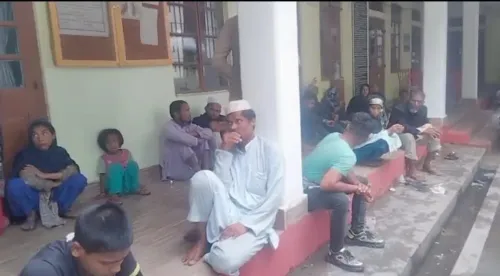
Abdullah distinguished between undocumented Bangladeshi migrants and Rohingyas , saying the latter were given shelter after being deported from Myanmar .
On 5 October , 250 Bangladeshi nationals found illegally in J&K were flown by IAF to West Bengal for deportation to Bangladesh.
Abdullah declared the J&K government would not implement the Uniform Civil Code (UCC) , urging Parliament to legislate it first.
The UCC is a Directive Principle under Article 44 of the Constitution and remains contested on grounds of minority rights and cultural diversity.
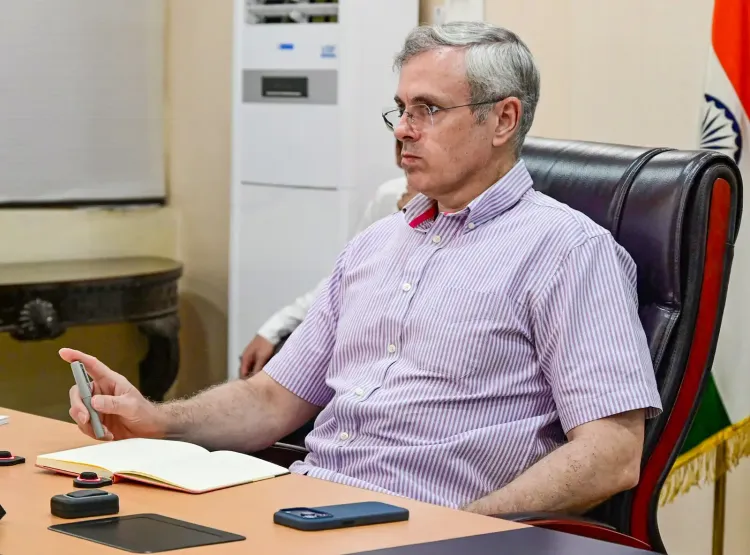
Jammu and Kashmir Chief Minister Omar Abdullah on Tuesday, 6 October 2026, publicly questioned the Centre's recent administrative action against Rohingya refugees in the Union Territory, asserting that the community was being targeted without justification. His remarks came a day after 250 Bangladeshi nationals found living illegally in Jammu and Kashmir were airlifted on an Indian Air Force (IAF) flight to West Bengal for deportation to Bangladesh.
Omar Abdullah on Rohingyas
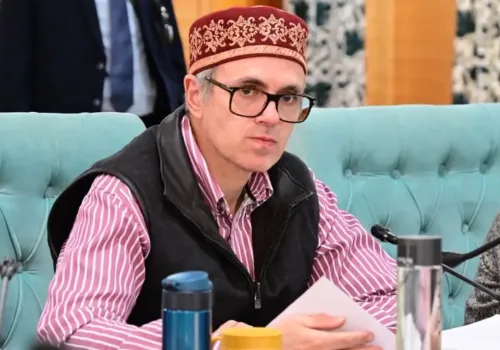
Speaking to reporters in Srinagar, the Chief Minister drew a clear distinction between undocumented Bangladeshi migrants and the Rohingya community. “People who have come from Bangladesh without permission, it is a different matter for them. But the Rohingyas, who are being targeted for no reason, when they were deported from their country, we gave them a place here,” Abdullah said.
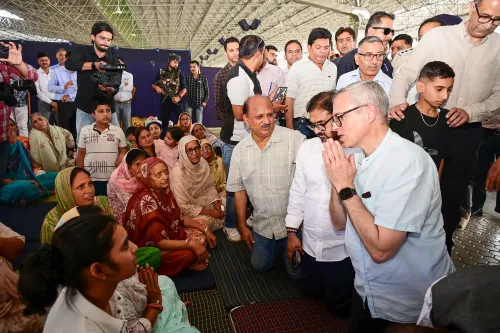
He added: “We allowed them to live here until their country’s situation improves. I find it strange to take action against them suddenly. But we do not have it in our hands. This is the Government of India.” The remarks underscore a widening tension between the elected state administration and the Centre over the handling of stateless communities sheltering in the region.
Context: The IAF Deportation Flight
The backdrop to Abdullah’s comments is a significant enforcement operation. On Monday, 5 October, authorities flew 250 Bangladeshi nationals who had been staying illegally in Jammu and Kashmir to West Bengal aboard an IAF aircraft, from where they are to be deported to Bangladesh. This was one of the larger single-day deportation movements from the Union Territory in recent memory.
Notably, the Rohingya community—a stateless Muslim minority that fled persecution in Myanmar—occupies a different legal and humanitarian status from economic migrants, though the Centre has not publicly differentiated between the two groups in its enforcement posture. Critics argue that conflating the two categories risks violating international humanitarian norms.
Abdullah on the Uniform Civil Code
The Chief Minister also made pointed remarks on the Uniform Civil Code (UCC), declaring that the Jammu and Kashmir government would not implement it. “Such a legislation should be debated and enacted by the Parliament. If you have the courage, bring a law in the Parliament. Debate it in the Parliament. See if it passes in Parliament or not,” he said.
The UCC proposes a single set of personal laws—covering marriage, divorce, adoption, inheritance, and succession—applicable equally to all citizens regardless of religion, replacing the current system of community-specific personal laws. It is enshrined in Article 44 of the Indian Constitution as a Directive Principle of State Policy, making it aspirational but not judicially enforceable.
Supporters contend that the UCC would advance gender equality, secularism, and national integration by eliminating discriminatory traditions. Critics, however, raise concerns about the protection of minority rights, cultural diversity, and religious freedom. Several BJP-governed states have moved ahead with UCC implementation, intensifying pressure on other governments to follow suit.
What This Signals
Abdullah’s dual pushback—on both the Rohingya crackdown and the UCC—signals an assertive posture by the elected government in Jammu and Kashmir vis-à-vis the Centre on identity and governance questions. This comes amid ongoing debates about the degree of legislative and executive autonomy available to the Union Territory’s government after the reorganisation of 2019. How the Centre responds, and whether the Rohingya deportation orders are revised or extended, will be closely watched in coming weeks.
Point of View
Abdullah is staking out a humanitarian distinction that the Centre’s operational posture has so far blurred. His UCC challenge—‘bring it to Parliament’—is less a legal argument than a political dare, testing whether BJP-led states that have already adopted the code will press for a national framework. The real question is whether J&K’s elected government has the institutional leverage to push back, or whether these remarks amount to political signalling with no procedural teeth.
NationPress
6 Oct 2026
Frequently Asked Questions
Why did Omar Abdullah criticise the Centre’s action against Rohingyas?
Omar Abdullah argued that Rohingya refugees, who had been given shelter in Jammu and Kashmir after fleeing persecution in Myanmar, were being targeted without reason. He drew a distinction between them and undocumented Bangladeshi migrants, saying the two cases should not be treated the same way.
What happened to the Bangladeshi nationals in Jammu and Kashmir?
On 5 October 2026, 250 Bangladeshi nationals found living illegally in Jammu and Kashmir were transported on an IAF flight to West Bengal, from where they are to be deported to Bangladesh. It was one of the larger single-day removal operations from the Union Territory in recent times.
What did Omar Abdullah say about the Uniform Civil Code?
The J&K Chief Minister stated that his government would not implement the UCC, and challenged the Centre to pass it through Parliament before expecting states and Union Territories to adopt it. He said the legislation must be debated and enacted by Parliament first.
What is the Uniform Civil Code and why is it controversial?
The UCC proposes a single set of personal laws on marriage, divorce, adoption, inheritance, and succession that would apply to all citizens regardless of religion, replacing existing community-specific personal laws. While supporters say it advances gender equality and national integration, critics argue it threatens minority rights and cultural diversity. It is listed as a Directive Principle under Article 44 of the Constitution, making it aspirational but not legally enforceable.
Who are the Rohingyas and why are they in Jammu and Kashmir?
The Rohingyas are a stateless Muslim minority who fled large-scale persecution in Myanmar, with major displacement waves occurring in 2017 and earlier. A number of Rohingya families were sheltered in Jammu and Kashmir and other Indian states on humanitarian grounds while their return to Myanmar remained unsafe. Their legal status in India has been a subject of ongoing political and judicial debate.