Omar Abdullah Marks 7 Years Since J&K's Special Status Was Revoked

Synopsis
Seven years after Article 370 was revoked and Jammu and Kashmir was reorganised as a Union Territory, Chief Minister Omar Abdullah marked the anniversary with a firm public declaration that his party has not accepted the changes and remains committed to reversing them.
Key Takeaways
August 5, 2026 marks seven years since Article 370 was revoked and Jammu and Kashmir was bifurcated into two Union Territories.
Omar Abdullah stated his party has 'not forgotten, not reconciled, far less accepted' the 2019 constitutional changes.
The Jammu and Kashmir National Conference remains formally committed to reversing the reorganisation and restoring the region's special status.
Abdullah quoted Robert Frost to signal the fight is ongoing: 'Miles to go before I sleep.' Statehood restoration, promised by the central government, has not yet been legislated despite the 2024 Assembly elections being held on schedule.
Seven years on, and Jammu and Kashmir Chief Minister Omar Abdullah has made clear that neither time nor office has softened his party's position on the August 2019 constitutional changes that stripped the region of its special status. On Wednesday, August 5, 2026, Abdullah took to X to mark the anniversary — not with resignation, but with a pointed declaration of unfinished political business.
Abdullah's post quoted Robert Frost — 'The woods are lovely, dark and deep. But I have promises to keep. And miles to go before I sleep' — a literary signal that he regards the fight as ongoing, not archived. The words carry weight: a sitting Chief Minister invoking a poet's metaphor for duty and distance, on the exact anniversary of the day his region's constitutional identity was remade without its consent.
What August 5, 2019 Actually Dismantled
On August 5, 2019, the central government revoked Article 370 of the Indian Constitution, which had granted Jammu and Kashmir a distinct status — its own constitution, a separate flag, and limits on outsiders acquiring land or settling permanently. The same day, Parliament passed the Jammu and Kashmir Reorganisation Act, bifurcating the former state into two Union Territories: Jammu and Kashmir (with a legislature) and Ladakh (without one).
The changes were among the most sweeping constitutional alterations to a state's status in independent India's history. For regional parties like the Jammu and Kashmir National Conference — founded in 1932 and the oldest political force in the region — the move was not just a policy shift but an assault on the compact that had brought the region into the Indian Union on its own negotiated terms.
A Chief Minister's Dissent — From Inside the System
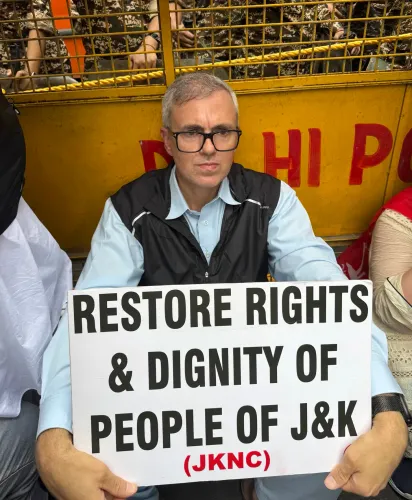
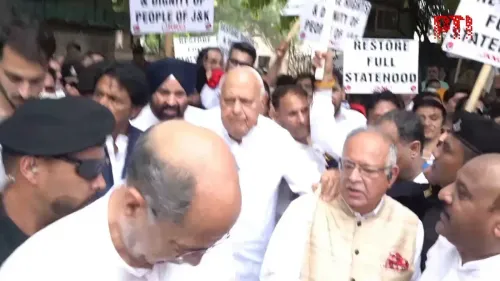
Abdullah's position today is constitutionally unusual. He leads the government of a Union Territory — an arrangement that itself flows from the 2019 reorganisation his party opposed and continues to oppose. The National Conference contested and won the 2024 Assembly elections in J&K on a platform that explicitly included restoring statehood and pushing back against the constitutional changes. That mandate now sits in tension with the limits of what a Union Territory Chief Minister can actually do.
His post does not name the central government or any political opponent. It does not demand a specific action or set a deadline. What it does is mark time — publicly, deliberately, on the one date that concentrates all of this history into a single point. 'We haven't forgotten and we haven't reconciled, far less accepted our current circumstances,' he wrote, in a formulation that leaves no ambiguity about where the National Conference stands.
The Promise of Statehood — Still Pending
The central government has, at various points, assured that statehood for Jammu and Kashmir would be restored 'at an appropriate time.' That assurance has not yet translated into legislative action. The Supreme Court of India, in its December 2023 ruling upholding the revocation of Article 370, directed that Assembly elections be held by September 2024 — a timeline that was met. But the question of full statehood, and the deeper constitutional grievances Abdullah references, remains open.
For the residents of Jammu and Kashmir, the anniversary is not abstract. It marks the day their region ceased to be a state, the day a set of protections around land, jobs, and identity were dissolved, and the day a political argument began that has not ended. Abdullah's post is a reminder — to his constituents, to his party, and to New Delhi — that the clock is still running.
Miles to go. And the National Conference is counting every one of them.
Point of View
Not a tactical grievance, which is harder to dismiss. The broader pattern is significant: regional parties in J&K have consistently used August 5 as a rallying point, and Abdullah's dual role as Chief Minister and opposition voice on the constitutional question gives him unusual leverage to keep the statehood issue alive in national discourse. The real test will come when — or if — New Delhi moves on statehood restoration, and whether that move is offered on terms the National Conference can accept.
NationPress
5 Aug 2026
Frequently Asked Questions
Why is August 5 significant for Jammu and Kashmir?
August 5, 2019 is the date the Indian Parliament revoked Article 370 , ending Jammu and Kashmir's special constitutional status, and passed the Reorganisation Act that bifurcated the former state into two Union Territories.
What did Omar Abdullah post on August 5, 2026?
Omar Abdullah posted on X marking seven years since the revocation, stating his party has not forgotten or accepted the changes and remains committed to reversing them, closing with a quote from Robert Frost.
What was Article 370 and what did its removal mean for J&K?
Article 370 granted Jammu and Kashmir a distinct constitutional status, including its own constitution, a separate flag, and restrictions on outsiders acquiring property. Its revocation in 2019 removed these protections and ended the region's statehood.
Has Jammu and Kashmir's statehood been restored?
As of 2026 , statehood for Jammu and Kashmir has not been legislatively restored. The central government has promised restoration 'at an appropriate time,' but no formal legislative action has been taken.
What is the Jammu and Kashmir National Conference's position on Article 370?
The Jammu and Kashmir National Conference , led by Omar Abdullah , has consistently opposed the revocation of Article 370 and the region's reorganisation, and contested the 2024 Assembly elections on a platform that included reversing the 2019 changes.