Omar Abdullah on Anantnag demolitions: 'Razing houses won't improve things'
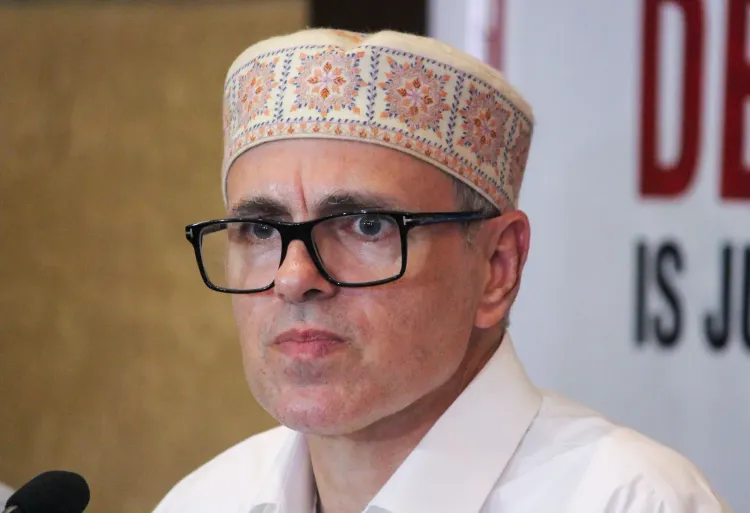
Synopsis
A day after a policeman was killed on Amarnath Yatra duty and two LeT militants' houses were bulldozed in Anantnag, J&K Chief Minister Omar Abdullah publicly broke with the security establishment — warning that demolitions and mass detentions will worsen, not end, the cycle of violence. His remarks, invoking a Supreme Court order and the Pahalgam precedent, signal a direct fault line between the elected government and the Centre's counter-insurgency posture.
Key Takeaways
Head Constable Ashiq Hussain Qureshi was killed in Anantnag on Wednesday while on Shri Amarnath ji Yatra duty.
Houses of Adil Thokar and Haroon Rashid Ganaie , both active LeT terrorists, were demolished on the intervening night of Wednesday and Thursday.
More than 1,000 overground workers (OGWs) were detained across the Kashmir Valley after the attack.
CM Omar Abdullah cited a Supreme Court order against summary demolitions and warned the action would worsen the situation.
Mehbooba Mufti called the demolitions and mass detentions 'collective punishment that has no place in a democracy' in a post on X .
Similar demolitions had stopped for nearly one year before resuming following this attack.
Jammu and Kashmir Chief Minister Omar Abdullah on Thursday, 24 July 2025, cautioned against retributive demolitions in Anantnag, saying that razing houses of terrorists would not improve the security situation and that the government must instead take the people along. His remarks came a day after the houses of two active Lashkar-e-Toiba (LeT) militants were razed in the district following the killing of a policeman.
The Anantnag Attack and Its Aftermath
Head Constable Ashiq Hussain Qureshi was shot dead in Anantnag town on Wednesday while deployed on Shri Amarnath ji Yatra duties. In the intervening night of Wednesday and Thursday, security forces demolished the houses of Adil Thokar and Haroon Rashid Ganaie, both identified as active terrorists. Additionally, more than a thousand overground workers (OGWs) were detained across the Kashmir Valley in the hours that followed.
The killing has raised alarm within the security establishment, with a senior police officer vowing: 'Won't rest unless the coward assailant/assailants are brought to justice.'
What Omar Abdullah Said
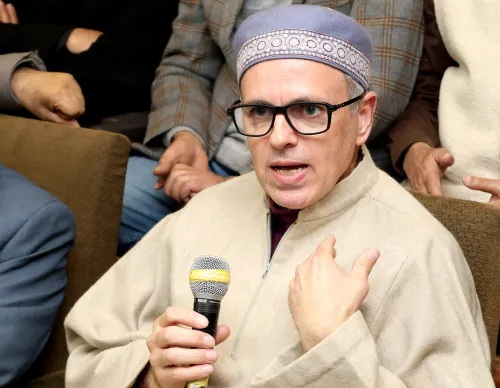
Speaking to reporters in Srinagar, Abdullah acknowledged the anger of the police but urged restraint, citing a Supreme Court order against summary demolitions of this nature. 'I understand the anger of the police, but the Supreme Court has issued an order stating that summary action of this kind should not be taken,' he said.
The Chief Minister drew a direct parallel to the Pahalgam terror attack of April 2025, when houses were similarly bulldozed. 'At that time, I had to speak to the Central government to stop the trend,' he said. He also noted that investigations into the Pahalgam attack had established that 'not a single local was involved and all the attackers had come from outside.'
'Demolishing houses or making thousands of arrests will not improve the situation; in fact, it will only worsen it,' Abdullah said, adding that in his experience as Chief Minister, the cycle of violence cannot be broken without public participation. 'We can reach a certain point using the police, Army and the CRPF, but the real end will come only when the general public stands together against such violence.'
Political Response: PDP Calls It 'Collective Punishment'
Former Chief Minister and Peoples Democratic Party (PDP) president Mehbooba Mufti condemned the terror attack but also criticised the government's response. In a post on social media platform X, she wrote: 'The killing of a police officer in the line of duty is a heinous and condemnable act. But detaining over a thousand people and demolishing the homes of families of two alleged militants amounts to collective punishment that has no place in a democracy.'
Mufti further argued that if the Centre maintains militancy has been reduced to near zero, it must 'adopt a more humane and lawful approach towards innocent civilians instead of resorting to "tit for tat" for an entire community.'
Pattern of Demolitions in Kashmir
The demolition of houses linked to active militants is not unprecedented in Jammu and Kashmir. Such actions had been carried out in earlier years but had reportedly stopped for nearly one year amid a drop in violence levels, before resuming following the Anantnag attack. The recurrence signals that security forces are reverting to deterrence-based tactics as Yatra-season violence tests the administration.
What Comes Next
A manhunt to trace the assailant or assailants responsible for Head Constable Qureshi's killing is reportedly ongoing. Abdullah's public pushback against demolitions puts the J&K government on a collision course with security agencies, and the Centre's response — or silence — will set the tone for how the state handles the next phase of counter-insurgency operations during the sensitive Amarnath Yatra season.
Point of View
Giving him legal cover rather than a purely political stance. But the deeper tension is structural: elected governments in J&K have consistently struggled to assert civilian primacy over counter-insurgency tactics. The Pahalgam precedent Abdullah himself cited — where he had to lobby the Centre to halt bulldozers — illustrates that restraint in Kashmir is episodic, not institutionalised. If the Amarnath Yatra season sees further attacks, the pressure on security agencies to act visibly will override judicial caution, and Abdullah's voice may again be drowned out.
NationPress
22 Oct 2026
Frequently Asked Questions
Why did J&K CM Omar Abdullah oppose the demolition of houses in Anantnag?
Omar Abdullah argued that demolishing the houses of LeT terrorists following the killing of Head Constable Ashiq Hussain Qureshi would worsen, not improve, the security situation. He cited a Supreme Court order against such summary demolitions and said the government must take the public along rather than resort to retributive action.
Whose houses were demolished in Anantnag and why?
The houses of Adil Thokar and Haroon Rashid Ganaie, both identified as active Lashkar-e-Toiba terrorists, were razed on the intervening night of Wednesday and Thursday. The demolitions came in direct response to the killing of Head Constable Ashiq Hussain Qureshi in Anantnag on Wednesday while he was on Amarnath Yatra duty.
What did Mehbooba Mufti say about the Anantnag demolitions?
PDP president Mehbooba Mufti condemned the terror attack but called the demolitions and mass detentions of over a thousand people 'collective punishment that has no place in a democracy,' posting her remarks on social media platform X. She urged the Centre to adopt a more humane and lawful approach.
Has the Kashmir government demolished militant houses before?
Yes. Demolitions of houses linked to active militants have been carried out in Jammu and Kashmir in earlier years. The practice had reportedly stopped for nearly one year amid a reduction in violence levels before resuming following the Anantnag attack.
What is the status of the investigation into the Anantnag policeman's killing?
A manhunt for the assailant or assailants who killed Head Constable Ashiq Hussain Qureshi is ongoing. A senior police officer stated the force would 'not rest' until those responsible are brought to justice. More than a thousand overground workers were detained across the Kashmir Valley as part of the immediate crackdown.