Opposition's Attempt to Halt Constitution Bills Backfires
Synopsis
In a dramatic turn of events, the Opposition celebrates a perceived victory in blocking key Constitution Amendment Bills but ultimately falters in the narrative. As the government shifts the focus, the political implications are significant as crucial elections loom.
Key Takeaways
Opposition claims victory by blocking key Bills but faces a narrative challenge.
Government portrays critics as anti-women and anti-OBC.
Significant implications for upcoming state elections.
2023 Women’s Reservation Act aims for 33% representation for women.
Ongoing Census includes caste enumeration.
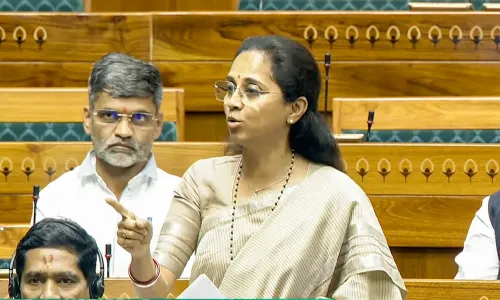
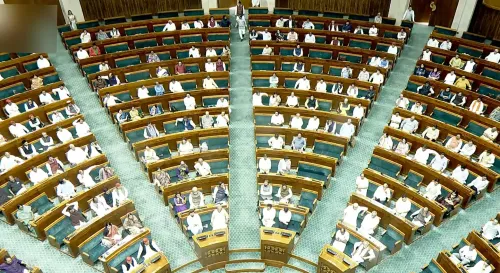
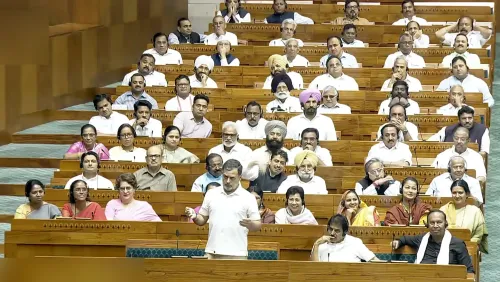
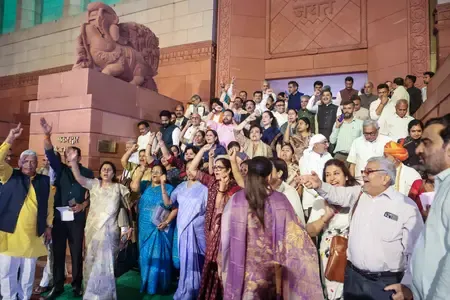
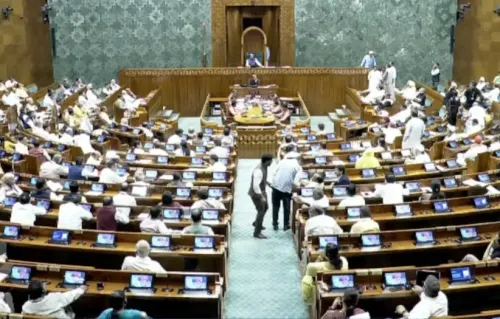
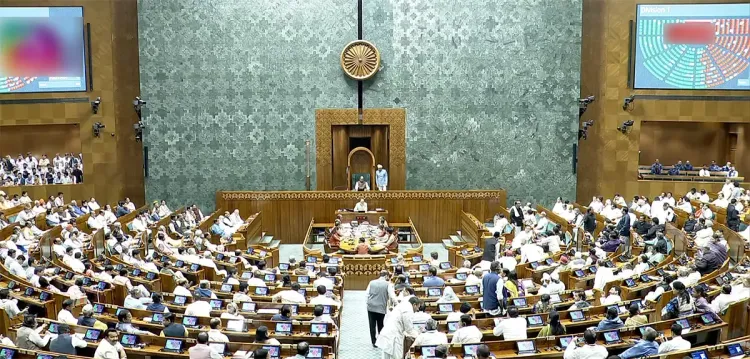
New Delhi, April 17 (NationPress) While the Opposition may be reveling in what it perceives as a victory by preventing the Union government from advancing three crucial Constitution Amendment Bills in the Lok Sabha on Friday after a heated two-day debate, it ultimately faltered in shaping the narrative.
Their assertion of being champions of social justice, caste enumeration, and reservation policies demands a reevaluation, presenting a political setback even amidst their so-called triumph. By casting the Opposition as anti-women and anti-OBC, the government adeptly redirected the conversation, depicting dissenters as elitists who obstruct progress.
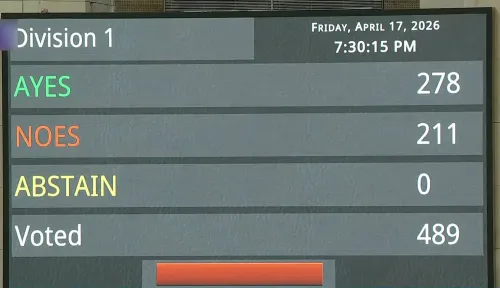
In a session with 528 members present to cast their votes, the Constitution (131st Amendment) Bill, 2026 garnered 298 votes in favor versus 230 against, revealing that the ruling National Democratic Alliance (NDA) fell approximately 54 votes short.
Additionally, the Lok Sabha saw the introduction of the Union Territories Laws (Amendment) Bill, 2026, along with the Delimitation Bill, 2026. These legislative proposals aimed at enlarging the House of the People, facilitating delimitation based on the 2011 Census, and establishing reservations for women according to this delimitation.
The Jammu & Kashmir, Puducherry, and Delhi Laws Bill intended to implement similar provisions within those Union Territories. The Opposition opposed the association of delimitation with women's reservation implementation.
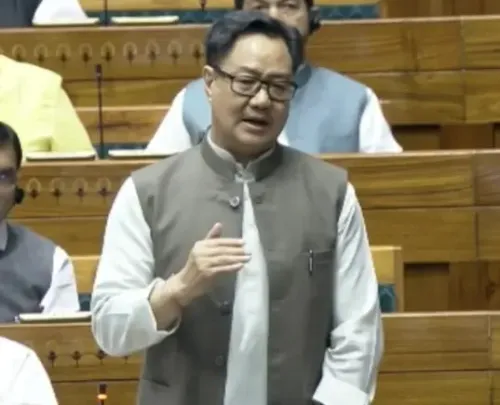
During the debate, Leader of Opposition Rahul Gandhi declared that the bloc would categorically reject the Bills. Following the voting results, Parliamentary Minister Kiren Rijiju urged Speaker Om Birla to refrain from putting the other two Bills to a vote, citing their intrinsic interconnection.
Prime Minister Modi called upon the House to endorse the Bill focused on women's empowerment, while Union Home Minister Amit Shah highlighted, with statistics, that southern states should not fear losing representation relative to their current strength. Despite this, the Opposition remained steadfast in their stance.
Though the displayed numbers indicated a partisan divide, Rijiju reiterated the Modi government's commitment to advancing women's empowerment. “It's unfortunate that you missed an opportunity to empower women through this historic Bill,” he told the Opposition members who were celebrating the final outcome.
Meanwhile, citing past examples from the Congress administration to support his argument, the Home Minister criticized Gandhi's party for its long-standing opposition to caste-based census and reservations for Other Backward Classes (OBCs). He dismantled the “false narrative” that the Bills would disadvantage southern states, presenting evidence indicating they would actually gain seats post-delimitation.
He accused the Opposition of “opposing everything,” from women's quotas to equitable representation, and noted that procedural rules prohibited substantive debates at introduction. PM Modi also urged critics to back the “landmark” reforms, framing the Bills as a fulfillment of longstanding women's empowerment demands without constitutional overreach.
The Treasury benches focused on equity rather than punitive measures for the South's family planning achievements. Shah also contested the Congress claim of being the sole party to empower women, citing examples such as the BJP's role in electing the first woman Chief Minister of Delhi, along with a Tribal woman as President of India.
With significant state elections approaching, including those in Tamil Nadu and West Bengal this month, followed by Uttar Pradesh, Punjab, and others, the Opposition will need to strategize a defense once the reality of the situation sets in.
Regarding the demand for caste enumeration, the Home Minister clarified that the ongoing Census of India encompasses this aspect. The last Census occurred in 2011, with the next one expected in 2021 but postponed due to the COVID-19 pandemic.
Meanwhile, the 2023 Women’s Reservation Act, which allocates 33 percent reservation for women in the Lok Sabha and State Legislative Assemblies, was officially notified on Thursday by the Union Law Ministry.
Point of View
The recent developments in the Lok Sabha reflect a complex interplay between political opposition and government strategy. While the Opposition claims a victory by blocking the Constitution Amendment Bills, the government effectively reframed the narrative, challenging the Opposition's commitment to social justice and women's empowerment.
NationPress
30 Sept 2026
Frequently Asked Questions
What were the key Constitution Amendment Bills discussed?
The key Bills included the Constitution (131st Amendment) Bill, 2026, the Union Territories Laws (Amendment) Bill, 2026, and the Delimitation Bill, 2026.
Why did the Opposition oppose these Bills?
The Opposition argued that linking delimitation with women's reservation was inappropriate and contested the government's framing of their stance.
What did Prime Minister Modi and Home Minister Amit Shah advocate for?
PM Modi urged support for the women's empowerment Bill, while Amit Shah reassured southern states about their representation post-delimitation.
What is the 2023 Women’s Reservation Act?
It is a legislative act providing 33 percent reservation for women in the Lok Sabha and State Legislative Assemblies.
What is the significance of the ongoing Census in India?
The Census includes provisions for caste enumeration, which has been a point of contention in the political discourse.