Owaisi condemns threat to raze Delhi's Hujra Kuan Mosque
Synopsis
AIMIM president Asaduddin Owaisi on 19 October 2026 condemned alleged threats to demolish Delhi's historic Hujra Kuan Mosque — gazetted in 1977 — without any notice, linking the incident to fears over the Waqf Amendment Act and the Places of Worship Act.
Key Takeaways
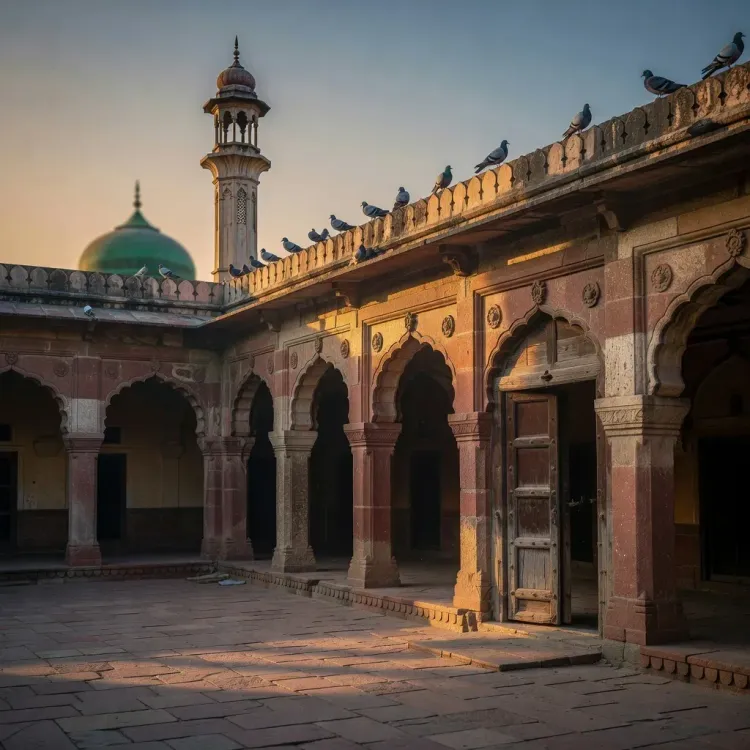
Hujra Kuan Mosque , located near the Race Course in Delhi , is recorded in the official government gazette of 1977 .
AIMIM president Asaduddin Owaisi alleged that worshippers are being barred from offering prayers and the caretaker has received demolition threats, with no formal notice issued by any authority.
Owaisi cited potential misuse of the Waqf Amendment Act and the Places of Worship (Special Provisions) Act, 1991 , which prohibits conversion of religious sites as they stood on 15 August 1947.
He demanded the government publicly retract the alleged threats and guarantee no action will be taken against the mosque.
The incident heightens ongoing political debate over minority religious property protections and the practical effect of recent Waqf legislation amendments.
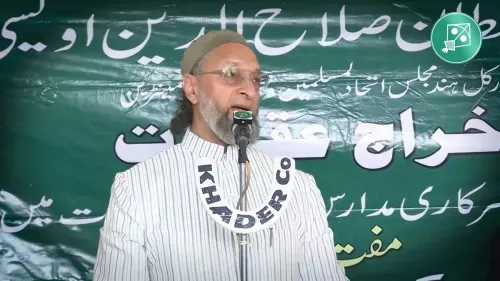
A historic mosque in the heart of the national capital is at the centre of a fresh political storm — and AIMIM president Asaduddin Owaisi is demanding answers. On Monday, 19 October 2026, Owaisi took to X to sharply condemn what he described as an attempt to demolish the Hujra Kuan Mosque, a centuries-old site located near the Race Course area in Delhi, warning that the government's silence on such threats was validating his party's worst fears about minority religious sites.
Translating his post from Hindi: 'Delhi mein Race Course ke paas sthit aitihasik masjid Hujra Kuan ko giraane ki koshish ki kadi ninda karta hoon' — 'I strongly condemn the attempt to demolish the historic Hujra Kuan Mosque located near the Race Course in Delhi.' Owaisi stated that worshippers are being prevented from offering namaz (prayers) at the site, that the mosque's caretaker has been threatened with demolition, and — critically — that no formal notice has been issued by any authority. 'Why are Muslims' places of worship being targeted?' he demanded.
A mosque on the books since 1977
The weight of Owaisi's argument rests partly on one administrative fact: the Hujra Kuan Mosque is recorded in the official government gazette of 1977. A government gazette entry is not a minor footnote — it is a formal state acknowledgement of a site's existence and status. That a property with such documented standing could face demolition threats without a single notice being served, Owaisi argued, makes the alleged action not just alarming but plainly illegal.
The Places of Worship (Special Provisions) Act, 1991 was enacted precisely to prevent the conversion or demolition of religious sites, preserving the character of every place of worship as it stood on 15 August 1947. The Waqf Act, 1995 further created a statutory framework through state Waqf boards to administer and protect Muslim charitable and religious endowments. Owaisi's central charge is that both these laws are being rendered meaningless in practice — a claim his party has pressed repeatedly during debates over the recent Waqf Amendment Act.
Waqf Amendment and the fears it reignited
The alleged incident at Hujra Kuan arrives in a politically charged atmosphere. Amendments to the Waqf Act — contested bitterly in Parliament by opposition parties and Muslim community organisations — drew warnings from AIMIM and others that diluting Waqf board authority would leave minority religious properties more vulnerable to encroachment and demolition. Owaisi's post framed the Hujra Kuan episode as direct evidence: 'Our fears about the misuse of the Waqf Amendment Act and the Places of Worship Act are now appearing to be proven true.'
That is a serious allegation. It links a local administrative threat in Delhi to a national legislative controversy — and it calls on the government not just to back down on this specific mosque, but to issue a public guarantee that no such action will be taken. 'The government must withdraw these illegal threats and clarify that no such action will be taken against the mosque,' Owaisi wrote.
What Delhi authorities and the Centre must answer
The immediate question is accountability: which authority — Delhi's local administration, the land or heritage department, or another agency — communicated a demolition threat to the caretaker, and under what legal basis? If no notice was served, that absence is itself a legal problem. Any demolition of a gazetted religious site without due process would ordinarily invite challenge under both the Places of Worship Act and Waqf statutes, as well as under the constitutional right to religious practice.
Owaisi's demand is pointed and time-bound: clarify and retract, publicly, now. Whether the Ministry of Minority Affairs or Delhi's administration responds — and how quickly — will signal how seriously the Centre treats the protection of gazetted minority religious properties in its own backyard.
A 1977 gazette entry should be a shield, not a buried footnote. If it can be swept aside without even a notice, the law offers far less protection than its text promises.
Point of View
Handing critics a vivid on-the-ground example to press that argument. Owaisi's framing — connecting a municipal-level threat to national legislation — is a deliberate escalation tactic designed to shift accountability from Delhi authorities to the Centre. The government's response, or silence, will itself become evidence in an ongoing legislative and constitutional debate about whether the 1991 Places of Worship Act is being honoured in letter and in spirit. With parliamentary sessions and potential court petitions on the horizon, the fate of a single gazetted mosque in Delhi could crystallise a much larger argument about the legal scaffolding that protects minority religious sites across India.
NationPress
19 Oct 2026
Frequently Asked Questions
What is the Hujra Kuan Mosque in Delhi?
The Hujra Kuan Mosque is a historic mosque located near the Race Course area in Delhi. It is formally recorded in the official government gazette of 1977, establishing its recognised status as a religious site.
Why is Owaisi protesting against the alleged demolition threat?
Owaisi alleges that the mosque's caretaker was threatened with demolition without any formal notice being issued, which he says violates due process and laws protecting places of worship, including the Places of Worship Act of 1991.
What does the Places of Worship Act 1991 say about mosques and other religious sites?
The Places of Worship (Special Provisions) Act, 1991 prohibits the conversion of any place of worship and mandates that the religious character of every such site be maintained as it existed on 15 August 1947.
How does the Waqf Amendment Act relate to this controversy?
Owaisi and other opposition leaders have argued that recent amendments to the Waqf Act dilute the authority of state Waqf boards to protect Muslim religious and charitable properties, making sites like Hujra Kuan more vulnerable to encroachment or demolition.
What has Owaisi demanded from the government over the Hujra Kuan Mosque?
Owaisi has demanded that the government publicly withdraw the alleged illegal threats and issue a clear guarantee that no demolition or punitive action will be taken against the Hujra Kuan Mosque.