Owaisi on NDA Expansion: 'Those Who Called Us B-Team Now Join Them'
Synopsis
AIMIM president Asaduddin Owaisi on June 20 pointed out that parties which once called AIMIM a 'B-team' of the BJP are now joining the NDA themselves, turning a long-running opposition attack on its head ahead of upcoming state elections.
Key Takeaways
Owaisi posted on June 20, 2026 , saying parties that called AIMIM a 'B-team' are now joining the NDA.
AIMIM has contested elections independently since 2014 , consistently rejecting the B-team label.
NDA , formed in 1998 , has expanded by absorbing former critics and smaller regional outfits since returning to power.
The statement targets Muslim voters and regional parties as key audiences ahead of 2026-27 state assembly polls.
AIMIM's core base spans Hyderabad , parts of Maharashtra , Bihar , and Uttar Pradesh .
The post signals AIMIM's intent to use NDA's coalition growth as campaign messaging against former accusers.
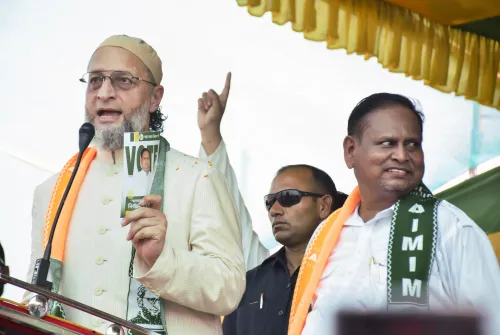
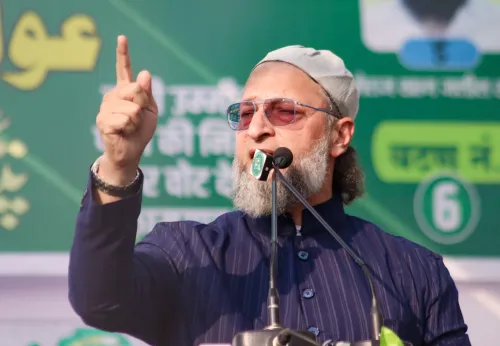
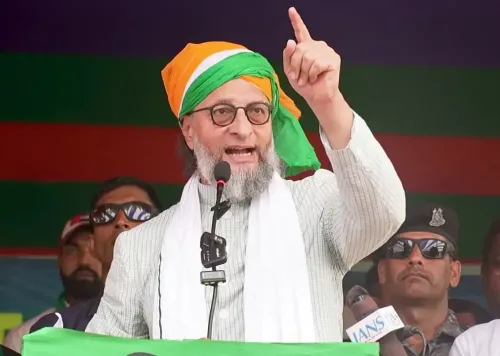
AIMIM president Asaduddin Owaisi took a sharp political dig at rival parties on Saturday, June 20, 2026, pointing out what he called a telling irony in Indian coalition politics: parties that once labelled AIMIM a 'B-team' of the BJP are themselves now joining the National Democratic Alliance (NDA).
In a post on X, Owaisi wrote in Hindi: 'Jo kal tak AIMIM ko 'B Team' kahte the, aaj wahi log NDA mein shamil ho rahe hain' — 'Those who until yesterday called AIMIM the B-team are today themselves joining the NDA.' The remark, brief but pointed, encapsulates a recurring tension in Indian electoral politics where ideological positioning and alliance choices frequently diverge.
Context
The 'B-team' charge has been one of the most persistent attacks levelled against AIMIM by opposition parties, particularly those contesting Muslim-majority seats. Critics argued that AIMIM's independent candidacies split the anti-BJP vote and indirectly benefited the ruling alliance. Owaisi and the party have consistently and forcefully rejected this framing, insisting on their right to independent political participation.
The June 20 post inverts that narrative: by pointing out that the accusers are now the ones walking into NDA, Owaisi is effectively arguing that the 'B-team' label was a political weapon rather than a principled critique.
Policy Backdrop
NDA, the BJP-led coalition, was originally constituted in 1998 as a broad anti-Congress front. Since the alliance returned to power at the centre in 2014, its expansion strategy has notably included absorbing regional parties and leaders who were once vocal critics of the BJP's ideological positions. This pattern has accelerated ahead of state assembly elections, as smaller outfits recalibrate their survival strategies against both the Congress and dominant regional formations.
AIMIM, by contrast, has contested multiple elections independently since 2014, declining overtures from both the United Progressive Alliance and the NDA. Its core electoral base remains concentrated in Hyderabad and select constituencies in Maharashtra, Bihar, and Uttar Pradesh, where Muslim voter consolidation is a decisive factor.
Stakeholders and Impact
The remark carries direct significance for Muslim voters and regional parties navigating alliance arithmetic ahead of upcoming state polls. For voters who backed parties that attacked AIMIM on B-team grounds, the sight of those same parties entering NDA raises credibility questions about the original charge. It also reinforces AIMIM's long-standing self-positioning as a party that has not compromised on staying outside the BJP-led fold.
For the NDA itself, the expanding coalition signals the BJP's continued success in drawing in smaller formations, but it also opens the alliance to charges of opportunism from within the opposition. Each new entrant potentially dilutes the ideological coherence that original NDA partners projected.
What's Next
State assembly elections scheduled across 2026-27 are expected to test the durability of recent NDA expansions, as fresh alliance announcements and seat-sharing disputes often expose fault lines between new and old partners. Owaisi's post suggests AIMIM intends to press this contradiction in its campaign messaging, using the NDA's own growth against those who once weaponised the B-team narrative. Whether this framing resonates with voters in key states will be a significant indicator of AIMIM's political standing in the next electoral cycle.
Point of View
So publicly flipping it onto parties now entering NDA is a direct attempt to neutralise that line of attack before the next round of state elections. It also fits a broader pattern in Indian politics where smaller parties fight for narrative ownership of 'consistency' as larger formations shift alignments. If even a fraction of the voters who abandoned AIMIM over B-team concerns begin to question that logic, the party stands to recover ground in competitive Muslim-majority constituencies.
NationPress
20 Jun 2026
Frequently Asked Questions
What did Owaisi say about AIMIM being called a B-team?
On June 20, 2026, Owaisi posted that parties which previously called AIMIM a 'B-team' of the BJP are now themselves joining the NDA, calling out what he sees as hypocrisy in that accusation.
What does 'B-team of BJP' mean in Indian politics?
The 'B-team' label is used by opposition parties to suggest that a smaller party indirectly helps the BJP by splitting anti-BJP votes, even without a formal alliance. AIMIM has faced this charge repeatedly since 2014.
Has AIMIM ever joined the NDA or BJP alliance?
No. AIMIM under Owaisi has consistently contested elections independently and has declined to join either the NDA or the Congress-led alliance, maintaining a position outside both major coalition blocs.
Why are parties joining NDA ahead of 2026-27 elections?
Smaller regional parties often join the NDA ahead of state polls to secure seat-sharing arrangements and access to the ruling coalition's resources, even if they previously held ideological differences with the BJP.
What is AIMIM's political base in India?
AIMIM's primary stronghold is Hyderabad, where Owaisi has won six consecutive Lok Sabha terms. The party also contests seats in Maharashtra, Bihar, and Uttar Pradesh, focusing on Muslim political representation.