Owaisi to Modi: Remove Chinese troops from Arunachal or quit
Synopsis
AIMIM president Asaduddin Owaisi issued a sharp public ultimatum to PM Narendra Modi on 26 October 2026, demanding the removal of Chinese troops from Arunachal Pradesh or the Prime Minister's resignation — reigniting debate over India's LAC management.
Key Takeaways
AIMIM president Asaduddin Owaisi posted a direct challenge to PM Narendra Modi on 26 October 2026 .
He demanded: 'Remove the Chinese army from Arunachal Pradesh , or give up the throne.' Arunachal Pradesh is claimed by China as 'South Tibet'; India consistently asserts it as an integral part of Indian territory.
The territorial dispute dates to the 1962 Sino-Indian War and has intensified since the 2020 Galwan Valley clash that killed 20 Indian soldiers .
India and China have held multiple rounds of Corps Commander-level talks on disengagement since Galwan, with progress on Ladakh but contested outcomes on other LAC sectors.
The Ministry of External Affairs had not publicly responded to Owaisi's post at the time of publication.
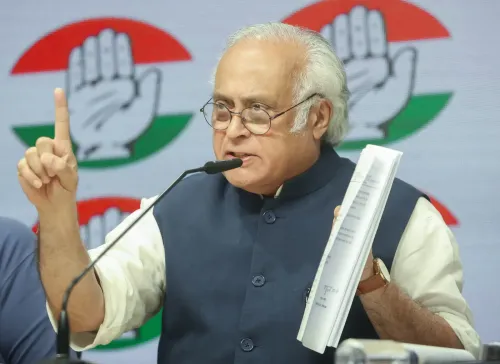
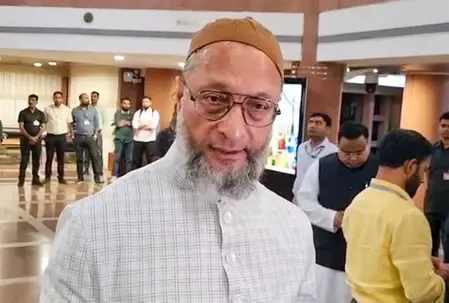
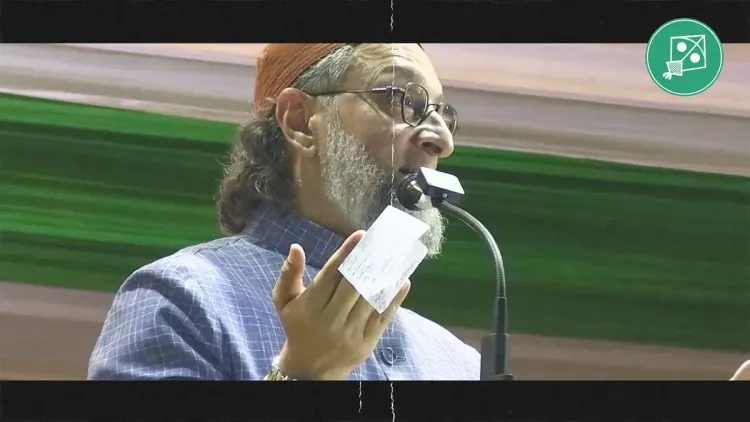
A blunt two-line ultimatum — remove the Chinese military from Arunachal Pradesh or vacate the office. AIMIM president Asaduddin Owaisi directed that stark challenge at Prime Minister Narendra Modi on Monday, 26 October 2026, in a post that compressed one of India's most sensitive territorial flashpoints into a single, unambiguous demand.
Posting directly to the Prime Minister's handle, Owaisi wrote in Hindi: 'Arunachal Pradesh se Cheeni fauj ko hatao, warna gaddi chhodo' — 'Remove the Chinese army from Arunachal Pradesh, or give up the throne.' No qualifications, no diplomatic hedging. The register was deliberately combative, aimed squarely at the government's stewardship of India's northeastern frontier.
Why Arunachal sits at the heart of the India-China fault line
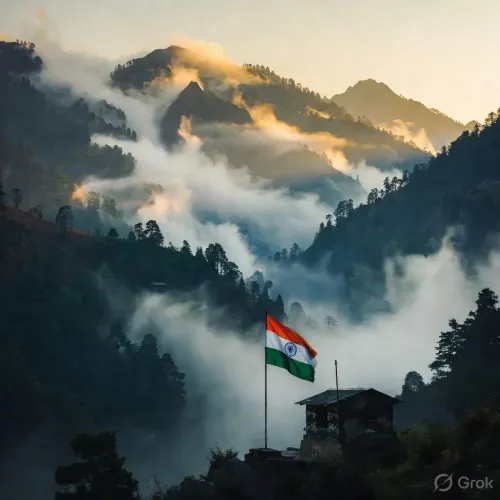
Arunachal Pradesh, a state of roughly 84,000 square kilometres bordering China, Bhutan, and Myanmar, has been claimed by Beijing as 'South Tibet' for decades. China periodically objects to visits by Indian officials — including the Prime Minister — to the state, and regularly renames locations within its boundaries. The dispute traces back to the 1962 Sino-Indian War, which left the eastern sector of the Line of Actual Control (LAC) undefined and contested.
India has consistently rejected Beijing's claims, asserting that Arunachal Pradesh is, in the words of successive governments, 'an integral and inalienable part of India.' Yet the LAC's unresolved status means any perceived incursion or presence of Chinese troops on the Indian side of the boundary carries enormous political and strategic weight.
Owaisi's ultimatum in the wider opposition playbook
This is not the first time Owaisi has used the LAC as a cudgel against the Modi government. The June 2020 Galwan Valley clash — which killed 20 Indian soldiers and an unconfirmed number of Chinese troops — gave opposition parties, including AIMIM, a recurring line of attack on the government's China policy. Since Galwan, India and China have held multiple rounds of Corps Commander-level talks, leading to phased disengagement in eastern Ladakh; whether comparable progress has been made on the Arunachal sector remains a subject of political dispute.
Owaisi, as a Lok Sabha MP from Hyderabad and a consistent voice on national security in Parliament, frames the demand through the lens of sovereignty. His phrasing — 'gaddi chhodo' ('give up the throne') — is a direct echo of the kind of rhetorical pressure that has defined opposition politics in the post-Galwan era: tie territorial integrity to the ruling party's legitimacy, and dare the government to respond.
The Ministry of External Affairs has not issued a public response to the post. Any official communication on LAC management or forthcoming India-China border talks would be the next significant data point in this political standoff.
Sovereignty demands, it turns out, do not wait for diplomatic timelines — and Owaisi is making sure the Prime Minister's timeline includes an answer.
Point of View
' Owaisi is consciously collapsing the distinction between foreign policy failure and electoral accountability, a framing the ruling party finds difficult to counter without disclosing sensitive operational details. The move also signals that Arunachal Pradesh — historically less prominent than Ladakh in public discourse — is being elevated as a second front in the opposition's national security critique. Whether the government chooses to respond will itself be read as a political signal.
NationPress
26 Oct 2026
Frequently Asked Questions
What did Asaduddin Owaisi say about Arunachal Pradesh and China?
Owaisi posted a direct challenge to PM Modi on 26 October 2026, demanding that Chinese troops be removed from Arunachal Pradesh, or that the Prime Minister resign from office.
Does China claim Arunachal Pradesh?
Yes. China refers to Arunachal Pradesh as 'South Tibet' and has claimed the territory for decades, though India consistently asserts it as an integral and inalienable part of Indian territory.
What happened in the Galwan Valley clash in 2020?
In June 2020, Indian and Chinese soldiers clashed in the Galwan Valley in eastern Ladakh, killing 20 Indian soldiers. It triggered multiple rounds of military-level disengagement talks between the two countries.
What is the Line of Actual Control (LAC)?
The LAC is the de facto border between India and China, stretching roughly 3,488 kilometres across Ladakh, Himachal Pradesh, Uttarakhand, Sikkim, and Arunachal Pradesh. It has never been formally demarcated and is disputed in several sectors.
Has the Indian government responded to Owaisi's post about Arunachal?
As of publication, the Ministry of External Affairs had not issued a public response to Owaisi's post.